
Norse church ruin found in Greenland
24.9.2026 05:00:00 CEST | Nationalmuseet – Forskning og Kulturarv | Press release
The find of a skeleton reveals a hitherto unknown Norse church in southern Greenland, not far from Erik the Red’s settlement. The discovery broadens our knowledge about the society and power balance in Greenland at that time and may lead to more such finds in the future.
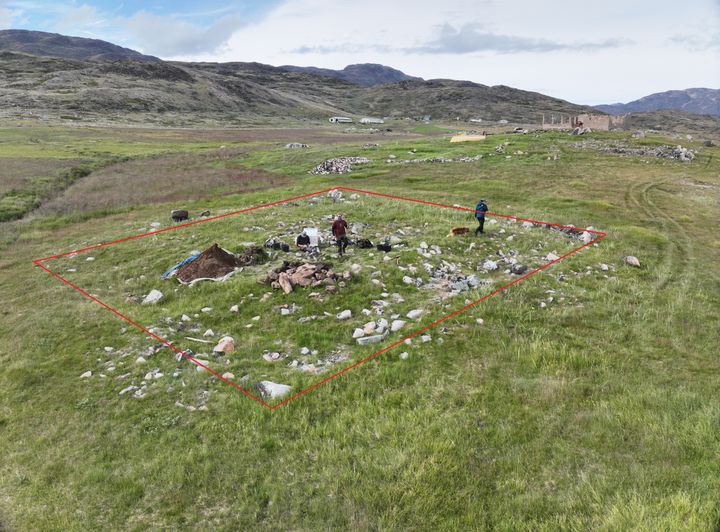
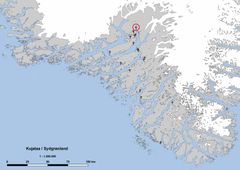
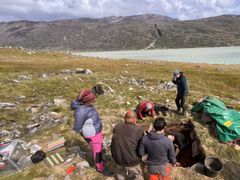
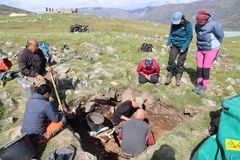
A skeleton unearthed during an excavation in August confirms the discovery of a Norse church ruin in Greenland. The find was made at Qinngua near Narsarsuaq in southern Greenland, not far from Erik the Red’s settlement.
“This is a sensation, which means we have to rethink the significance of this whole area to the Norse people. Churches were vital in Norse society, which makes them key to understanding how their society, especially the power structures, developed,” says Christian Edelfelt Koch Madsen, senior researcher at the National Museum and research coordinator of the project.
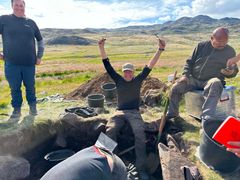
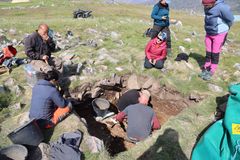
The discovery was made by a team of researchers from the National Museum of Denmark, Greenland’s National Museum and Archive, University Museum of Bergen and UNESCO Kujataa.
It is more than 60 years since a Norse church was last discovered in Greenland. Back then, they were Viking-Age churches that had soon been given up again; but this one is a bigger church that was likely in use up through the Middle Ages. This makes it especially interesting because it tells us something about the developments in Greenland during the transition between the birth and demise of the settlement. Our knowledge about that period is still full of holes.
Grave confirms this is a church
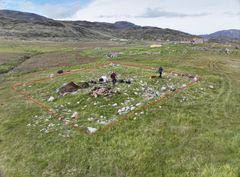
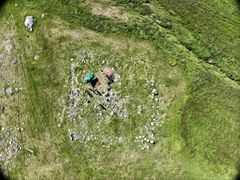
The notion that this could be a church has been around for some time. It arose because the ruins at the site comprise a rectangular stone wall with a stone building in the middle, which typically indicates a church. But the decisive proof would be to find a cemetery with graves, and ever since the National Museum first excavated at the site in the 2000s, none have been found.
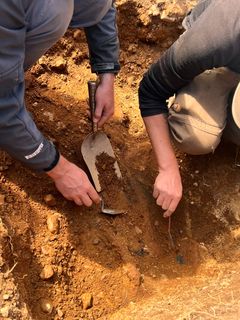
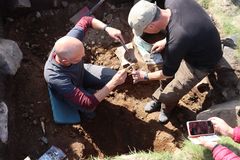
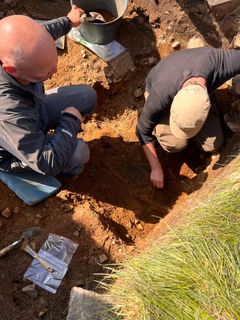
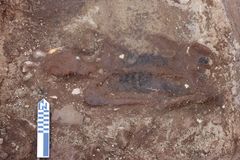
This summer, however, researchers located a skeleton. It was placed with the head towards the east, as is customary for Christian burials. The grave thus confirms the existence of a cemetery and, in turn, the church.
“This is ‘the smoking gun’. Now there is no doubt that this is a church. Inuit are buried in stone-covered chambers, whereas Norse people are buried in cemeteries, so everything points in the same direction, including the written sources,” says Christian Edelfelt Koch Madsen.
Clue to other undiscovered churches
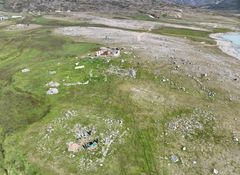
The medieval written sources mention several names and locations of Norse churches, and one of the more credible ones fits the location of the newly found church rather well. The account of “Kirkja undir Sólarfjöllum” (the Church under the Sunny Mountains) matches the mountains in the background, which the Norse must have called the Sunny Mountains. They are right by the ice cap and subject to a local high pressure that often yields sunny weather.
In the long run, the discovery may thus lead to new church finds, predicts Christian Edelfelt Koch Madsen.
“As the location of this church fits so well with the descriptions in the sources, it would make sense to try to locate other churches also mentioned in writing, but as yet undiscovered.”
Researchers are still analysing samples from the find, but the skeleton was placed with its arms along its sides, which suggests early Middle Ages. The large size of the church and the many hewn stones would typically be dated to the period 1100 - 1300.
The ruins of two or three farms are located near the church, which may suggest the beginnings of a village society.
New insights into power structures
The find is also exciting since it was made near Erik the Red’s main settlement at Brattahlíð. In this relatively small area, six churches have been found, although only three remained in use into the Middle Ages.
“It almost seems as if this area was home to a veritable race to build churches and thus demonstrate power and position. That race likely had some losers who perhaps gave up on their church buildings – such as this one. More research will show. Regardless, this find means we have to look at the area in a new way and reconsider what we know about Norse medieval societal structures,” says Christian Edelfelt Koch Madsen.
The find simultaneously emphasises that there is still much to discover and document regarding Norse times in southern Greenland. Archaeological excavations contribute to an ever more detailed picture of life among the so-called Greenlandic Vikings, from the year 980 until the 1400s when Norse society in Greenland collapsed and was abandoned. The reasons for this collapse have been discussed by scholars for decades.
“The new discovery may be another little clue to understanding that mystery,” says Christian Edelfelt Koch Madsen.
Contact:
- Christian Edelfelt Koch Madsen, senior researcher, The National Museum of Denmark, +45 4120 6388, cekm@natmus.dk
- Konrad Smiarowski, PhD, University Museum of Bergen / Universitetsmuseet i Bergen, +47 93933205, konrad.smiarowski@uib.no
- Michael Nielsen, museum curator, Greenland’s National Museum and Archive, +299 52 03 51, michael@natmus.gl
- Aqqaluaq Frederiksen, Site Manager, UNESCO Kujataa, +299 64 71 32, af@isg.gl
Keywords
Contacts
John Fhær Engedal NissenCommunications OfficerNationalmuseet
Tel:+45 41 20 68 49jni@natmus.dkImages
Subscribe to releases from Nationalmuseet – Forskning og Kulturarv
Subscribe to all the latest releases from Nationalmuseet – Forskning og Kulturarv by registering your e-mail address below. You can unsubscribe at any time.
Latest releases from Nationalmuseet – Forskning og Kulturarv
Kirkeruin fra nordboerne fundet i Grønland24.9.2026 05:00:00 CEST | Pressemeddelelse
Fund af skelet afslører ukendt kirke fra nordboerne i Sydgrønland, ikke langt fra Erik den Rødes boplads. Opdagelsen gør os klogere på datidens samfundsudvikling og magtforhold i Grønland og kan måske føre til flere kirkefund i fremtiden.
4.500 year old food remains reveal sophisticated cooking in Early Bronze Age Syria14.9.2026 10:09:10 CEST | Press release
New research shows a sophisticated kitchen in ancient Syria dating back 4,500 years, featuring the use of two different types of cooking pots and a range of ingredients—such as goat, grain, and gazelle—as well as resin used as a spice.
4.500 år gamle madrester afslører avanceret madlavning i bronzealderens Syrien14.9.2026 08:24:09 CEST | Pressemeddelelse
Ny forskning viser et avanceret køkken i oldtidens Syrien for 4.500 år siden med brug af to forskellige grydetyper og en række ingredienser som ged, frugt, gazelle - og harpiks som krydderi.
Affald, brand og klimakrise: Stort bogværk om byggeloven viser, hvordan samfundets udfordringer har formet arkitekturen28.8.2026 09:00:25 CEST | Pressemeddelelse
Byggeloven har ændret sig mange gange gennem historien for at imødekomme de aktuelle samfundsproblemer. Nu samler et stort bogværk hele byggelovens historie: Fra affaldsproblemer i middelalderen til brandsikring i 1700-tallet og til nyere tiders fokus på energiforbrug i bygninger og byer.
Dansk skibsvrag med voldsom og tragisk historie undersøges nu nærmere11.5.2026 07:09:13 CEST | Pressemeddelelse
Forskere fra Nationalmuseet påbegynder i dag nye undersøgelser af 1600-talsvraget af det danske skib ”Havmanden” – et skib, der oplevede det voldsomste mytteri i dansk søfartshistorie. Målet er blandt andet at finde flere detaljer om menneskene ombord, som oplevede skibets tragiske skæbne.
In our pressroom you can read all our latest releases, find our press contacts, images, documents and other relevant information about us.
Visit our pressroom