
4.500 year old food remains reveal sophisticated cooking in Early Bronze Age Syria
14.9.2026 10:09:10 CEST | Nationalmuseet – Forskning og Kulturarv | Press release
New research shows a sophisticated kitchen in ancient Syria dating back 4,500 years, featuring the use of two different types of cooking pots and a range of ingredients—such as goat, grain, and gazelle—as well as resin used as a spice.
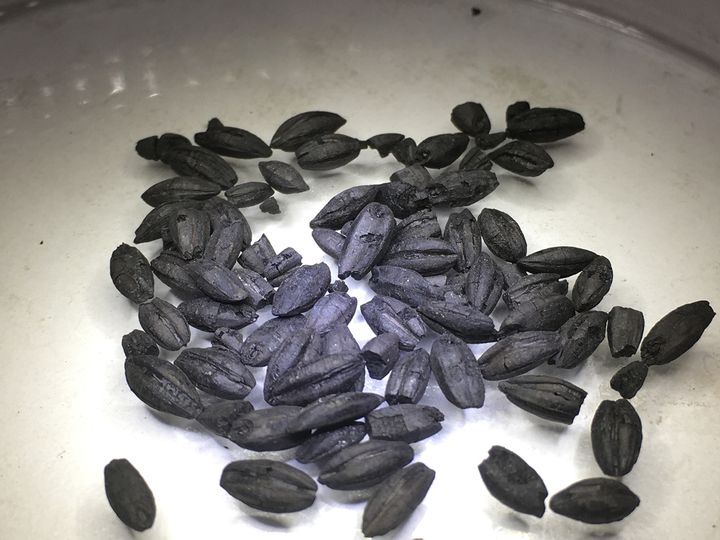
For the first time, researchers can now identify the contents of the cooking pots used in the ancient city of Hama 4,500 years ago. Researchers from the National Museum of Denmark, along with colleagues from Copenhagen University and the National Centre for Scientific Research in Lyon, France, have analysed the 4500-year-old animal bones, plant remains, and fats from inside the walls of cooking pots from Hama. They show that a wide range of food products were available in the city, deriving from both the city itself, from fields in the vicinity, and from the steppes and grazing areas further afield.
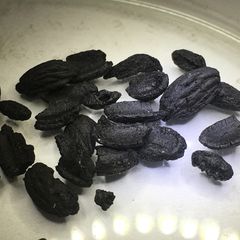
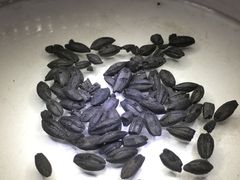
Barley, wheat, lentils, olives, and grapes were available, while the animal food components came from sheep, goats, pigs, cattle, and gazelle. Remains of fats in the cooking pots suggest that milk, plants, and possibly pork was cooked in the pots, and that some meals were flavoured with resinous wood.
Food from near and far
“This is the first time we have been able to identify the components of meals from inside the cooking pots at Hama. We can see that some ingredients probably came from the city itself, such as pork and grapes, while cereals, lentils and olives came from the fields in the vicinity, sheep and cattle from grazing land around the city, and gazelle from the steppe to the east”, says Mette Marie Hald, senior researcher at the National Museum and first author of the study.
Two types of cooking pots
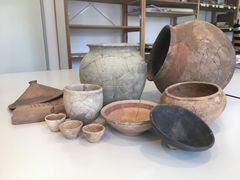
The study also shows that cooks in Early Bronze Age Syria did not just grab the nearest cooking pot in the kitchen but chose their pots depending on the meal they were about to cook. While the locally made pots were made of clay mixed with the stone calcite, another type of cooking pot, imported from the steppe to the east, was made of clay mixed with basalt. The different clay mixtures meant that the cooking pots had different thermal properties, and the imported pots appear to have been used for a wider range of meals.
“The different types of cooking pots at Hama show that cooking in the Bronze Age involved active decision-making not only in terms of ingredients, but also in terms of tools used in the preparation of specific meals”, Mette Marie Hald says.
Flavoured with resin
The study also shows that some meals were flavoured with resinous wood.
“We know from recipes written on clay tablets from the Bronze Age that resinous wood was added to meals to enhance their flavour, and we can see this practice from some of the cooking pots at Hama”, Mette Marie Hald says. “Interestingly, all the cooking pots that contained traces of resin had symbols impressed or incised into the clay. Perhaps those pots were chosen specifically for the resin-flavoured meals to avoid carrying that particular flavour over into other types of meals afterwards”, she adds.
FACT SHEET
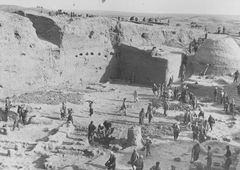
- Hama was excavated between 1931 and 1938 by archaeologists from the National Museum of Denmark
- Researchers have been working on the collection of finds from Hama housed in Copenhagen within a research project supported by Independent Research Fund Denmark since 2021 (grant no. 1024-00107B).
- The food remains have been identified using microscopy and chemical analysis.
- The study is published in ”Journal of Archaeological Science: Reports”. https://www.sciencedirect.com/science/article/abs/pii/S2352409X26004554
Keywords
Contacts
Mette Marie HaldSenior Scientist
Tel:+45 41206175mmh@natmus.dkMorten Greve Linnemann
Tel:+45 41 20 63 80Morten.Greve.Linnemann@natmus.dkImages
Links
Subscribe to releases from Nationalmuseet – Forskning og Kulturarv
Subscribe to all the latest releases from Nationalmuseet – Forskning og Kulturarv by registering your e-mail address below. You can unsubscribe at any time.
Latest releases from Nationalmuseet – Forskning og Kulturarv
4.500 år gamle madrester afslører avanceret madlavning i bronzealderens Syrien14.9.2026 08:24:09 CEST | Pressemeddelelse
Ny forskning viser et avanceret køkken i oldtidens Syrien for 4.500 år siden med brug af to forskellige grydetyper og en række ingredienser som ged, frugt, gazelle - og harpiks som krydderi.
Affald, brand og klimakrise: Stort bogværk om byggeloven viser, hvordan samfundets udfordringer har formet arkitekturen28.8.2026 09:00:25 CEST | Pressemeddelelse
Byggeloven har ændret sig mange gange gennem historien for at imødekomme de aktuelle samfundsproblemer. Nu samler et stort bogværk hele byggelovens historie: Fra affaldsproblemer i middelalderen til brandsikring i 1700-tallet og til nyere tiders fokus på energiforbrug i bygninger og byer.
Dansk skibsvrag med voldsom og tragisk historie undersøges nu nærmere11.5.2026 07:09:13 CEST | Pressemeddelelse
Forskere fra Nationalmuseet påbegynder i dag nye undersøgelser af 1600-talsvraget af det danske skib ”Havmanden” – et skib, der oplevede det voldsomste mytteri i dansk søfartshistorie. Målet er blandt andet at finde flere detaljer om menneskene ombord, som oplevede skibets tragiske skæbne.
To arkæologer hædres for dedikeret undervisning8.5.2026 16:24:27 CEST | Pressemeddelelse
Den største pris inden for arkæologi i Danmark uddelt af Erik Westerby Fondet går i år til lektor Henriette Lyngstrøm og lektor emeritus Per Ole Rindel. De får hver et hæderslegat for deres dedikerede og mangeårige indsats i undervisningen af de unge arkæologistuderende på Københavns Universitet.
Coins made to stop Viking raids ended up as Viking jewellery29.4.2026 06:02:00 CEST | Press release
English coins depicting Christian motifs were intended to protect against Viking raids, but ended up as valuable Viking jewellery instead. Now, two such rare coins have been found in Denmark.
In our pressroom you can read all our latest releases, find our press contacts, images, documents and other relevant information about us.
Visit our pressroom