
Constipation is common in astronauts – blood tests provide new answers
17.8.2026 06:00:00 CEST | Københavns Universitet | Pressemeddelelse
Many things are different in space – including how the intestines work. Constipation is a known side effect of space travel, but until now we have known little about why it happens. Now, researchers from the University of Copenhagen, in collaboration with NASA, have examined blood samples from astronauts and have suggestions as to why the intestines slow down in space. This may provide useful information both for astronauts and for patients on Earth.
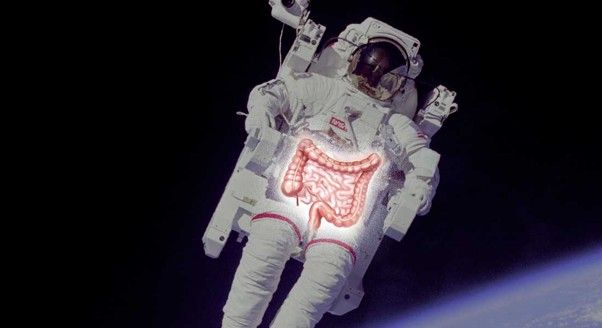
For astronauts in space, constipation is a well-known problem. But why this happens has long been unclear.
Now, a new study from the University of Copenhagen in collaboration with NASA provides an idea of what happens in the stomach without the influence of gravity. The researchers have examined blood samples from 52 astronauts who have participated in months long missions to the International Space Station. The study results identified gastrointestinal changes that occur shortly after the astronauts leave Earth and gravity behind.
"We see changes in astronauts’ blood samples that indicate that the gut bacteria begin to ferment protein to a greater extent than usual within weeks after the astronauts arrive in space, and this change continues until they are back on Earth," says joint first author and associate professor at the Department of Nutrition, Exercise and Sports, Giorgia La Barbera.
Protein fermentation is when gut bacteria begin to break down protein instead of fiber because the fiber in the diet has been used up. This is not abnormal, and it also happens to many people on Earth.
"The lack of gravity in space probably causes food to move more slowly through the intestine, and this fits with the fact that we are seeing signs of increased protein fermentation. This may also help explain constipation in astronauts," says co-author of the article Henrik Roager, who is also an associate professor at the Department of Nutrition, Exercise and Sports.
The intestines are connected to the brain
These findings were part of an experiment to analyse astronauts’ blood metabolites, which are small molecules in the circulation, revealing how the body's metabolism works. Metabolites can be used as clues to many aspects of human health, including providing information about what you have eaten or how the intestines are functioning.
These findings are important because changes in the gut not only affect digestion but can have consequences for the rest of the body – including the brain.
"We know that products of protein fermentation is often associated with negative health consequences, such as kidney damage, potential effects on mood or reduced ability to focus, among others," says Lars Ove Dragsted, senior author of the study and professor at the Department of Nutrition, Exercise and Sports.
Longer journeys and bedridden patients
With plans to send crews on extended space missions to the Moon and beyond, the researchers point out that the current findings may be important.
“When we plan for longer journeys in space – for example to Mars countermeasures may be needed to mitigate negative effects of space travel on the intestines”, says Giorgia La Barbera.
"Our findings can inform potential interventions – either directly through increasing dietary fiber, supplementation with prebiotics or other types of treatments that promote peristalsis and decrease gut transit time. This would help reduce protein fermentation and thus provide a healthy gut environment and avoid negative health consequences," adds Henrik Roager.
The authors point out that the research is not only relevant for space travelers, but there are also implications here on Earth.
"You can use this knowledge to help bedridden patients. They also experience constipation and likely also have increased protein fermentation that may aggerate health conditions," concludes Lars Ove Dragsted, senior author of the paper.
***
Fact box: What is protein fermentation?
Protein fermentation is a process in the gut in which bacteria begin to break down protein when they no longer have fiber available.
This typically happens when food stays in the intestine for a longer period of time – even when you do not feel constipated.
When the bacteria break down protein, they form various metabolites that can be absorbed into the blood and transported around the body.
These metabolites can affect the brain through the so-called gut-brain axis, where the gut and brain communicate.
Research has shown that metabolites from protein fermentation can be associated with effects on the brain – including in relation to anxiety and reduced ability to focus.
***
Fact box 2: Surprisingly clear results
Studies of blood metabolites are often difficult to interpret given a number of factors, including variability in findings between individuals. The nature of the spaceflight research helped to reduce that variability, and increase confidence in the findings.
"The samples we have analyzed come from a total of 52 different astronauts, on different missions and across many years. This is very different from how you normally do a study. So, it is quite impressive that our method has been able to show so clearly that there is consistently more protein fermentation," says joint first author and assistant professor Jan Stanstrup.
***
Fact box 3: About the study
The authors investigated how human metabolism changes during space travel. They measured metabolites in the blood and found that increased protein fermentation occurs in the intestines when astronauts leave Earth and gravity. The blood tests also showed minor changes related to fish and caffeine intake. The researchers have used a so-called non-targeted method, where they do not look for specific substances in advance, but instead analyse all metabolites in the blood to see which ones change.
The blood samples were available from three studies conducted on the International Space Station. The availability of small amounts of blood being available allowed for these extended analyses, providing additional scientific information from these studies. The collaboration of scientists at the University of Copenhagen and NASA is just one more example of the power of international cooperation embodied by the ISS.
The study was conducted in collaboration with NASA and the following authors from there have contributed to the study: Sara R. Zwart and Scott M. Smith. The following authors from the University of Copenhagen have contributed to the study: Giorgia La Barbera, Jan Stanstrup, Henrik M. Roager and Lars Ove Dragsted.
Nøgleord
Kontakter
Lars Ove DragstedProfessor, Department of Nutrition, Exercise and Sports
Tlf:+45 24 66 66 94ldra@nexs.ku.dkJan StanstrupAssistant Professor, Department of Nutrition, Exercise and Sports
Tlf:+45 35 33 28 59jst@nexs.ku.dkGiorgia La BarberaAssociate Professor, Department of Nutrition, Exercise and Sports
Tlf:+45 35 32 41 98glb@nexs.ku.dkAmalie Viktoria GammelgaardKU Kommunikation, Presse
Tlf:93 51 60 67amalie@adm.ku.dkLinks
About the University of Copenhagen
The University of Copenhagen was founded in 1479 and today has 37,000 students and 10,000 employees – of whom more than 5,000 are researchers – and revenues of DKK 11.3 billion.
10 Nobel Prizes have been awarded to researchers at the University.
Følg pressemeddelelser fra Københavns Universitet
Skriv dig op her, og modtag pressemeddelelser på e-mail. Indtast din e-mail, klik på abonner, og følg instruktionerne i den udsendte e-mail.
Flere pressemeddelelser fra Københavns Universitet
Astronauters maver går i stå i rummet – blodprøver giver nyt svar17.8.2026 06:00:00 CEST | Pressemeddelelse
Alt er anderledes i rummet – også hvordan tarmene fungerer. Forstoppelse er en kendt bivirkning ved rumfart, men indtil nu har vi vidst utroligt lidt om, hvorfor det sker. Nu har forskere fra Københavns Universitet i et samarbejde med NASA undersøgt blod fra astronauter og har et bud på, hvorfor tarmene går i stå. Det kan være nyttig viden både for astronauter og for patienter på Jorden.
Psykolog: Kapitalismen har tre mulige fremtider13.8.2026 06:30:00 CEST | Pressemeddelelse
I en ny bog kortlægger lektor i psykologi, Séamus Power, tre realistiske scenarier for verdensøkonomiens fremtid – fra eskalerende ulighed til mere retfærdige former for kapitalisme.
Nybrud i usædvanlig galakse kan bane vejen for at forstå mørkt stof12.8.2026 17:00:00 CEST | Pressemeddelelse
For første gang har forskere opdaget en stjernestrøm fra en kuglehob i en galakse uden for Mælkevejen – nemlig i en såkaldt ultra-diffus galakse. Opdagelsen åbner nye muligheder for at undersøge mørkt stof, som er et af moderne astrofysiks største uløste mysterier. Fundet er gjort af forskere fra Københavns Universitet og er netop udgivet i Nature.
Breakthrough in unusual galaxy may help unravel the mystery of dark matter12.8.2026 17:00:00 CEST | Pressemeddelelse
For the first time, researchers have discovered a globular cluster stellar stream in a galaxy beyond the Milky Way – specifically in an ultra-diffuse galaxy. The discovery opens up new possibilities for studying dark matter, one of the greatest unsolved mysteries in modern astrophysics. The finding was made by researchers from the University of Copenhagen and has just been published in Nature.
Forskere kiggede på 80.000 danske diabetikeres medicin: Kobler regelmæssigt brug til bedre hjertesundhed7.8.2026 08:45:00 CEST | Pressemeddelelse
Voksne med type 2-diabetes, som ikke tager deres medicin konsekvent, har en 27 procent højere risiko for hjertesygdomme, viser nyt studie. Effekten er endnu stærkere blandt yngre patienter.
I vores nyhedsrum kan du læse alle vores pressemeddelelser, tilgå materiale i form af billeder og dokumenter samt finde vores kontaktoplysninger.
Besøg vores nyhedsrum