
From flat moss to forests and flowers: New discovery may explain how plants conquered land
2.6.2026 06:00:00 CEST | Københavns Universitet | Pressemeddelelse
Researchers from the University of Copenhagen have identified a previously unknown protein that may help explain how plants managed to colonize land more than 400 million years ago. The protein was studied in moss, and the new findings contribute to our understanding of plant evolution and life on Earth.
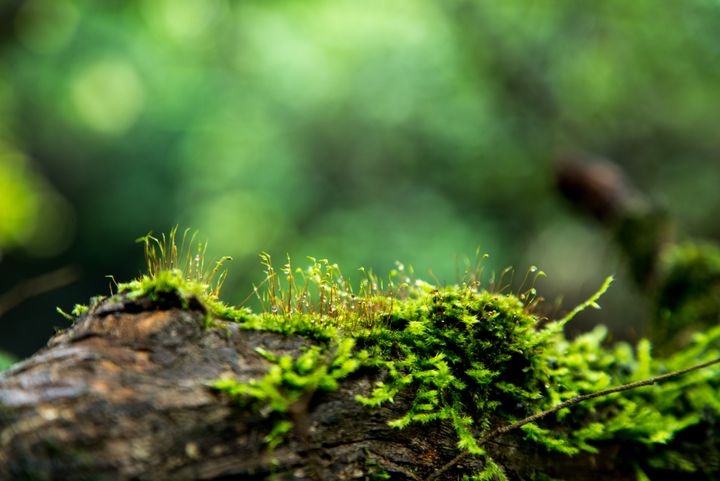
If plants had never learned to grow in multiple directions, our world would look very different. No trees, flowers or other complex plants – and therefore no animals or humans.
New research from the University of Copenhagen now suggests that a specific protein in moss may have been crucial for this key step in plant evolution – a step that made life on land possible. Around 470 million years ago, plant cells developed the ability to divide into three dimensions and grow upwards and sideways. Until then, as aquatic organisms, they had only grown in a two-dimensional flat form, limiting how complex they could evolve.
The newly identified protein likely arose through evolution by combining two previously existing proteins into a single protein. The researchers do not yet know exactly when this fusion occurred, but it may have played a role in the early transition of plants to life on land.
“We have identified a protein that has never been seen before and that has very special properties. It helps us gain a better understanding of how land plants function,” explains one of the study’s authors, Eleazar Rodriguez, Associate Professor in Functional Genomics at the Department of Biology.
If you look at a tree today, its growth depends on fundamental biological mechanisms that emerged early in plant evolution. These include how cells divide in different directions, how cells obtain energy for growth, and how proteins are regulated within the cell.
These are the mechanisms that the researchers now provide new insight into, dating back roughly 470 million years.
“Without the ability to grow in three dimensions, the landscape would look very different. We would not see trees and shrubs grow the way they do today. Life on land would likely have remained much more limited,” says Thomas Juel Ammitsøe, postdoc and co–first author of the study.
Removing the newly discovered protein
The researchers identified the previously unknown protein, named RAK1, in a moss species. The protein is a fusion between two types of proteins already known – a signaling protein (kinase) and an acetyltransferase. When present, it has a specific effect in the moss: by influencing the cell’s energy metabolism, it enables cells to divide in multiple directions and form buds and shoots.
This became clear when the researchers compared two versions of the same moss. In one, RAK1 was present; in the other, it had been removed.
“We observed that cells in the moss lacking RAK1 did not divide properly and formed defective buds. This shows that RAK1 may have been crucial for enabling the moss to grow efficiently,” explains the study’s co–first author, assistant professor Cloe De Luxan Hernandez.
Proteins are the workers of the cell
Moss represents some of the earliest land plants that began to grow on Earth. Until now, the explanation for how moss developed the ability to grow in three dimensions has focused on gene regulation – specifically that certain genes are switched on and off at the right time.
The researchers from the University of Copenhagen now build on this explanation by showing that simply turning genes on and off is not sufficient. The newly discovered RAK1 helps coordinate the metabolic balance needed for three-dimensional growth.
The discovery of RAK1 highlights that evolution does not always invent something entirely new – sometimes it simply combines existing elements in new ways.
“Our findings suggest that the transition from flat to three-dimensional plant growth depends not only on gene regulation, but also on precise metabolic control during stem cell division and bud formation,” says Eleazar Rodriguez.
The discovery therefore provides not only new knowledge about moss, but also insight into fundamental mechanisms underlying growth in living organisms.
Like human stem cells, moss stem cells depend on tightly controlled metabolism during growth and division. Our findings suggest that RAK1 is part of this regulatory system,” concludes Eleazar Rodriguez.
***
Fact box: Moss as an ideal model system
Mosses represent some of the earliest land plants on Earth and are thought to have evolved from algae-like ancestors that originally lived in water.
Moss is widely used in research to study plant development because of its relatively simple organization and evolutionary position as the first type of land plant.
In this study, the researchers used the model moss Physcomitrium patens, one of the most well-studied moss species.
***
Fact box: Difference between two-dimensional and three-dimensional growth
Moss can grow in flat structures made up of thread-like filaments, characteristic of two-dimensional growth. In this stage, cells divide in two directions, allowing the moss to spread across the surface.
When cells switch to three-dimensional growth, they begin to divide in multiple directions and form buds. These give rise to more complex structures, enabling the moss to grow upwards and form more complex organs such as leaves.
***
Fact box: How the researchers studied RAK1
The researchers identified a protein, RAK1, which is a fusion between a signaling protein (kinase) and an acetyl transferase.
They then compared moss with and without RAK1.
They found that moss lacking RAK1 was unable to divide effectively in multiple dimensions.
In contrast, the presence of RAK1 enabled cells to respond to signals and develop properly into three-dimensional structures.
RAK1 acts as a link between cellular signaling and intracellular chemical regulation, enabling cells to transition to three-dimensional growth.
***
Fact box: About the study
The results are published in the journal New Phytologist, which focuses on plant science research.
A total of 18 researchers contributed to the study.
The study was conducted as part of a broader international collaborative effort involving researchers from Austria, England, Germany and Japan.
Nøgleord
Kontakter
Thomas Juel AmmitsøePostdoc, Department of Biology
Tlf:+45 22 48 21 88thomas.j.a@bio.ku.dkresearchprofiles.ku.dk/da/persons/thomas-juel-ammitsøe/Cloe De Luxan HernandezAssistant Professor, Department of Biology
Tlf:+45 42 33 80 36cloe.deluxan@bio.ku.dkresearchprofiles.ku.dk/en/persons/lmv520-lmv520/Eleazar RodriguezAssociate Professor, Department of Biology
Tlf:+45 93 99 00 63eleazar.rodriguez@bio.ku.dkresearchprofiles.ku.dk/en/persons/eleazar-josé-rodriguez-gomes/Amalie Viktoria GammelgaardKU Kommunikation, Presse
Tlf:93 51 60 67amalie@adm.ku.dkBilleder
Links
About the University of Copenhagen
The University of Copenhagen was founded in 1479 and today has 37,000 students and 10,000 employees – of whom more than 5,000 are researchers – and revenues of DKK 11.3 billion.
10 Nobel Prizes have been awarded to researchers at the University.
Følg pressemeddelelser fra Københavns Universitet
Skriv dig op her, og modtag pressemeddelelser på e-mail. Indtast din e-mail, klik på abonner, og følg instruktionerne i den udsendte e-mail.
Flere pressemeddelelser fra Københavns Universitet
Psykolog: Kapitalismen har tre mulige fremtider13.8.2026 06:30:00 CEST | Pressemeddelelse
I en ny bog kortlægger lektor i psykologi, Séamus Power, tre realistiske scenarier for verdensøkonomiens fremtid – fra eskalerende ulighed til mere retfærdige former for kapitalisme.
Nybrud i usædvanlig galakse kan bane vejen for at forstå mørkt stof12.8.2026 17:00:00 CEST | Pressemeddelelse
For første gang har forskere opdaget en stjernestrøm fra en kuglehob i en galakse uden for Mælkevejen – nemlig i en såkaldt ultra-diffus galakse. Opdagelsen åbner nye muligheder for at undersøge mørkt stof, som er et af moderne astrofysiks største uløste mysterier. Fundet er gjort af forskere fra Københavns Universitet og er netop udgivet i Nature.
Breakthrough in unusual galaxy may help unravel the mystery of dark matter12.8.2026 17:00:00 CEST | Pressemeddelelse
For the first time, researchers have discovered a globular cluster stellar stream in a galaxy beyond the Milky Way – specifically in an ultra-diffuse galaxy. The discovery opens up new possibilities for studying dark matter, one of the greatest unsolved mysteries in modern astrophysics. The finding was made by researchers from the University of Copenhagen and has just been published in Nature.
Forskere kiggede på 80.000 danske diabetikeres medicin: Kobler regelmæssigt brug til bedre hjertesundhed7.8.2026 08:45:00 CEST | Pressemeddelelse
Voksne med type 2-diabetes, som ikke tager deres medicin konsekvent, har en 27 procent højere risiko for hjertesygdomme, viser nyt studie. Effekten er endnu stærkere blandt yngre patienter.
Forskere afslører skjult mekanisme bag medfødt hjertesygdom5.8.2026 06:05:00 CEST | Pressemeddelelse
Opdagelsen af et signal i cellernes ’antenner’ kan muligvis forklare, hvorfor fostre udvikler sygdom i både hjerte og andre organer, mener forskere fra Københavns Universitet.
I vores nyhedsrum kan du læse alle vores pressemeddelelser, tilgå materiale i form af billeder og dokumenter samt finde vores kontaktoplysninger.
Besøg vores nyhedsrum