
Less food waste: Supermarkets can save money by giving surplus food away
23.4.2026 10:03:13 CEST | Københavns Universitet | Press release
When supermarkets choose the right strategy for surplus food, they can both reduce food waste and improve their bottom line. An analysis from the University of Copenhagen shows that it is often more profitable to donate surplus food than to throw it away. In many cases, doing so leads to a direct financial gain.
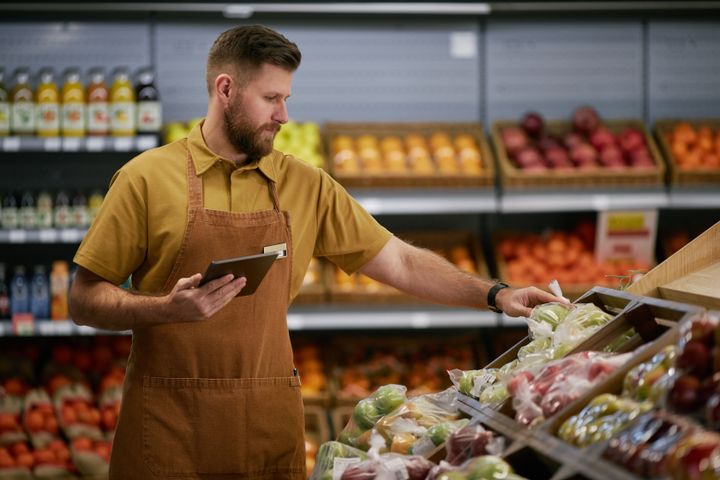
Around one-third of all food produced globally is lost or wasted each year – amounting to roughly US$1 trillion, according to FAO. A significant share of this waste occurs in the retail sector, where large volumes of edible food are discarded despite being fit for consumption.
But food waste is not only unsustainable – it is also costly for retailers. In addition to the lost revenue from unsold goods, disposing of food typically involves waste handling costs.
A new analysis from the University of Copenhagen provides detailed figures on Danish retailers’ financial incentives to sell, donate or discard surplus food. Today, at least half of all surplus food in Danish retail is thrown away.
Although a central part of the analysis is based on data from a limited number of retail chain stores, the results point in a clear direction: in most cases, it is more expensive to discard food than to give it away – and retailers can often even make money by acting earlier.
“There is a widespread perception that donating surplus food is mainly about charity. But our figures show that, in many cases, it is also the most financially sensible option for retailers once they have given up hope of selling the products,” says Jørgen Dejgård Jensen, Professor at the Department of Food and Resource Economics, University of Copenhagen and author of the study.
Early price reductions deliver the greatest returns
The analysis shows that early price reductions in-store are, on average, the most profitable strategy:
“As long as the products still have some shelf life left, it makes most sense to sell them at a discount. If retailers act in time and reduce prices a few days before the expiry date, they can often turn a potential loss into a real financial gain. In fact, a price reduction of around 15% is typically enough to ensure the products are sold,” explains Jørgen Dejgård Jensen.
According to the study data, most product groups generate a net financial gain of around €0.3–0.8 per kilo when prices are reduced, because more items are sold instead of ending up as waste.
For fresh meat, fish and processed meat products, the benefit can be even higher – in some cases exceeding €1.3 per kilo.
Only liquid dairy products and dry goods rarely generate a surplus through price reductions.
Donation costs less than disposal
When products are too close to their expiry date to be sold, the analysis shows that it is more cost-effective in most cases to donate them to organisations that redistribute food to socially and financially vulnerable people rather than discarding them.
While it typically costs retailers around €0.27–0.36 per kilo in waste and handling costs to dispose of food, donation costs on average about €0.14–0.23 per kilo. This represents a saving of approximately €0.10–0.20 per kilo for most product groups.
“From the store’s perspective, it is often about choosing the least costly solution. And in most cases, donation is cheaper than disposal. In practice, there is little difference between putting food into a container for collection, for example for biogas production, and placing it on a pallet for a food redistribution organisation to collect,” says Jørgen Dejgård Jensen.
According to the researcher, the study overall shows that retailers’ choices have major implications – both financially and for society:
“Reducing food waste and improving profitability are not conflicting goals. On the contrary, our study shows that the two can go hand in hand,” the professor concludes.
“I hope this will encourage retailers to look at whether they could manage surplus food more smartly. Some products may be thrown away simply because staff are not aware that a better option exists. Of course, this requires training so employees know what should go where.”
*
THE STUDY ALSO FINDS
- According to the analysis bread, fruit and vegetables account for 65% of total surplus food in Danish retail.
- At least half of all surplus food is discarded. Most of the remainder is sold at a reduced price, while only 0.1–0.2% is donated.
- Sales via food waste platforms such as Too Good To Go can in some cases be even more profitable than donation. This model is most established for fruit, vegetables and bread, where it can generate net revenue of up to €0.5–0.7 per kilo. The analysis suggests there may also be economic potential for such platforms in higher-value products such as meat.
- The study also shows that food donation creates significant value for recipient organisations such as shelters, drop-in centres and crisis centres. For most product groups, donated food creates a social value of around €1–5 per kilo when it reaches vulnerable recipients.
ABOUT THE STUDY
- The analysis is based on an economic model describing supermarkets’ incentives for managing surplus food. It combines industry data from 2019 with interviews with Danish retailers and food organisations, as well as publicly available accounting and price data.
- The scientific article has been published in the Journal of Food Products Marketing [https://www.tandfonline.com/doi/full/10.1080/10454446.2025.2584844]
- The study was supported by the VELUX Foundation.
FOOD WASTE IN DENMARK
According to the Danish Environmental Protection Agency, total annual food waste in Denmark is estimated at 881,062 tonnes. Of this, just under 103,906 tonnes come from the retail and wholesale sector (2023 figures).
Keywords
Contacts
Jørgen Dejgård Jensen
Professor
Department of Food and Resource Economics
University of Copenhagen
jorgen@ifro.ku.dk
+45 35 33 68 59
Maria Hornbek
Communications Consultant
UCPH Communications
University of Copenhagen
maho@adm.ku.dk
+45 22 95 42 83
Links
About the University of Copenhagen
The University of Copenhagen was founded in 1479 and today has 37,000 students and 10,000 employees – of whom more than 5,000 are researchers – and revenues of DKK 11.3 billion.
10 Nobel Prizes have been awarded to researchers at the University.
Subscribe to releases from Københavns Universitet
Subscribe to all the latest releases from Københavns Universitet by registering your e-mail address below. You can unsubscribe at any time.
Latest releases from Københavns Universitet
Historiske analyser kan hjælpe kommunerne i mål med den grønne omstilling21.4.2026 10:07:05 CEST | Pressemeddelelse
Gamle konflikter og dårlige erfaringer med tidligere naturprojekter gør det svært for kommunerne at gennemføre store klimatiltag som udtagning af lavbundsjorde, viser ny forskning fra Københavns Universitet. De historiske erfaringer bør bruges til at forbedre dialogen med borgerne, når der skal planlægges nye klimaindsatser, mener forskerne.
Mindre madspild: Butikkerne kan spare ved at give madvarer væk21.4.2026 07:16:00 CEST | Pressemeddelelse
Når supermarkeder vælger den rigtige strategi for overskudsmad, kan de både reducere madspild og forbedre bundlinjen. En analyse fra Københavns Universitet peger på, at det oftest er mere rentabelt at donere madvarer bort frem for at smide dem ud. I mange tilfælde er det direkte en økonomisk gevinst.
Stenalderfolk forsvandt: Nyt DNA-studie afslører dramatisk befolkningsskifte for 5.000 år siden20.4.2026 06:00:00 CEST | Pressemeddelelse
DNA fra flere tusinde år gamle skeletter i Frankrig afslører pest, høj dødelighed og nye sociale strukturer, og kaster lys over, hvordan Europas befolkning blev formet.
Forskere: Chatbots er partiske og bør ikke bruges til politisk rådgivning16.4.2026 14:59:57 CEST | Pressemeddelelse
Populære chatbots som ChatGPT og Gemini er ikke neutrale, og de favoriserer bestemte partier, når man spørger dem, hvem man skal stemme på. Det gør dem uegnede til rådgivning i forbindelse med et valg, mener forskere fra Københavns Universitet, som står bag en ny analyse af chatbots’ politiske bias.
Elephant genomes reveal a past of continental connectivity and a future of increasing isolation16.4.2026 11:11:37 CEST | Press release
In the largest genomic mapping of Africa's elephants, an international team of researchers shows that elephant history is defined by the ability to move across large distances and exchange genes throughout the African continent. But as the elephants’ living space is becoming increasingly patchy, the study documents the visible genetic consequences of isolation – and points to approaches that help to incorporate genomics into current and future elephant conservation.
In our pressroom you can read all our latest releases, find our press contacts, images, documents and other relevant information about us.
Visit our pressroom