
Elephant genomes reveal a past of continental connectivity and a future of increasing isolation
16.4.2026 11:11:37 CEST | Københavns Universitet | Press release
In the largest genomic mapping of Africa's elephants, an international team of researchers shows that elephant history is defined by the ability to move across large distances and exchange genes throughout the African continent. But as the elephants’ living space is becoming increasingly patchy, the study documents the visible genetic consequences of isolation – and points to approaches that help to incorporate genomics into current and future elephant conservation.
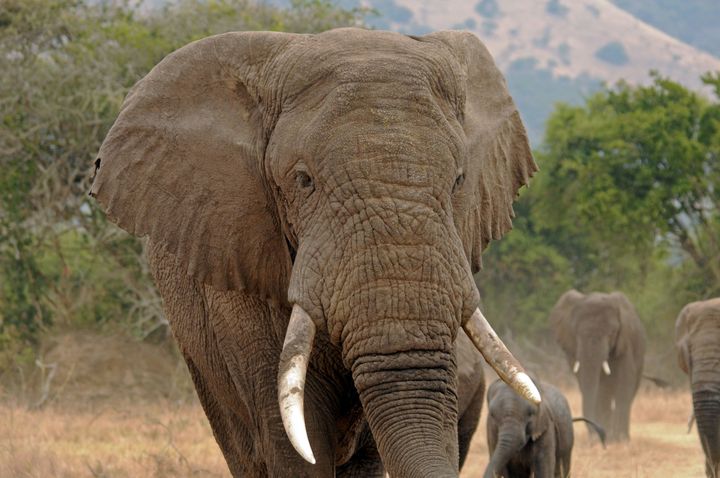
In the largest genomic study of African elephants to date, an international team of researchers analysed 232 whole genomes from both savanna and forest elephants, collected across 17 African countries. This is the first large-scale, continent-wide genetic study since African elephants were recognized as two separate species. To achieve this herculean task, the researchers used samples that have been biobanked during previous genetic research more than 30 years ago and generated high-quality genomes through the iConserve program of the biotechnology company Illumina.
The results, which are now published in Nature Communications, show genetic signs of isolation in several populations, where elephant herds have been cut off from each other due to a history of hunting, as well as growing human populations and their needs for agriculture and infrastructural developments.
"Our study shows that until recently, elephants have been connected across vast distances. This freedom of movement has created genetic robustness because the populations have intermingled. Today, the picture is different. Elephants are living in a world where space is more and more restricted and some populations are becoming isolated," says the study’s lead author, Assistant Professor Patrícia Pečnerová of the University of Copenhagen and Lund University.
Remote areas are worst affected
Two remote areas in north-eastern Africa, in Eritrea and Ethiopia, are home to elephant populations that are small in number and quite isolated. The elephants there are more than 400 kilometres away from other populations and are enclosed by human settlements and agricultural areas. Here, researchers found a high degree of inbreeding, low genetic variation, and an accumulation of mildly deleterious mutations, which make them more vulnerable to changes in the environment and diseases.
A similar, but more nuanced pattern emerges in West Africa, where high human population densities and a long history of the ivory trade have also isolated and reduced elephant populations. Contrary to expectations, savanna elephants in west-central Africa do not show the same loss of genetic variation seen in the isolated populations in Eritrea and Ethiopia. While they are similarly inbred due to past bottlenecks and isolation, the impact on genetic variation is partly masked because forest elephant genes flowed into these populations through interspecies hybridization.
Savanna and forest elephants are known to hybridize in a small number of locations where their habitats meet. Surprisingly, this study also found that even savanna elephants far from the hybrid zone carry trace amounts of forest elephant ancestry. Whether this reflects a different position of the hybrid zone in the past or forest genes being carried across the continent by the movement of elephants, remains unclear. Yet, it highlights that while genetic exchange has been fundamental within species, it also has occurred between the two African elephant species.
However, when it comes to implications for conservation, Professor Alfred Roca of the University of Illinois Urbana-Champaign, a senior author of the study, calls for caution:
“By reconstructing their genomic history, we found that savanna and forest elephants followed very different population trajectories over the last four million years, with over 85% of overall elephant genetic variation due to the differences between them. Given this history, gene flow between the species is unlikely to be beneficial, and hybrid elephants should be avoided for translocations. Among savanna elephant populations, historically high connectivity across their range limited regional differentiation. However, there were sufficient genetic differences across southern, eastern and west-central Africa to suggest that translocations across regions should be avoided.”
We must protect both landscapes and animals
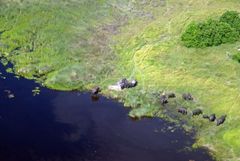
The patterns of gene flow revealed in this study are ultimately shaped by one thing: the ability of elephants to move across landscapes. Today, the positive effect of preserving elephant movement by protecting the landscape is quite evident in southern Africa in the Kavango–Zambezi Transfrontier Conservation Area – also called the KAZA region, which spans five Southern African countries and covers an area of 520,000 square kilometres in one of the world's largest nature reserves. Here, the elephants are genetically diverse because the populations are closely connected and can exchange genes.
Patrícia Pečnerová, who is also a National Geographic Explorer and a Branco Weiss Fellow, explains: "Elephants are extremely intelligent animals that can live close to humans and adapt. But one of the most important forces for their evolution is that genes can move between populations. In southern Africa, the landscape still allows movement between protected areas, and here we see that the genetic health of the elephants remains relatively intact."
Without ecological corridors and international coordination between countries and nature management authorities, even protected populations risk becoming weakened by genetic isolation. The highways of the animal kingdom are vanishing—once-open landscapes that allowed elephants to move, connect, and exchange genes are becoming increasingly fragmented. To ensure the long-term survival of elephants, we need to protect more than just the animals. We need to protect the landscapes and the connections between them.
“This study reminds us that we cannot understand or conserve elephants without knowing their history, and that they have always been in flux, especially in response to human impacts and climate change. The finding that recent and ancient hybridisation between the two species extends over such a large part of both species’ range is particularly interesting,” says co-author Chris Thouless, Director of Conservation at Save the Elephants and Director of the Elephant Crisis Fund. He adds: “The evidence of inbreeding in isolated and depleted savanna elephant populations is a matter of concern, especially since the samples on which this study is based date from before the recent period of intense poaching for ivory.”
The comprehensive genomic atlas not only provides new knowledge about the elephants' past and movements, but is also an operational tool for the authorities working to protect them. Along with making all data publicly available for future research and conservation efforts, the researchers behind the project and partners from Save the Elephants and San Diego Zoo Wildlife Alliance are developing DNA tools that can be used on site to monitor wild elephant populations.
“Our findings provide important insights into the genetic health and connectivity of elephant populations on the African continent. By identifying distinct population units and levels of gene flow, this research can guide more effective conservation strategies, including habitat management, corridor protection, and translocation decisions. In addition, genomic tools and data that we have generated can support wildlife forensics by helping to trace the origin of confiscated ivory, thereby strengthening efforts to combat illegal wildlife trade. Looking ahead, this work contributes to a growing body of knowledge that will inform conservation not only in Uganda but across Africa. By integrating genomics into conservation education and planning, we can better safeguard elephant populations for future generations, ensuring their ecological role and long-term survival in rapidly changing environments” say co-authors Charles Masembe and Vincent Muwanika, both Professors at Makerere University in Uganda.
This research was supported by the iConserve program of Illumina, Inc., the U.S. Fish and Wildlife Service African Elephant Conservation Fund, the Marie Skłodowska-Curie Actions of the European Union’s Horizon 2020 program, and other personal awards.
Main results of the study
• 232 whole genomes from elephants in 17 African countries have been analysed – the largest genomic mapping of African elephants to date.
• African forest and savanna elephants have followed different evolutionary trajectories for millions of years.
• There is both older and more recent hybridisation between the species.
• Even savanna elephants outside of the hybrid zone carry small traces of forest elephant ancestry.
• Isolated peripheral populations (e.g., Eritrea and Ethiopia) show clear signs of inbreeding, lowered genetic variation, and an increased load of mildly deleterious mutations.
• West African populations have high inbreeding due to the long history of isolation, but savanna elephants in west-central Africa have surprisingly high levels of genetic variation due to hybridisation with forest elephants.
• While differentiation among savanna elephants across southern, eastern, and north-central Africa has been limited by historical gene flow, the differences that do exist suggest that translocations across regions should be avoided.
• Large contiguous natural areas in southern Africa show that the genetic health of the populations is maintained by the high genetic connectivity.
• Forest elephants have higher genetic variation with fewer potentially harmful mutations than savanna elephants, giving hope for their short-term survival despite their ongoing steep decline.
• The genomic resources will enable monitoring of elephant populations in the field
Keywords
Contacts
Patrícia Chrzanová Pečnerová
Assistant Professor
Department of Biology
University of Copenhagen
patricia.pecnerova@bio.ku.dk
+45 52 24 60 57
Alfred L. Roca
Professor
Department of Animal Sciences
University of Illinois Urbana-Champaign
roca@illinois.edu
+1 217 244 8853
Maria Hornbek
Communications Consultant
UCPH Communication
University of Copenhagen
maho@adm.ku.dk
+45 22 95 42 83
Images
Links
Subscribe to releases from Københavns Universitet
Subscribe to all the latest releases from Københavns Universitet by registering your e-mail address below. You can unsubscribe at any time.
Latest releases from Københavns Universitet
Engang var Afrikas elefanter forbundne – stort studie afslører hvordan isolation har skadet de grå kæmper16.4.2026 11:01:00 CEST | Pressemeddelelse
I den største genetiske kortlægning af Afrikas elefanter viser et internationalt forskerhold, at elefanternes historie er præget af evnen til at bevæge sig over store afstande og udveksle gener på tværs af det afrikanske kontinent. Men da elefanternes levesteder bliver stadig mere fragmenterede, dokumenterer undersøgelsen de synlige genetiske konsekvenser af isolationen og peger på måder, der kan bidrage til den fremtidige bevarelse af elefanter.
Hjernescanning kan afsløre risikoen for psykiatrisk indlæggelse14.4.2026 06:00:00 CEST | Pressemeddelelse
Hjernens reaktion på negative følelser kan være med til at forudsige, hvilke personer med depression og bipolar lidelse, der har størst risiko for at blive indlagt, viser nyt studie fra Københavns Universitet.
Religiøs lovgivning øger religiøsitet og konservatisme i USA13.4.2026 14:40:34 CEST | Pressemeddelelse
Borgere i amerikanske stater, der indfører lovgivning til fordel for religiøse organisationer, begynder at gå mere i kirke, og deres holdninger til spørgsmål om abort og homoseksuelles rettigheder bliver mere konservative. Det viser et nyt studie fra Københavns Universitet.
Søvnforskere slår alarm: Stigende nattemperaturer truer søvnen for milliarder af mennesker9.4.2026 05:41:34 CEST | Pressemeddelelse
Varmere nætter forstyrrer vores søvn i alarmerende grad, og problemet ser ud til at tage til i styrke. En international gruppe af forskere foreslår en global arbejdsgruppe, der kan overvåge og beskytte menneskehedens søvn i en ophedet verden.
Fisk på antidepressiver: Forskere udvikler nyt våben mod giftige stoffer i spildevandet8.4.2026 06:00:00 CEST | Pressemeddelelse
Giftige kemikalier fra lægemidler som antidepressiv medicin slipper hver dag igennem spildevandet og ud i vandmiljøet. Et nyt forskningsprojekt fra Københavns Universitet skal nu for første gang give overblik over miljøfremmede stoffer i spildevandet, og hvordan man mest effektivt fjerner hver enkelt af dem.
In our pressroom you can read all our latest releases, find our press contacts, images, documents and other relevant information about us.
Visit our pressroom