When Deterrence Fails: Nuclear Security and the Collapse of Global Restraint in the Face of Russian Aggression on Ukraine
17.12.2025 08:00:00 CET | Ukraine House in Denmark | Pressemeddelelse
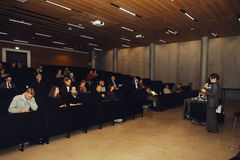
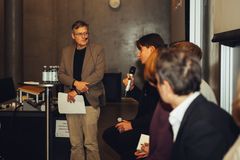
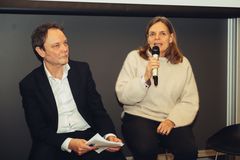
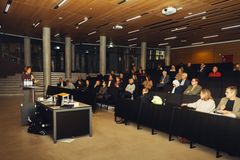
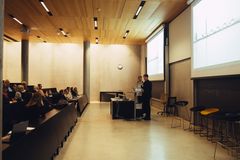
On December 5, Ukraine House in Denmark, together with the Danish Foreign Policy Society, organized a panel discussion on nuclear security and its implications in the face of the Russian war against Ukraine and the free world. Leading experts examined how Ukraine’s denuclearization, Russia’s nuclear coercion, and the occupation of the Zaporizhzhia Nuclear Power Plant (ZNPP) have transformed nuclear risk from an abstract threat into a daily geopolitical reality with global consequences.
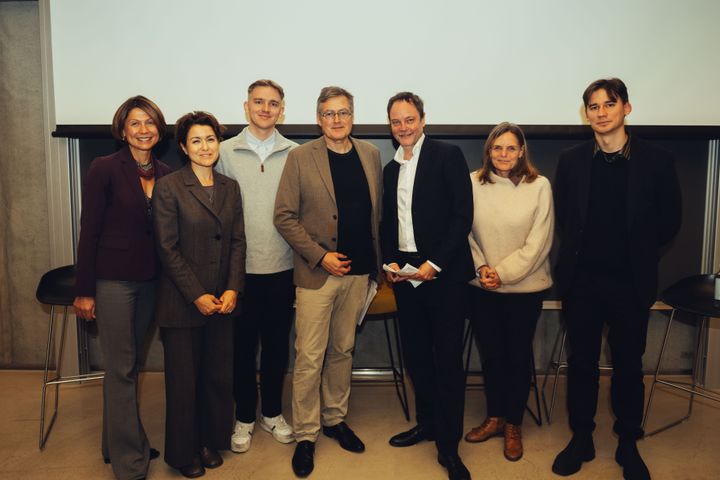
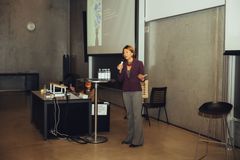
The discussion was opened by Dr. Mariana Budjeryn, Senior Research Associate at Harvard’s Belfer Center and MIT's Center for Nuclear Security, author of "Inheriting the Bomb: The Collapse of the USSR and the Nuclear Disarmament of Ukraine", who introduced the historical foundations of Ukraine’s nuclear disarmament. Budjeryn revisited the origins of Ukraine’s denuclearization through the 1994 Budapest Memorandum, describing the circumstances, like the Chornobyl catastrophe, that led Ukrainians to choose a nuclear-free state in the constitution after the renewal of Ukraine's independence.
She placed Ukraine’s decision within the broader framework of postwar nuclear deterrence doctrine, which shaped Western security thinking during and after the Cold War. After the collapse of the Soviet Union, thousands of nuclear warheads were dispersed across newly independent post-Soviet republics. For the West, rapid denuclearization of these territories became a top priority amid fears of political instability.
Mariana Budjeryn stressed that Ukraine did not receive legally binding security guarantees, but only “assurances” — political promises of concern in case of aggression. She believes that we can confidently say that extended nuclear deterrence toward Ukraine has failed. Yet she emphasized that Ukraine was never truly placed under a Western security umbrella alike through troop deployments or firm military commitments. Moreover, U.S. strategic priorities later shifted toward counterterrorism, while long-term deterrence failures were not anticipated. This strategic neglect, she argued, is precisely why Ukraine’s denuclearization now carries global consequences.
Later in the discussion, Mariana Budjeryn addressed the broader nuclear order, warning of a dangerous erosion of international restraint mechanisms. “Thousands of people will never be ‘untortured,’ but the core idea of nuclear doctrine was to prevent war from happening in the first place,” she said. Referring to arms control treaties, she highlighted the weakening of institutional safeguards since 1972, while emphasizing that the Nuclear Non-Proliferation Treaty of 1968 remains the last comprehensive global framework of responsibility.
“How is it that you get to base your security on nuclear deterrence, but we have to forego this most powerful weapon in the world? So these states [with nuclear arsenal] are constrained; they have responsibilities. They have to pursue negotiations on Article VI, pursue negotiations in the big, towards the cessation of our race, and a total and complete disarmament. Now, who is the responsible possessor of nuclear weapons?”
That last question is not only a call on Russia’s abusive nuclear use and blackmail rhetoric, but also a broader perspective on nuclear responsibility. By giving away its nuclear arsenal, Ukraine believed in the openness and guarantees of both Russia and the West. Now, paying the price for this naivety, Ukraine still faces the asymmetric nature of current deterrence:
“Individually, NATO members have been very generous to Ukraine as a matter of charity to a country that's in trouble … The West has so many resources, it's a military powerhouse, and to think that with all those resources they couldn't give Ukraine what Ukraine needed… So I think the paradigm has not shifted in time. And I wonder whether it's not too late now.” — highlighted Dr. Mariana Budjeryn
From Power Plant to Military Base: Russia’s Occupation of Zaporizhzhia NPP
Following Budjeryn’s historical framing, Denys Sultanhaliiev, Senior Researcher at Truth Hounds, and Yuriy Uhryn, Legal Counsel at Truth Hound, presented the findings of their investigation “Seizing Power: Occupation, Torture, and Nuclear Safety Breaches at the Zaporizhzhia Nuclear Power Plant”. They outlined four key channels of Rosatom’s influence in occupied Enerhodar: administrative appointments, education and ideological control, financing of the city budget, and direct control over the ZNPP.
Truth Hounds, an organization operating since 2014 that documents and investigates international crimes during the armed conflicts in Ukraine and other regions of Eastern Europe, the Caucasus, and Central Asia, reported that the plant is being used as a military facility, including the storage of military vehicles inside turbine halls. At the same time, Ukrainian nuclear workers are subjected to coercion, abductions, and torture to force compliance. One documented testimony describes a technician abducted after a night shift, beaten, electrocuted, and threatened — and then ordered to return to work two hours later.
They also emphasized the legal gravity of these crimes and described a systematic and widespread pattern: repeated abductions, a network of detention sites, consistent methods of physical and psychological torture, and identical long-term consequences for victims.
According to Truth Hounds’ estimates, over 2,000 civilians from Enerhodar have been unlawfully detained since 2022. The city’s population has collapsed from more than 52,000 residents in January 2022 to fewer than 9,000 by 2025. Meanwhile, Russia’s occupation has undermined all seven indispensable pillars of nuclear safety, from staff working conditions and off-site power supply to emergency response and radiation monitoring.
Truth Hounds concluded with an international call for:
-
sanctions against Rosatom,
-
its exclusion from international nuclear governance frameworks,
-
criminal accountability for responsible officials,
-
and urgent pressure on Russia to release all unlawfully detained civilians.
Nuclear Fear, European Responsibility, and the Return of Deterrence Politics
Reflecting on the broader European dimension of nuclear risk, Charlotte Flindt Pedersen, Director of the Danish Foreign Policy Society, underlined how difficult it remains to openly discuss nuclear threats within Western societies.
“[In Europe] we're very afraid to talk about the whole issue of nuclear [energy]. Because people get terrified… It's really a very terrifying thing, but at the same time, we need to talk about it. Because otherwise we can't go there. And we haven't started yet. We're just afraid.”
Addressing the risks of escalation, she noted that there has been direct communication from the U.S. administration to Russia regarding the consequences of any nuclear use. “Russia is using nuclear threats as blackmail,” she explained, “but I am convinced they are also afraid of the consequences themselves. There is constant monitoring, and I do not believe nuclear weapons will be used.”
From a technical and strategic standpoint, Matias Benedict Seidelin, Senior Defence and Security Correspondent at OLFI, explained that recent claims about Russian nuclear testing — including the so-called Poseidon tests — were not nuclear testing, but rather actual testing of a nuclear weapon. However, he believes that currently Russia “does not have the capacity to conduct a nuclear test again in a long while.”
Despite these technical limitations, Seidelin stressed that nuclear weapons are being used politically. So that coming back to the discussion about failed deterrence on Ukraine, Russian coercion politics imposing threats on Western supplies did, in contrast, work pretty well, as Dr. Budjeryn noted. Several speakers warned that the world may be entering a new nuclear age.
Dr. Mariana Budjeryn pointed to the erosion of global restraint mechanisms, while Charlotte Flindt Pedersen highlighted that countries such as South Korea and Taiwan are increasingly debating nuclear armament — a sign that trust in the non-proliferation regime is weakening under great-power coercion. And yet, “the more fingers there are on nuclear weapons, the more dangerous it is for all of us... This conversation is to raise awareness. This generation has grown up with very little [awareness about the nuclear]. We know about the climate crisis, we know about AI, we know about all these other dangers, but nuclear weapons are still with us. And they are capable, there are enough of them to wipe out this civilization as we know.” – Dr. Budjeryn reminded us.
The New Old Nuclear: Generational Memory and Chornobyl
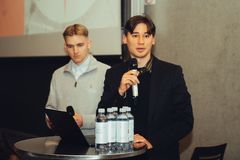
In the closing remarks, moderator Michael Jarlner turned to the younger Truth Hounds speakers and asked how it feels to belong to a generation that may once again face nuclear catastrophe directly.
The answer was quite simple but striking: the young generation of Ukrainians grew up knowing very well what Chornobyl was about, and yet they don’t perceive it emotionally and dramatically, because the worst has already happened. And yet, Russia constantly reminds Ukraine, for example, through sending a drone to shoot at the cover of Chornobyl’s reactor 4, that they could always use nuclear energy against humanity.
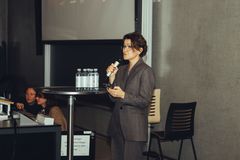
Speaking from a generation that witnessed Chornobyl life, Ukraine House in Denmark Chairperson Nataliia Popovych reflected on how deeply nuclear trauma is embedded in the Ukrainian collective memory, reiterating what the young Ukrainian speakers talked about. “Ukrainians feel resilient,” she said, “but at this time, resilience is facing reality. After Chornobyl, a lot of people felt like: we have seen this before. Electrocution and all kinds of torture are not new for Ukrainians. All these things we've felt before.” She emphasized how profoundly the war is shaping her generation:
“Unfortunately, after the Second World War, Ukrainians were recognizing their relatives after the Soviet army was leaving some towns, by the color of their hair, because everything else was tortured and killed to the extent that it was possible to recognize. So all of these things have happened before. And if we do not want to pass the problem of Russia to our children, to our grandchildren, to deal with it, we need to make it end with us. And that will take a lot of solidarity to whatever mechanisms that we have left, and it will take some optimism.”
Real solidarity and optimism rooted in political action and engagement are a must to help Ukraine regain its positionality in the face of Russia. Ukraine’s denuclearization, once framed as a triumph of non-proliferation, has become a case study in deterrence failure. So today, it is a joint responsibility to ensure that Europe is ready to stand against a nuclear-armed aggressor.
We thank all speakers for their insights on this critical matter of nuclear security and the unprecedented Russian abuse of nuclear power and nuclear threats. As a European community, acting together, we can ensure that our children grow up without fear of nuclear catastrophe.
Nøgleord
Billeder


Følg pressemeddelelser fra Ukraine House in Denmark
Skriv dig op her, og modtag pressemeddelelser på e-mail. Indtast din e-mail, klik på abonner, og følg instruktionerne i den udsendte e-mail.
Flere pressemeddelelser fra Ukraine House in Denmark
Danmarks første udstilling om ukrainsk naiv kunst viser kulturens rolle i en tid med krig20.8.2026 08:00:00 CEST | Pressemeddelelse
Den 21. august åbner Ukraine House in Denmark NAÏV: Ukrainian Visions – den første udstilling i Danmark dedikeret til ukrainsk naiv kunst. Mens Ukraine ofte bliver betragtet gennem krigens prisme, retter udstillingen blikket mod en kunstnerisk tradition, der gennem generationer har været med til at udtrykke, bevare og forsvare ukrainsk kultur og identitet, og som har fået fornyet betydning i en tid, hvor Ukraines kulturarv igen er under pres.
Kyiv til København: Velorukh. Cycling in Ukraine fortsætter sin europæiske turné med en boglancering i Ukraine House in Denmark29.7.2026 16:07:44 CEST | Pressemeddelelse
København, den 7. august 2026. Efter præsentationer i Berlin, Barcelona, Prag og på Mallorca kommer den engelsksprogede udgave af Velorukh. Cycling in Ukraine nu til København som led i bogens europæiske turné. Arrangementet finder sted i Ukraine House in Denmark, en af Skandinaviens førende platforme for formidling af moderne ukrainsk kultur til et internationalt publikum.
Ukraine House in Denmark and Texty.org.ua Present “Infographics of the Russian-Ukrainian War” Pop-Up Exhibition26.6.2026 13:41:10 CEST | Pressemeddelelse
From June 26 to August 14, Ukraine House in Denmark and the Ukrainian data journalism outlet Texty.org.ua will display a pop-up exhibition “Infographics of the Russian-Ukrainian War” exploring Russia's war against Ukraine through data and visual storytelling.
Ukraine House in Denmark Presents "Form in the Making" Exhibition at 3daysofdesign8.6.2026 14:20:22 CEST | Pressemeddelelse
For the third year in a row, Ukraine House in Denmark joins 3daysofdesign, Copenhagen’s biggest design festival on June 10-12. This year, together with the Ukrainian Association of Furniture Manufacturers, the Embassy of Ukraine in Denmark, and curators Anait Danielian and Larysa Tsybina, we present “Form in the Making” – a collective exhibition exploring how contemporary Ukrainian design is made today.
Post Release — Different “Liberation” Experiences after WWII: Lessons for the Present14.5.2026 14:00:09 CEST | Pressemeddelelse
In connection with Europe Day, Ukraine House in Denmark, in cooperation with the European Commission Representation in Denmark, hosted a public conversation on the many meanings of “liberation” after the Second World War. The event brought together historians and public intellectuals from Ukrainian, Crimean Tatar, Danish, and broader European contexts to reflect on how the end of WWII was remembered, silenced, distorted, and politically used across different societies.
I vores nyhedsrum kan du læse alle vores pressemeddelelser, tilgå materiale i form af billeder og dokumenter samt finde vores kontaktoplysninger.
Besøg vores nyhedsrum