Ukraine House in Denmark Hosts Debate on the End of Russian Colonialism
1.10.2025 08:00:00 CEST | Ukraine House in Denmark | Pressemeddelelse
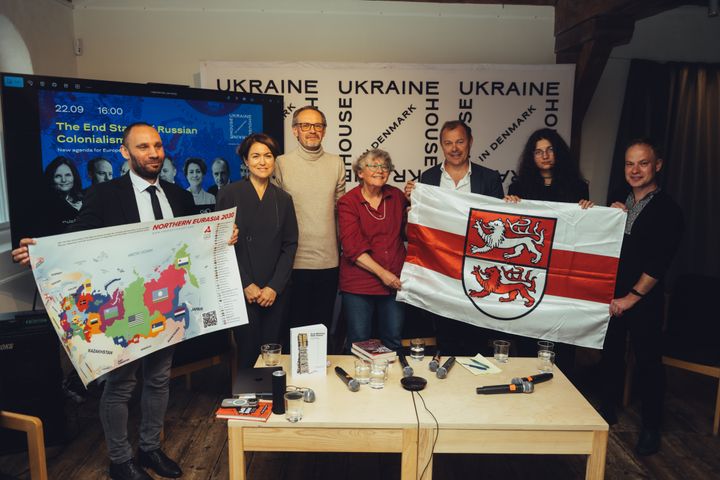
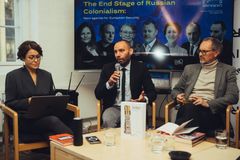
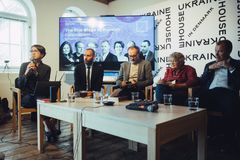
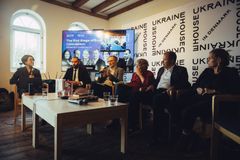
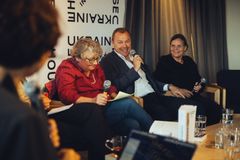
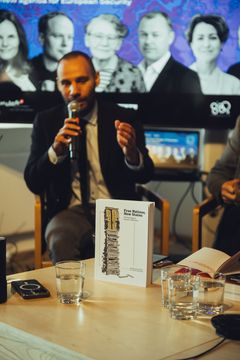
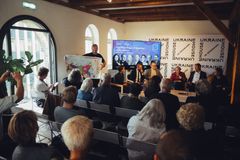
Copenhagen, September 22, 2025 — Ukraine House in Denmark, together with the Danish Foreign Policy Society and the Free Nations of Post-Russia Forum, convened a high-level discussion on the end of Russian colonialism. The event brought together international experts, policymakers, and civil society leaders to examine Russia’s imperial decline and the urgent need to prepare for its consequences.
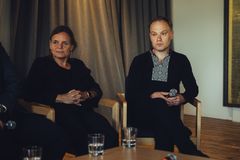
Moderated by Nataliia Popovych, Chairperson of Ukraine House in Denmark, the panel featured Charlotte Flindt Pedersen (Danish Foreign Policy Society), Jacob Kaarsbo (Intelligence and Security Analyst), Juraj Mesík (Slovak Foreign Policy Association), Yaroslav Yurchyshyn (Member of the Ukrainian Parliament), Oleg Magaletskyi (Free Nations of Post-Russia Forum), and Mette Skak (Scholar on Russian foreign and security policy).
Giving Voice to Oppressed Nations
The discussion opened with Oleg Magaletskyi, who laid out the mission of the Free Nations of Post-Russia Forum. He stressed that Russia remains the last colonial empire in Europe, and that this reality is still poorly understood, even in the heart of the West.
Magaletskyi described the forum’s dual focus on education and advocacy: exposing Russia’s colonial nature and amplifying the voices of captive nations such as the peoples of Sakha, Buryatia, Tatarstan, Bashkortostan, and many others. He illustrated the sheer scale of Moscow’s domination by comparing the distance from Moscow to Yakutsk with the distance from Lisbon to Luanda or Brussels to Kinshasa — underlining that this is not just geography, but colonial management:
“People in these regions are treated as second-class citizens. Moscow takes their people to die in Ukraine and seizes their resources to fuel military aggression. Ukraine knows this system well—we were used as a colonial resource in imperial wars. That is why the war that started in Moscow can only end in Moscow.”
Building bridges among captive nations and promoting controlled, nonviolent decolonization is the only way to prevent new cycles of aggression and chaos.
The Inevitability of Collapse and the End of Illusions
Picking up this theme, Juraj Mesík reminded the audience that history shows all empires eventually collapse. However, he warned that Europe risks repeating the same mistakes it made at the end of the Cold War when it was absolutely unprepared for the collapse of the Soviet Union. He expressed concern that Europe today finds itself in a similar mindset, unable or unwilling to confront the reality of Russia’s fragility. Empires always disintegrate, however, the real danger is not collapse itself but Europe’s refusal to prepare for it:
“We are so mesmerized by the fact that Russia is territorially large, that it can send hundreds of thousands of people to die without resistance because they are de facto slaves, and that it still has economic resources which are shrinking very fast. Nevertheless, we continue to believe that they are economically powerful. We have all kinds of preconcepts in our minds that we believe and we are not willing to consider the reality that it is all disappearing.”
According to Mesík, Russia today is held together by only four fragile forces. The first is coercion: the military and the police that maintain order through fear. The second is energy exports: revenues from oil and natural gas, particularly the money that flowed from Europe until 2023. The third is ideology: the chauvinistic notion of the “great Russian nation” that justifies empire and aggression. And the fourth is fear: the nuclear threat, systematically and methodically used to paralyze Western decision-making.
A central theme of the Copenhagen debate was the urgent need for Europe to shed illusions about Russia and to recognize the scale of the threat it poses. For too long, Western policymakers have oscillated between fear of escalation and wishful thinking about possible resets. Mette Skak highlighted the dangers of falling prey to such illusions, arguing that Denmark’s approach should be rooted in realism:
“In Denmark we do not pursue policies that are victims of illusions about Russia. And generally speaking, I believe that the fear of Russia using its nuclear weapons is vanishing. People are realizing that the more Moscow repeats these threats, the more they become victims of inflation. For a time, there was even the idea of pursuing a so-called reverse Nixon policy—to tempt Putin and Russia to side with the United States against China. But this is really an illusion. It is not going to happen, because Putin and Xi Jinping are very much the same kind of dictators.”
The Missing Theory of Victory and Europe’s Strategic Paralysis
A central weakness highlighted during the debate was Europe’s lack of a coherent strategy for dealing with Russia’s aggression. For more than three years, allies have repeated the slogan of supporting Ukraine “for as long as it takes,” but panelists stressed that this is not a strategy—it is a placeholder that conceals the absence of a genuine plan for victory. Without clarity about the end goal and the means of achieving it, Europe risks prolonging the war, draining Ukrainian human resources, and eroding the European public's resolve.
Jacob Kaarsbo was outspoken in his criticism of this approach:
“After two and a half years in Ukraine, we have never had a theory of victory. It has been ‘as long as it takes’ — and that's led us nowhere, and that's why this [war] is [still] going on.”
He argued that European security policies have long been shaped by American leadership and the protection of the US nuclear umbrella, leaving Europe without the habit of independent strategic thinking. Therefore, Europe must grow more assertive in its decisions and actions.
Charlotte Flindt Pedersen agreed that Europe’s greatest weakness lies in the absence of strategic foresight. She emphasized that Russia cannot be contained gradually or deterred by attrition alone:
“We have not even fully perceived the extent of Russia’s threat. You never stop the Soviet Union gradually — you stop it forcefully. Instead of a war of attrition, we should have said ‘Enough is enough.” What is missing, she argued, is a collective European mindset that sees Russia clearly for what it is: a spoiler with global reach:
“What is missing in Europe is a shared understanding of Russia as a spoiler and a common plan with scenarios for possible outcomes. One of the things that Denmark has understood, or the current prime minister has understood, is that we actually need to meet force with force, and even sometimes be the aggressive part. That's a very scary thing for us because we've had these many years of peace.”
Taken together, the speakers’ interventions revealed a profound strategic paralysis at the heart of European policy: a failure to define victory, a lack of confidence in Europe’s own ability to act, and a reluctance to confront Russia as the systemic threat that it is. Overcoming this paralysis, they argued, will be the decisive factor in whether Europe seizes the initiative to end Russian imperialism once and for all.
Juraj Mesík emphasized that Russia’s imperial retreat has always followed military defeat — from losing Alaska after the Crimean War to the independence of Finland and Poland after World War I. He argued that the same logic applies today; the precondition for Russia’s collapse is a clear defeat in Ukraine:
“At the moment when Russia is militarily defeated, the most fundamental force that keeps it together, which is this military and coercive apparatus, will disappear or will be significantly weakened, and that will open possibilities for both national emancipation movements [...] and also regional separatism.”
Democracy Through Decolonization
The panel also underscored that Russia cannot be reformed into a democracy in its current form. Its size, social structure, and authoritarian traditions make it resistant to democratic change. Instead, speakers argued, democracy in the post-Russian space will only emerge through decolonization and the empowerment of oppressed nations.
Yaroslav Yurchyshyn highlighted that ethnic minorities make up at least 30% of Russia’s population, yet their voices remain absent from global discussions:
“When our European colleagues say, ‘we need to hear Russia,’ I reply: at least 30% of Russia’s population is made up of ethnic minorities. Why are their voices not included in any global agenda? That is why we created a special commission, invited experts, and set a goal—not to replace Russia or its indigenous peoples, not to speak for them, but to ensure that their voices are finally heard. At the same time, we must be clear about human rights. Russia has destroyed this concept both in Ukraine and in all the territories it occupies. Yet even so, there is a possibility of democratization in the post-Russian space. The best path forward is decentralization—or what we call ‘refederalization’—because although Russia calls itself a federation, no region truly has any rights.”
Juraj Mesík added that Europe must reject the idea that Russia can ever evolve into a democracy in its current form, pointing out that it lacks the social, institutional, and cultural preconditions for such a transformation. Instead, he warned that Russia will remain aligned with China and other authoritarian powers. For him, the West must give up illusions about “good Russians” and instead engage directly with representatives of oppressed nations within the Russian Federation, who alone have the legitimacy to build democratic futures once Moscow’s grip ends.
The message was clear: lasting democracy will come not from Moscow, but from the emancipation of the many nations that have long been suppressed under Russian rule.
Key Takeaways
-
Collapse is inevitable: Russia’s imperial retreat follows military defeat; Ukraine’s victory will trigger it.
-
Illusions must end: Resets, “good Russians,” and nuclear fear only delay action.
-
Europe needs a strategy: “As long as it takes” is not a plan; a theory of victory is essential.
-
Europe must grow independent: Reliance on the US is risky; Europe must build its own security architecture.
-
Democracy requires decolonization: A democratic Russia in its current form is impossible; captive nations must be empowered.
-
Voices of nations matter: Non-Russian groups make up a third of the population and must be included in shaping post-Russia futures.
-
Preparation prevents chaos: Without planning, collapse could resemble Yugoslavia rather than Czechoslovakia.
-
Unity is decisive: Democracies must be more united than authoritarian regimes if they are to prevail.
Ukraine House in Denmark thanks all speakers and partners for their contributions to this panel discussion. Their perspectives underline that preparing for the end of Russian colonialism is a geopolitical and moral necessity. The conversation must continue — in Copenhagen and across Europe — to ensure that when the empire collapses, the free world is ready to support justice, stability and the voices of liberated nations.
Nøgleord
Billeder
Følg pressemeddelelser fra Ukraine House in Denmark
Skriv dig op her, og modtag pressemeddelelser på e-mail. Indtast din e-mail, klik på abonner, og følg instruktionerne i den udsendte e-mail.
Flere pressemeddelelser fra Ukraine House in Denmark
Kyiv til København: Velorukh. Cycling in Ukraine fortsætter sin europæiske turné med en boglancering i Ukraine House in Denmark29.7.2026 16:07:44 CEST | Pressemeddelelse
København, den 7. august 2026. Efter præsentationer i Berlin, Barcelona, Prag og på Mallorca kommer den engelsksprogede udgave af Velorukh. Cycling in Ukraine nu til København som led i bogens europæiske turné. Arrangementet finder sted i Ukraine House in Denmark, en af Skandinaviens førende platforme for formidling af moderne ukrainsk kultur til et internationalt publikum.
Ukraine House in Denmark and Texty.org.ua Present “Infographics of the Russian-Ukrainian War” Pop-Up Exhibition26.6.2026 13:41:10 CEST | Pressemeddelelse
From June 26 to August 14, Ukraine House in Denmark and the Ukrainian data journalism outlet Texty.org.ua will display a pop-up exhibition “Infographics of the Russian-Ukrainian War” exploring Russia's war against Ukraine through data and visual storytelling.
Ukraine House in Denmark Presents "Form in the Making" Exhibition at 3daysofdesign8.6.2026 14:20:22 CEST | Pressemeddelelse
For the third year in a row, Ukraine House in Denmark joins 3daysofdesign, Copenhagen’s biggest design festival on June 10-12. This year, together with the Ukrainian Association of Furniture Manufacturers, the Embassy of Ukraine in Denmark, and curators Anait Danielian and Larysa Tsybina, we present “Form in the Making” – a collective exhibition exploring how contemporary Ukrainian design is made today.
Post Release — Different “Liberation” Experiences after WWII: Lessons for the Present14.5.2026 14:00:09 CEST | Pressemeddelelse
In connection with Europe Day, Ukraine House in Denmark, in cooperation with the European Commission Representation in Denmark, hosted a public conversation on the many meanings of “liberation” after the Second World War. The event brought together historians and public intellectuals from Ukrainian, Crimean Tatar, Danish, and broader European contexts to reflect on how the end of WWII was remembered, silenced, distorted, and politically used across different societies.
Post-Release: Tymofii Brik on the Evolution of Ukrainian Society through Data on Social Change and Cohesion4.3.2026 12:21:51 CET | Pressemeddelelse
On January 22, Unity of Ukraine Day, Ukraine House in Denmark hosted a public discussion examining how Ukrainian society has transformed over the past three decades and what makes it resilient today amid full-scale war. Drawing on extensive sociological research, the event explored questions of trust, identity, decentralization, civil society, and polarization, offering a data-driven perspective that goes beyond simplified narratives. The discussion was moderated by Nataliia Popovych, who opened the event by framing Ukraine’s current resilience as the outcome of long-term social change rather than a sudden wartime phenomenon. The keynote presentation was delivered by Tymofii Brik, sociologist and rector of the Kyiv School of Economics, who presented findings from multiple national and international studies conducted before and during the war.
I vores nyhedsrum kan du læse alle vores pressemeddelelser, tilgå materiale i form af billeder og dokumenter samt finde vores kontaktoplysninger.
Besøg vores nyhedsrum