Familiar figure new head of Niels Bohr Institute
1.12.2023 11:26:58 CET | Københavns Universitet | Press release
Professor Joachim Mathiesen will take up his position as the new head of the Niels Bohr Institute from 1 December 2023. He will be responsible for leading an institute in rapid national and international development.
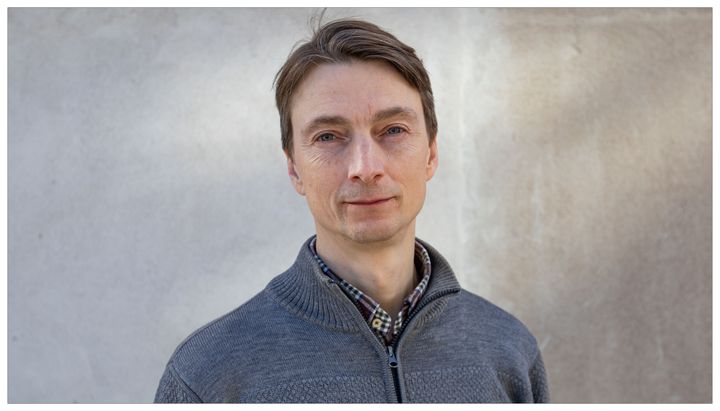
Joachim Mathiesen is no stranger to the head of department role. As the department's deputy head of research since 2019, he has worked closely with his predecessor, and he has furthermore been acting head of department since 1 September.
As the new head, Joachim Mathiesen will take over the management of a high-profile institution known worldwide for its research and education. The aim is to uphold this reputation, leading to a few specific focus areas.
“It is important to the Niels Bohr Institute that we continue to attract talented researchers from both Denmark and abroad. If we are to succeed, we must offer an attractive research and work environment. We need to have an open-minded approach, be inclusive and ensure diversity among our staff. At the same time, we need to do a better job of ensuring career development for our junior researchers. Not everyone will continue working with us after their PhD or postdoc positions, so we need to be good at discussing other career opportunities with them,” says Joachim Mathiesen, who also intends to focus on the study environment and the specialised master’s programmes at the Niels Bohr Institute.
“We have special degree programmes in quantum informatics, nanoscience and climate. Programmes that we collaborate on with others. We need to continue developing them for the benefit of society.”
Experience as both researcher and manager
Joachim Mathiesen, 47, holds a master’s degree and a PhD from the Niels Bohr Institute. Following his doctorate defence in 2004, he pursued a research career abroad, first in Israel at the Weizmann Institute of Science, then in Norway, where he started as a postdoc at the Norwegian University of Science and Technology, later becoming an assistant professor and eventually a professor of physics at the University of Oslo.
In 2009, he returned to the Niels Bohr Institute as an associate professor in complex systems modelling, where, among other projects, he investigates how fluid flows behave in porous structures when multiple phases are present at the same time. This involves, for example, studying how nutrients spread in the upper soil layer where both air and water are present.
Since 2019, Joachim Mathiesen has held the position of deputy head of research, and he therefore already knows the Niels Bohr Institute very well from the inside. The acting dean at Faculty of Science, Grete Bertelsen, sees this as an advantage.
“The Niels Bohr Institute has a broad spectrum of research and enjoys considerable recognition both nationally and internationally. Also, there’s a high demand from both national and international students for our physics programmes, which educate sought-after candidates for both public and private companies. So there’s plenty to get on with, and I’m convinced that Joachim’s insights will benefit both the department and the overall leadership of the faculty,” says Grete Bertelsen.
Joachim Mathiesen will take over the role of head from Jan Thomsen, who is currently a professor at the department and the COO of the department’s new quantum centre, the Novo Nordisk Foundation Quantum Computing Programme.
Contacts
Joachim MathiesenHead of DepartmentNiels Bohr Institute, University of Copenhagen
Tel:(+45) 3532 5214head_of_institute@nbi.ku.dkBirgitte LyhneHead of CommunicationsFaculty of Science, University of Copenhagen
Tel:(+45) 9356 5864Links
ABOUT THE FACULTY OF SCIENCE
The Faculty of Science at the University of Copenhagen – or SCIENCE – is Denmark's largest science research and education institution.
The Faculty's most important task is to contribute to solving the major challenges facing the rapidly changing world with increased pressure on, among other things, natural resources and significant climate change, both nationally and globally.
Subscribe to releases from Københavns Universitet
Subscribe to all the latest releases from Københavns Universitet by registering your e-mail address below. You can unsubscribe at any time.
Latest releases from Københavns Universitet
Mødre uden særlig fedtsyre i blodet får oftere børn med astma1.5.2026 06:05:00 CEST | Pressemeddelelse
Et lille molekyle i gravide kvinders blod kobles sammen med børns risiko for at udvikle småbørnsastma og luftvejsinfektioner, viser nyt studie.
Første psykiatriske indlæggelse bliver for de fleste starten på et langvarigt sygdomsforløb30.4.2026 10:39:41 CEST | Pressemeddelelse
Ved at følge en gruppe unge med psykiske problemer gennem 20 år har forskere fra Københavns Universitet fundet, at hele 95 procent igen kommer i kontakt med hospitalspsykiatrien. Samtidig har patienterne en tydelig social slagside, og det peger på, at første indlæggelse er et kritisk vindue for at sætte ind med massiv støtte.
Less food waste: Supermarkets can save money by giving surplus food away23.4.2026 10:03:13 CEST | Press release
When supermarkets choose the right strategy for surplus food, they can both reduce food waste and improve their bottom line. An analysis from the University of Copenhagen shows that it is often more profitable to donate surplus food than to throw it away. In many cases, doing so leads to a direct financial gain.
Historiske analyser kan hjælpe kommunerne i mål med den grønne omstilling21.4.2026 10:07:05 CEST | Pressemeddelelse
Gamle konflikter og dårlige erfaringer med tidligere naturprojekter gør det svært for kommunerne at gennemføre store klimatiltag som udtagning af lavbundsjorde, viser ny forskning fra Københavns Universitet. De historiske erfaringer bør bruges til at forbedre dialogen med borgerne, når der skal planlægges nye klimaindsatser, mener forskerne.
Mindre madspild: Butikkerne kan spare ved at give madvarer væk21.4.2026 07:16:00 CEST | Pressemeddelelse
Når supermarkeder vælger den rigtige strategi for overskudsmad, kan de både reducere madspild og forbedre bundlinjen. En analyse fra Københavns Universitet peger på, at det oftest er mere rentabelt at donere madvarer bort frem for at smide dem ud. I mange tilfælde er det direkte en økonomisk gevinst.
In our pressroom you can read all our latest releases, find our press contacts, images, documents and other relevant information about us.
Visit our pressroom