
Discovery of curse ritual in rubbish dump surprises Egyptologist: “It must have been widespread in ancient Egypt”
23.11.2026 08:54:39 CET | Københavns Universitet | Press release
Forty papyrus fragments found in a rubbish deposit more than 3,000 years old turned out to be the burnt remains of a curse ritual. According to Egyptologist Fredrik Hagen, signs of mass production suggest the ritual was widespread and commonly practised in ancient Egypt.
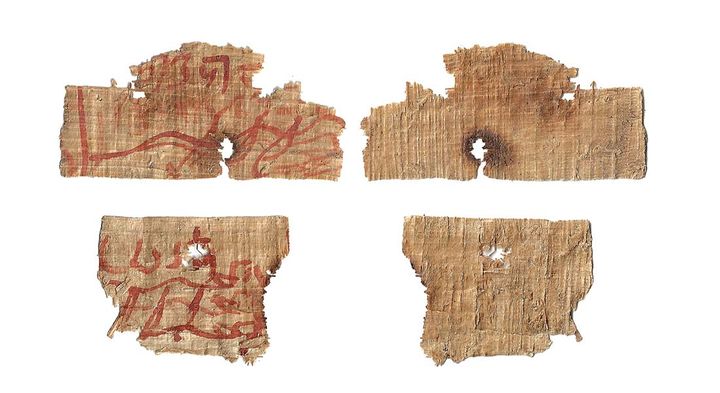
The discovery of 40 charred papyrus fragments at a temple in the ancient city of Thebes is changing researchers’ understanding of one of ancient Egypt’s most famous curse rituals. The fragments show that the ritual was probably far more widespread and commonplace than previously believed.
Until recently, Egyptologists only had a single copy of the so-called “Apophis-ritual”, preserved in a ritual manual from the late fourth century BC, but with little independent evidence for how often it was performed, by whom, or where.
The curse ritual known as the “Apophis ritual” was originally designed to curse the great snake who was the main enemy of the sungod Ra; this would help the sun on its journey through the underworld during the night, when he had to fight off the serpent in order to reemerge in the morning. It was then adapted to many other uses, including cursing the enemies of the pharaoh or any other person targeted by the performer, as well as any phenomenon associated with the great serpent, such as poison and bad weather.
During excavations at a temple in the ancient city of Thebes, Professor of Egyptology Fredrik Hagen from the University of Copenhagen and his colleagues discovered 40 charred and pierced papyrus fragments in a rubbish deposit. The fragments turned out to be mass-produced copies of drawings and texts that were burnt during the Apophis ritual.
“These tiny fragments give us a new indication of how widespread curse rituals were in ancient Egypt. Our finds and the subsequent analysis of the ritual confirms that it was a regular part of temple life, but a quick look at references to the ritual in other contexts also show that it was widely used outside temples, and that it was a common feature of Egyptian culture more broadly,” says Fredrik Hagen.
“We know that literate people, including those who were not priests, had access to magical rituals and functioned as magicians and healers. It is clear that people approached scribes for help in performing magic, both for protection and for attacking others. That includes the curse rituals that we can now see were far more widespread than previously thought.”
Earliest physical evidence
The fragments excavated by Fredrik Hagen and his colleagues are around 3,400 years old, pushing back the dating of the ritual by 1,000 years.
“They show that the ritual was much older than the one surviving copy from the fourth century BC might suggest. Already 1,000 years earlier, during what we call the New Kingdom, it was an integrated part of Egyptian culture, and our article also looks at the types of priests who were responsible for carrying out the ritual in the temples” says Fredrik Hagen.
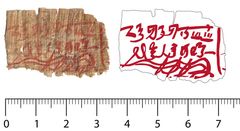
The fragments, each no larger than half a postage stamp, also constitute the earliest physical evidence that the curse ritual was carried out in practice.
“The papyrus drawing was often completely destroyed during the ritual, when it was trampled on, spit on, pierced with a knife and ultimately burned. Many of the 40 fragments show signs of having been pierced and charred, which matches the ritual instructions remarkably well. For the ritual to be successful, the materials had to be destroyed by fire, so we are extremely fortunate to have found any of them in a condition that still allows them to be recognised and studied,” he says.
How did Egyptian temples function?
Egyptology has traditionally focused on monuments like temples by analysing their spectacular reliefs and statues, and on what they can tell us about Egyptian religion.
For Fredrik Hagen and his colleagues, the study demonstrates how examining different types of objects and areas can provide new insights into how temples actually functioned in ancient Egypt: how did an Egyptian priest life his life?
Here new excavations, with a different set of priorities, can make important contributions by focussing on new material, such as rubbish dumps outside the temple.
“The reason physical remains of this ritual have never been found before is probably also that few people have paid much attention to such rather unglamorous rubbish dumps,” says Fredrik Hagen.
“But we still lack knowledge about many aspects of the lives of ordinary people in antiquity. We can only get that knowledge by looking in different places and investigating, for example, rubbish deposits. The fragments from the curse ritual, even if they are remarkable, are just a small piece of the puzzle. Other papyrus fragments from the same area have turned out to be the remains of the administrative archive of the temple, which enables us to investigate the daily economy and logistics of the offering cult in a temple like this. So there is a lot of new information emerging.”
The study, Cursing Apophis: Text and Material Culture of an Egyptian Execration Ritual, has been published in Zeitschrift für Ägyptische Sprache und Altertumskunde.
The Apophis ritual
In Egyptian mythology, Apophis was the serpent of chaos that attempted each night to prevent the sun god Ra from completing his journey through the underworld.
To protect the order of the world, ancient Egyptians, typically priests, performed rituals intended to symbolically destroy Apophis and his powers.
However, the ritual served several purposes. It could also be used to treat illness, ward off bad weather and even secure personal success, or the opposite for an enemy.
As part of the ritual, Apophis was drawn in the shape of a snake and his name written on papyrus in red ink, or represented as a wax figure. The papyrus or figures were then pierced with knives and burned while magical spells were recited.
The new archaeological discoveries from the mortuary temple of Thutmose III in Thebes show that the ritual was already being practised during the New Kingdom more than 3,400 years ago.
Keywords
Contacts
Professor Fredrik Hagen
Department of Cross-Cultural and Regional Studies
Email: hagen@hum.ku.dk
Press officer Carsten Munk Hansen
UCPH Communications
Email: carstenhansen@adm.ku.dk
Phone: + 45 28 75 80 23
Images
About the University of Copenhagen
The University of Copenhagen was founded in 1479 and today has 37,000 students and 10,000 employees – of whom more than 5,000 are researchers – and revenues of DKK 11.3 billion.
10 Nobel Prizes have been awarded to researchers at the University.
Subscribe to releases from Københavns Universitet
Subscribe to all the latest releases from Københavns Universitet by registering your e-mail address below. You can unsubscribe at any time.
Latest releases from Københavns Universitet
Fund af forbandelsesritual i affaldsdynge overrasker egyptolog: ”Det må have været meget udbredt i oldtidens Egypten”23.11.2026 07:59:32 CET | Pressemeddelelse
40 papyrusfragmenter fundet i et over 3.000 år gammelt affaldsdepot viste sig at være resterne af et forbandelsesritual. Fragmenterne bærer præg af masseproduktion, og det tyder ifølge egyptolog Fredrik Hagen på, at det har været et udbredt og almindeligt ritual i oldtidens Egypten.
Nyt fund omskriver historien om en af menneskets vigtigste forfædre19.11.2026 07:00:00 CET | Pressemeddelelse
Fossile tænder fra to huler i Kina viser, at menneskets forfader, Homo erectus, levede på det asiatiske fastland langt senere end hidtil troet. Forskerne fandt desuden en tand fra en anden menneskeart, der levede side om side med Homo erectus og det udfordrer vores forståelse af menneskets evolution.
Hvor mange job vil AI koste? Forskere advarer mod forhastede konklusioner18.11.2026 06:05:00 CET | Pressemeddelelse
Nyt CAISA-brief advarer mod at forveksle ’AI-eksponering’ med ’jobtab’ eller ’sparede årsværk’. Ifølge forskerne bag briefet er vi i den offentlige debat tilbøjelige til at overse de komplekse mekanismer, der afgør, hvordan kunstig intelligens faktisk påvirker beskæftigelsen.
Breakthrough: Danish researchers find efficient solution to famous 174-year-old mathematical headache17.11.2026 11:50:37 CET | Press release
Can any map be coloured using just four colours? That is the question behind one of the most famous problems of mathematics, dating back to 1852. Since 1976, we have known that the answer is ‘yes’ – but how do you actually find the coloring? Now, two professors from the University of Copenhagen and DTU, together with international colleagues, have found the optimal algorithm after a decade-long ‘obsession’. The answer provides new fundamental mathematical insights.
Gennembrud: Danske forskere har fundet en effektiv løsning på 174 år gammel matematisk hovedpine17.11.2026 10:58:34 CET | Pressemeddelelse
Kan ethvert landkort farvelægges med blot fire farver? Det handler et af matematikkens mest berømte problemer om, som stammer fra 1852. Vi har siden 1976 vidst at svaret er 'ja', men hvordan gør man det? Nu har to professorer fra Københavns Universitet og DTU sammen med udenlandske kolleger fundet en optimal algoritme, og det efter 10 års ’besættelse’. Svaret giver nye grundlæggende matematiske indsigter.
In our pressroom you can read all our latest releases, find our press contacts, images, documents and other relevant information about us.
Visit our pressroom