
High water, high rents: Poorest residents pay the most for climate adaptation
12.11.2026 07:17:00 CET | Københavns Universitet | Press release
As cities worldwide adapt to extreme weather, climate adaptation must prevent people from wading through flooded streets in the future. But the costs are not equally shared. A study from the University of Copenhagen shows that climate adaptation policies may even make social inequality worse. In Copenhagen, stormwater costs fall disproportionately on not-for-profit housing residents, as these neighborhoods are often located near climate adaptation projects.
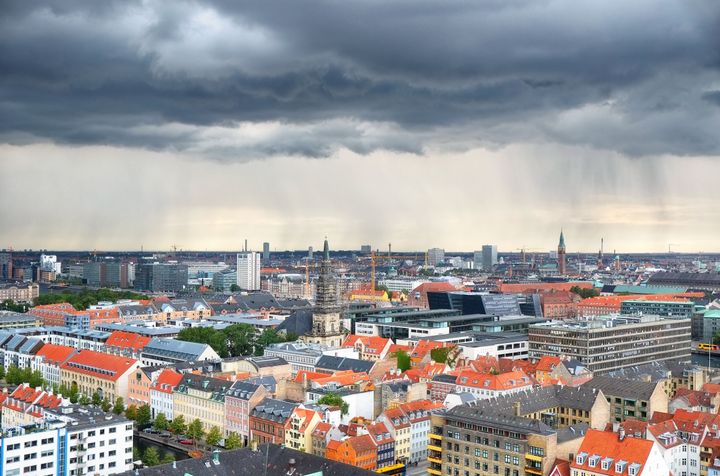
Cloudburst events and increasingly severe flooding threaten to make life wetter in the years ahead.
To address this challenge, cities across the world, including Copenhagen, invest in cloudburst tunnels and in separating stormwater from wastewater to reduce pressure on the sewers.
These measures are intended to benefit all residents. However, a new study from the University of Copenhagen shows that the costs of climate change adaptation are unevenly distributed. Tenants in not-for-profit housing and apartment buildings shoulder a larger share of the bill than owners in single-family houses.
“Climate adaptation is not only about flooding and sewer capacity. It is also about rising rents. Your type of housing determines how much of the bill you pay. Our case study shows that one-size-fits-all climate adaptation policies worsen urban injustice. Stormwater costs fall disproportionately on not-for-profit housing residents, despite Copenhagen’s reputation for climate leadership.” said Natalie Marie Gulsrud, Associate Professor at the Department of Geosciences and Natural Resource Management, University of Copenhagen.
She is first-author of the study “Housing Tenure, Climate Resilience, and Ecological Segregation”, published in PNAS.
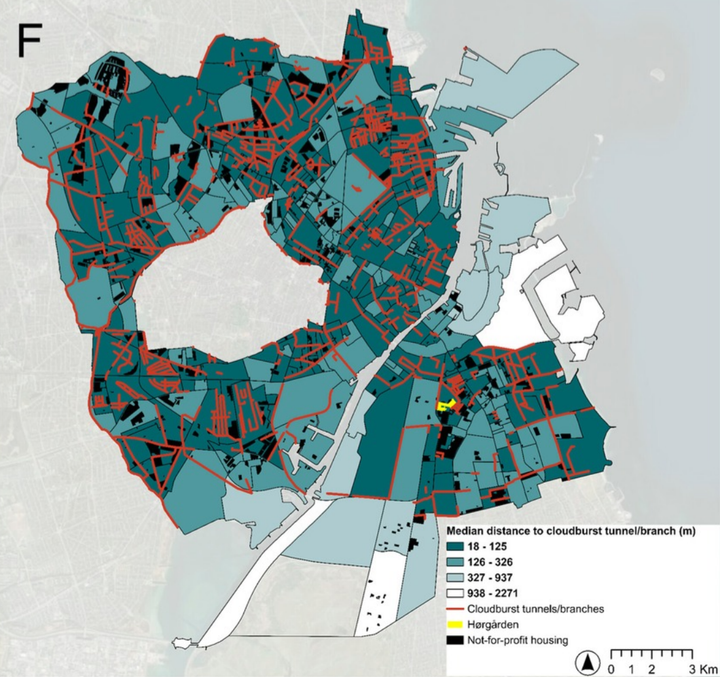
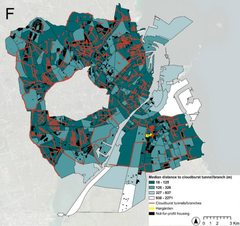
The researchers analysed geographical data on climate adaptation projects and compared it with data on housing tenure and housing types. This revealed that not-for-profit housing is often sited closer to priority areas for climate adaptation.
“We can see that not-for-profit housing is often located where cloudburst routes are typically established. The problem arises when properties along these routes are required to separate stormwater from wastewater on their own land to connect it to the cloudburst system. This makes sense from a water-management perspective, but it can also impose substantial costs,” said Natalie Marie Gulsrud.
Water bills pay to keep stormwater at bay
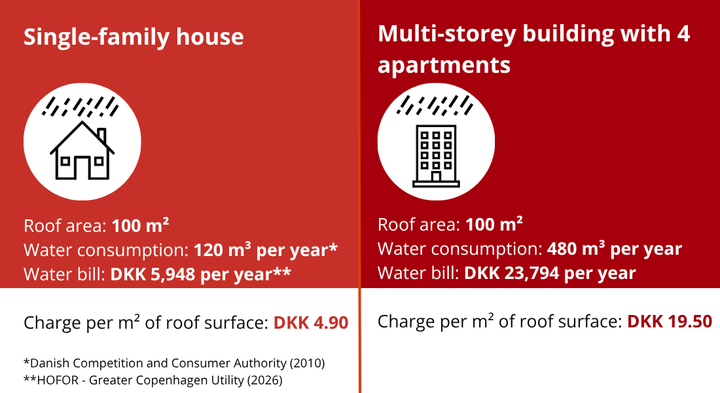
Another inequality that the researchers noticed was the payment model. Not-for-profit housing developments typically consist of apartment blocks of four to six storeys. The increased drainage charges are calculated on the basis of drinking water consumption in each dwelling rather than on the amount of rainwater that actually runs off the roof into the public drainage system.
As a result, a four-storey building with a roof area of 100 m² pays four times as much as a comparable single-storey detached house if each dwelling uses the same amount of drinking water.
According to the researchers, the payment model favours single-family households. Consequently, multi-storey housing bears a disproportionate share of the financing of urban climate adaptation.
“It would be fair if payment reflected the amount of stormwater each property actually discharges into the sewer system. At present, charges are tied to drinking water consumption instead. There is a fundamental inequity in the way water bills are allocated and in how residents pay for climate adaptation and cloudburst management. As water charges continue to rise, the burden falls most heavily on the most marginalised members of society,” said Natalie Marie Gulsrud.
Who carries the cost?
The study identified siloed governance as a hidden root cause behind unequal adaptation costs. By improving the coordination between social and technical departments, the costs of climate adaptation and stormwater management could be distributed more evenly across social groups and support a fair green transition, according to the researchers.
“In this paper we hope to introduce a human aspect to a highly technical topic involving stormwater pipes, housing tenure, and climate financing,” said Natalie Marie Gulsrud.
“Who gets protected as the climate changes, and who carries the cost? A just transition needs social and technical governance working together, not on separate tracks. If we don't fix this, we risk deepening socio ecological inequalities in the green transition. We hope this research moves us closer to a transition that is genuinely just and caring.”
*
[BOX] Case study: Hørgården
The researchers used Hørgården as a case study. The area is included on the Ministry of Social Affairs and Housing’s Prevention Areas list, and around 60 per cent of residents have an income below the Danish average.
As part of the implementation of a cloudburst conveyance route, Hørgården is required to separate stormwater from wastewater. Disconnecting roof run-off from the sewer system represents a significant expense for residents. Hørgården is an older housing development, and extensive sewer renovation and reconstruction will be required before the necessary climate adaptation measures can be completed. Ultimately, the costs are likely to be reflected in residents’ rents.
Keywords
Contacts
Natalie Marie Gulsrud
Associate Professor
Department of Geosciences and Natural Resource Management
University of Copenhagen
+45 21865524
nagu@ign.ku.dk
Andreas Berg Jakobsen
Communications Officer
University of Copenhagen
+45 35333176
abja@adm.ku.dk
Images
Links
About the University of Copenhagen
The University of Copenhagen was founded in 1479 and today has 37,000 students and 10,000 employees – of whom more than 5,000 are researchers – and revenues of DKK 11.3 billion.
10 Nobel Prizes have been awarded to researchers at the University.
Subscribe to releases from Københavns Universitet
Subscribe to all the latest releases from Københavns Universitet by registering your e-mail address below. You can unsubscribe at any time.
Latest releases from Københavns Universitet
Højere vandstand, højere husleje: Klimasikring kan koste de fattigste mest12.11.2026 07:16:00 CET | Pressemeddelelse
Klimasikring skal forhindre, at københavnerne vader gennem oversvømmede gader i fremtiden. Men regningen er ikke fordelt lige mellem dem. Borgere i almene boliger kan komme til at betale den største del, viser forskning fra Københavns Universitet.
Kaffe ser ud til at ændre, hvordan din tarm fungerer10.11.2026 10:22:45 CET | Pressemeddelelse
Drikker du kaffe hyppigt, lader det til at ændre dine tarmbakterier, men også selve din tarms fysiologi. Det er resultatet af et studie fra Københavns Universitet, som måske kan pege i retning af, hvordan vi bedre afhjælper forstoppelse.
Coffee appears to change how your gut functions10.11.2026 10:20:38 CET | Press release
If you drink coffee regularly, it appears to alter not only your gut bacteria but also the physiology of the gut itself. That is the conclusion of a study from the University of Copenhagen, which may help point the way towards better treatments for constipation.
Luftforurening tidligt i livet kan spores i lungerne helt op i ungdomsårene9.11.2026 06:55:00 CET | Pressemeddelelse
På trods af en forbedret luftkvalitet i Danmark finder et nyt studie en sammenhæng mellem luftforurening tidligt i livet og børn og unges lungefunktion. Selv små forskydninger kan have stor betydning for befolkningens sundhed, siger forsker.
Politistuderende elsker at se tv… om politi. Især Politijagt og Anna Pihl hitter6.11.2026 08:33:00 CET | Pressemeddelelse
Populære tv-programmer som Politijagt og Anna Pihl udgør en stor del af de politistuderendes medieforbrug. De studerende ser dem for at få mere viden om deres kommende arbejde, viser nyt studie, som også peger på, at medierne kan spille en større rolle for unges uddannelsesvalg, end man hidtil har antaget.
In our pressroom you can read all our latest releases, find our press contacts, images, documents and other relevant information about us.
Visit our pressroom