
Music can enhance the flavour of your food
22.10.2026 08:10:00 CEST | Københavns Universitet | Press release
Listening to music while you eat can shape the way your brain constructs flavour. A new study from the University of Copenhagen shows for the first time how sound and taste interact in the brain at a biological level.

The moment we take a sip of our morning coffee or our first bite of lunch, the brain begins interpreting what we taste. Is it sweet? Sour? Or something else entirely?
But the brain does not create flavour based solely on signals from the tongue. That is the finding of a new study from the Department of Food Science, published in the scientific journal Scientific Reports.
"When music reaches the ears at the same time as we are eating, we can see that the brain responds more strongly than when taste is experienced without music," says first author and postdoctoral researcher Alberte Baggesgaard Seeberg from the Department of Food Science.
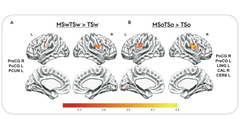
Using brain scans, the researchers show that music can activate some of the same brain regions involved in processing taste.
"This tells us that flavour is not simply a property of food. Flavour is an experience created by the brain," says senior author and professor Janice Wang.
A breakthrough in brain imaging
This is the first time researchers have used brain imaging to show what happens in the brain when it processes taste. In the study, they used functional magnetic resonance imaging (fMRI), which measures activity in different parts of the brain by detecting changes in blood flow.
"This allows us to move beyond simply asking people about their experiences, which has been the approach in previous studies. With brain scans, we gain a biological window into what happens when the senses interact," says Alberte Baggesgaard Seeberg.
While participants lay in the scanner, their brain activity was measured under different conditions. In some cases, they listened only to music. In others, they tasted flavour solutions. In some trials, music and taste were presented simultaneously. This enabled the researchers to compare how the brain responds to sound and taste separately and in combination.
The results clearly showed that certain brain regions were more active when participants listened to music while tasting one of the two flavour solutions.
"We can see that flavour is constructed by the brain and not only by the taste buds. What determines flavour is not limited to what happens on the tongue. It emerges through the integration of multiple senses," says Janice Wang.
The findings build on previous studies showing that music can enhance particular taste perceptions. For example, slow pop music with harmonious tones may enhance sweetness. Until now, however, this has only been investigated through behavioural studies in which participants rated flavours with and without music.
Shaping flavour experiences could improve wellbeing
According to the researchers, the new knowledge could be used to design better eating experiences in a range of settings, including restaurants, canteens and hospitals.
"For people who are at risk of malnutrition, something as simple as music could potentially improve the eating experience. There is a great deal we can do, often at very little cost, to improve quality of life for some people," says Alberte Baggesgaard Seeberg.
Janice Wang is pleased that, after many years of research into flavour and sensory perception, the team can now present biological evidence of how the senses interact.
"We now have a new way of influencing flavour perception, creating a better meal experience and potentially a better overall experience, without necessarily changing the food itself," she says.
_____________________________________________________________________________________________
Fact box: Sound can enhance flavour
It has long been known that music can alter the perception of flavour. This effect is known as sonic seasoning.
What is new is that researchers have now linked this effect to direct measurements of brain activity.
The new brain scans support previous research in the field.
_____________________________________________________________________________________________
Fact box: About the study
The study included 28 participants. While lying in a brain scanner, they alternated between listening to music and tasting flavour solutions made from sugar and citric acid. In some cases, both were presented at the same time.
The results show that certain types of music can enhance specific taste perceptions.
The researchers suggest that future studies should include a larger and more diverse group of participants, as factors such as age and cultural background may influence associations between music and taste.
Although flavour solutions were used in this study, the researchers expect similar results with foods that taste sweet or sour.
Keywords
Contacts
Alberte Baggesgaard Seeberg
Postdoctoral researcher, Department of Food Science
Qian Janice Wang
Professor, Department of Food Science
Amalie Viktoria GammelgaardKU Kommunikation, Presse
Tel:93 51 60 67amalie@adm.ku.dkImages
About the University of Copenhagen
The University of Copenhagen was founded in 1479 and today has 37,000 students and 10,000 employees – of whom more than 5,000 are researchers – and revenues of DKK 11.3 billion.
10 Nobel Prizes have been awarded to researchers at the University.
Subscribe to releases from Københavns Universitet
Subscribe to all the latest releases from Københavns Universitet by registering your e-mail address below. You can unsubscribe at any time.
Latest releases from Københavns Universitet
Musik kan forstærke smagen af din mad22.10.2026 08:10:00 CEST | Pressemeddelelse
Hvis du hører musik, når du spiser, kan det være med til at forme den måde, hjernen konstruerer din smagsoplevelse på. Det viser et nyt studie fra Københavns Universitet, der for første gang giver et biologisk indblik i, hvordan lyd og smag smelter sammen i hjernen.
Danmark mangler loven, der kan få AI ud af den offentlige sektors digitale kirkegård21.10.2026 06:05:00 CEST | Pressemeddelelse
Uklare regler spænder ben for brugen af kunstig intelligens i det offentlige. To juraforskere foreslår nu en samlet AI-lov, der kan skabe klarhed og styrke både innovation og borgernes retssikkerhed.
Mobilfri undervisning løfter karaktererne, viser stort eksperiment20.10.2026 06:05:00 CEST | Pressemeddelelse
Studerende klarer sig bedre fagligt, når telefonen lægges væk i undervisningen. Effekten er størst blandt dem, der i forvejen har de laveste karakterer, viser et nyt internationalt studie fra bl.a. Københavns Universitet.
Ancient technique can improve the bland taste of beans19.10.2026 10:50:05 CEST | Press release
Faba beans are a climate-friendly source of protein, but their taste is a barrier to wider consumption. Now, researchers from the University of Copenhagen show how fermentation can pave the way for improved flavour, higher quality, and added health-related benefits in these beans.
Ældgammel teknik kan ændre kedelig smag i bønner19.10.2026 10:49:30 CEST | Pressemeddelelse
Hestebønner er en klimavenlig proteinkilde, men smagen er en barriere for, at vi vælger dem til. Nu viser forskere fra Københavns Universitet, hvordan fermentering kan bane vejen for både bedre smag, højere kvalitet og flere sunde egenskaber i bønnerne.
In our pressroom you can read all our latest releases, find our press contacts, images, documents and other relevant information about us.
Visit our pressroom