
Coins made to stop Viking raids ended up as Viking jewellery
29.4.2026 06:02:00 CEST | Nationalmuseet – Forskning og Kulturarv | Press release
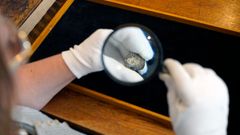
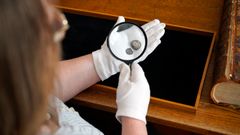
English coins depicting Christian motifs were intended to protect against Viking raids, but ended up as valuable Viking jewellery instead. Now, two such rare coins have been found in Denmark.
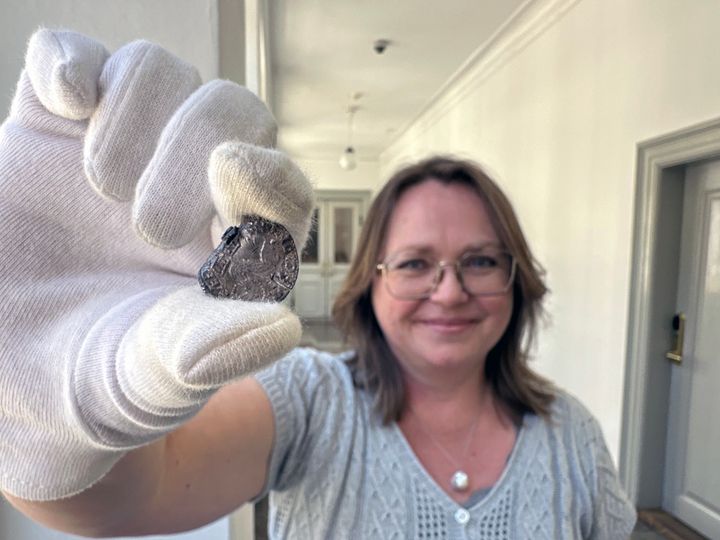
After repeated and lengthy invasions by Viking armies, the English King Æthelred the Unready attempted in 1009 to mobilise both nation and Church in the defence against these attacks. Apart from initiating extensive fasting and penance, the king also had an unusual coin minted depicting Christian motifs in the hope of obtaining divine intervention against the Vikings.
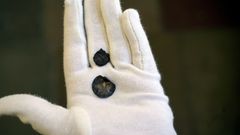
But the coins did not have the desired effect. On the contrary, it seems the Vikings found them especially attractive and wore them as jewellery. Now, two of these rare coins have been found by detectorists in Denmark – one in northern Jutland and one in southern Jutland.
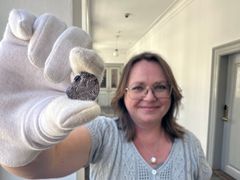
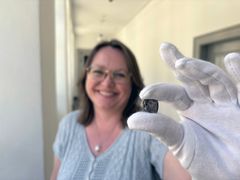
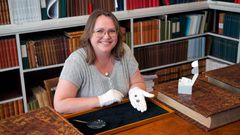
“It gave me goose bumps, because these coins are extremely rare, and they convey a special and also paradoxical part of history. They were made to obtain protection against the Vikings, but ended up instead as jewellery or amulets worn by Vikings. That is almost tragicomical,” says Gitte Tarnow Ingvardson, curator at the National Museum of Denmark.
Turning up in Scandinavia
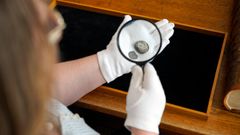
The so-called “Lamb of God” coins from England are very rare. In total, 30 specimens have been found cross the world. Only 4 or 5 have been found in England, the rest in the Scandinavian and Baltic countries. Here, most of them have been equipped with loops, which suggests that the Vikings wore them as jewellery or perhaps as amulets around their necks.
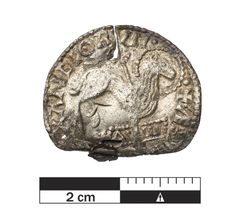
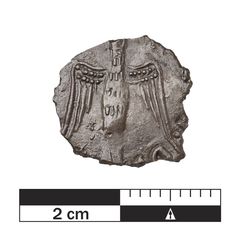
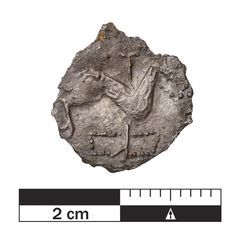
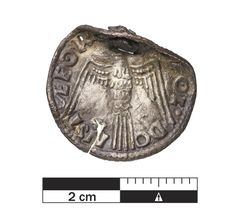
The coins differ significantly from contemporary English coins, which depict the king on the obverse side and a cross on the reverse. But the “Lamb of God” coins depict a lamb pierced by a cross on the obverse side – a Christian symbol of Christ’s sacrifice. The lamb steps on a plaque featuring the two Greek letters alpha and omega, symbolising that God is the beginning and the end of everything. The reverse depicts an ascending dove, symbol of the Holy Spirit.
Inspired Danish coins
The minting of these coins was probably limited and short lived. Perhaps it was given up because the desired effect failed to appear. At any rate, the Viking attacks continued.
But the many English coins that the Vikings looted during their raids decisively affected the ways in which Danish Viking-Age kings organised the coinage in Denmark.
“Danish coinage is inspired by and based on the well-organised English coinage. The Vikings soon realised that it was far more practical to use coins than to hack the silver into pieces for trading purposes,” says Gitte Tarnow Ingvardson.
Even the “Lamb of God” coins were imitated. Viking-Age kings such as Canute the Great and his son Harthacnut minted coins with the same two motifs, as did Sweyn Estridsson, who later played a significant part in establishing how the Danish Church was organised.
These many threads make the coin special, says Gitte Tarnow Ingvardson.
“What fascinates me above all is how a little coin is able to unfold the history of English kings and of Christianity in England in a way that links up with Danish Viking-Age kings, Danish coinage and even the establishment of the Danish state. Because this affects all of Viking-Age society. Just imagine that one little coin contains so much history!”
Keywords
Contacts
John Fhær Engedal NissenCommunications OfficerNationalmuseet
Tel:+45 41 20 68 49jni@natmus.dkGiite Tarnow IngvardsonCuratorThe National Museum of Denmark
Tel:+45 41 20 62 29gitte.tarnow.ingvardson@natmus.dkImages
Subscribe to releases from Nationalmuseet – Forskning og Kulturarv
Subscribe to all the latest releases from Nationalmuseet – Forskning og Kulturarv by registering your e-mail address below. You can unsubscribe at any time.
Latest releases from Nationalmuseet – Forskning og Kulturarv
4.500 year old food remains reveal sophisticated cooking in Early Bronze Age Syria14.9.2026 10:09:10 CEST | Press release
New research shows a sophisticated kitchen in ancient Syria dating back 4,500 years, featuring the use of two different types of cooking pots and a range of ingredients—such as goat, grain, and gazelle—as well as resin used as a spice.
4.500 år gamle madrester afslører avanceret madlavning i bronzealderens Syrien14.9.2026 08:24:09 CEST | Pressemeddelelse
Ny forskning viser et avanceret køkken i oldtidens Syrien for 4.500 år siden med brug af to forskellige grydetyper og en række ingredienser som ged, frugt, gazelle - og harpiks som krydderi.
Affald, brand og klimakrise: Stort bogværk om byggeloven viser, hvordan samfundets udfordringer har formet arkitekturen28.8.2026 09:00:25 CEST | Pressemeddelelse
Byggeloven har ændret sig mange gange gennem historien for at imødekomme de aktuelle samfundsproblemer. Nu samler et stort bogværk hele byggelovens historie: Fra affaldsproblemer i middelalderen til brandsikring i 1700-tallet og til nyere tiders fokus på energiforbrug i bygninger og byer.
Dansk skibsvrag med voldsom og tragisk historie undersøges nu nærmere11.5.2026 07:09:13 CEST | Pressemeddelelse
Forskere fra Nationalmuseet påbegynder i dag nye undersøgelser af 1600-talsvraget af det danske skib ”Havmanden” – et skib, der oplevede det voldsomste mytteri i dansk søfartshistorie. Målet er blandt andet at finde flere detaljer om menneskene ombord, som oplevede skibets tragiske skæbne.
To arkæologer hædres for dedikeret undervisning8.5.2026 16:24:27 CEST | Pressemeddelelse
Den største pris inden for arkæologi i Danmark uddelt af Erik Westerby Fondet går i år til lektor Henriette Lyngstrøm og lektor emeritus Per Ole Rindel. De får hver et hæderslegat for deres dedikerede og mangeårige indsats i undervisningen af de unge arkæologistuderende på Københavns Universitet.
In our pressroom you can read all our latest releases, find our press contacts, images, documents and other relevant information about us.
Visit our pressroom