Systematic doubles last year’s record profit: Defence software and AI driving growth
11.12.2025 11:40:12 CET | Systematic | Pressemeddelelse
The Danish software company behind NATO’s operative backbone grows revenue to EUR 299.6 million and more than doubles profit.
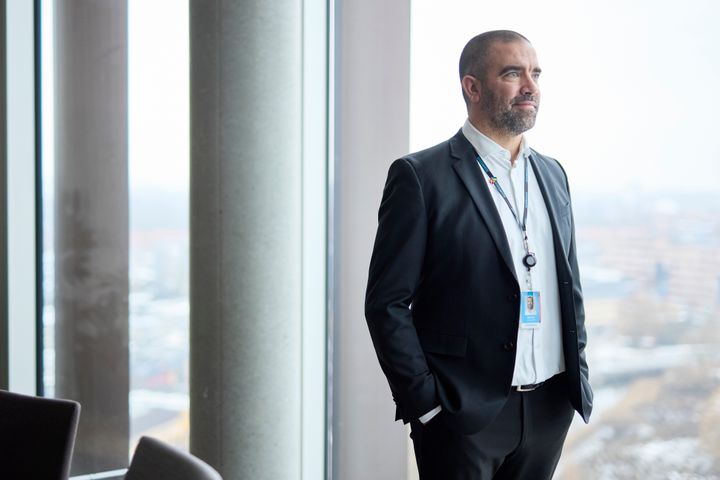
European armed forces are investing massively in digital solutions that enable collaboration across armed services and borders – without compromising data sovereignty.
Danish software company Systematic is benefiting from this trend in its 40th anniversary year with its most impressive financial statements ever: Revenue of EUR 299.6 million and a profit (EBIT) of EUR 107.6 million, which is more than double that in the previous financial year.
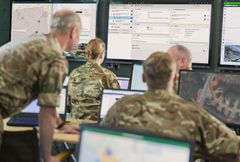
When a Danish frigate needs to coordinate with a German fighter aircraft and British soldiers on the ground, it calls for something more than just a command system. It requires advanced military software which enables collaboration and data sharing between allies – and this is precisely what is driving Systematic’s record profit.
“As a global supplier of market-leading command-and-control systems for many years, we’re now seeing a demand for systems that support multi-domain operations – in other words missions where armies, navies, air forces and cyber forces work together, sharing intelligence in real time. Here, AI is playing an increasingly significant role, and we have expanded our defence pack to cover the entire spectrum. And this is now creating real value,” explains Systematic CEO Nikolaj Bramsen.
The past five years have seen a 73% growth in revenue, from EUR 174 million in 2020/21 to EUR 299.6 million today.
Moreover, equity has grown to EUR 116.5 million, providing a solid foundation for investments in future products and markets.
“It has been an extraordinary year with extremely high sales of software licences – fuelled by extensive rearmament in Europe. We’re not expecting sales at the same level next year, but we enjoy a strong position in the market, and the need for digital defence solutions continues to grow,” says Nikolaj Bramsen.
AI now key to modern defence
Nikolaj Bramsen underscores the fact that all Systematic’s business areas have contributed significantly to the company’s growth, but that it is still the defence business which generates most revenue. Here, AI has been a decisive factor.
“AI-driven intelligence and situational overview have become a uniquely important factor in modern defence. It’s not just a question of seeing what is happening right now – but of understanding what is brewing so that you can respond quickly,” says Nikolaj Bramsen.
Germany is one country in particular that has started turbocharging the digitalisation of its armed forces. The Bundeswehr has invested heavily in Systematic’s SitaWare suite, and equipped both its navy and army with the Danish defence solution so that Germany can now conduct joint operations across its various armed services as well as across domains and with NATO allies.
Germany was also the first to acquire the latest SitaWare offering: Battlefield Health – a solution that combines two of Systematic’s core areas: health and defence. Battlefield Health is an electronic medical record that handles wounded soldiers’ health and treatment data while supporting the entire evacuation chain from injury site to hospital.
NATO collaboration opening up new markets
The interest being shown in Systematic’s defence software extends far beyond Europe. According to CEO Nikolaj Bramsen, the company is seeing growing demand in regions where countries are seeking closer collaboration with NATO while simultaneously investing significant sums in defence technology:
“We already have offices in Australia, New Zealand and the UAE. We see Asia Pacific and the Middle East as key growth areas – not least because many of the countries there want to strengthen their collaboration with NATO and are demanding technology that supports joint operations,” he says.
From battle zones to power plants
Software development within Systematic does not stop at defence. The company is successfully continuing to develop its tried-and-tested military solutions for other areas. To meet the growing need for monitoring and protecting critical infrastructure, Systematic has established a brand-new business unit: National Security & Infrastructure (NSI), which develops solutions for the owners and operators of critical infrastructure such as port terminals, airports, communication networks, data centres and the energy and utility sector.
The first product from NSI is called Rezilient. The system gathers data from sensors, cameras and drones, and provides private companies and the authorities with a shared overview and warnings of potential threats. Rezilient is based on the same technology as SitaWare.
“The threats to our critical infrastructure mean that it no longer makes sense to make a sharp distinction between civil and military security. SitaWare is not only used in conflict zones, but also in connection with natural disasters and other critical situations, where the emergency services, authorities and the armed forces need to coordinate and collaborate together. This experience can and should be used to protect society’s critical infrastructure,” believes Nikolaj Bramsen.
Health and library software enjoying international success
Systematic’s health business has delivered impressive results in 2004/2025 based on the sale and implementation of hospital solutions in Denmark, Finland and the Netherlands. At the same time, the municipal system Columna Cura as well as the data-sharing solution Axon are both seeing growing demand, while interest in the AI speech-recognition project “Talt” is growing in both Denmark and Norway.
In Norway, Columna Cura is deemed to hold so much potential that Systematic has established a Norwegian subsidiary. A large number of Norwegian municipalities are facing the prospect of having to replace their citizen record systems, and Systematic aims to win a significant share of the market.
“We see the same needs in the health sector in every country: Staff need to spend time on care and treatment – not dealing with laborious work procedures and insufficient data. Our products help solve these challenges,” says Nikolaj Bramsen.
The library platform Cicero, which is implemented throughout Denmark, is also winning market share abroad. Most recently, one of Germany’s largest public libraries, Bücherhallen Hamburg, has implemented the solution, and Nikolaj Bramsen expects more to follow in their footsteps.
Investing in development and charity
Systematic remains privately owned, with the founder Michael Holm still the majority shareholder, and the company has no debt.
In the past year, Systematic has increased its investments in development and new markets while at the same time maintaining its focus on corporate social responsibility. During the year, the company spent EUR 200,000 on medical equipment for Ukraine. At the same time, the company has introduced five days of paid leave a year for employees who participate in the military reserves or the emergency response force. And in connection with celebrating Systematic’s 40th anniversary, the company donated EUR 5,400 to 10 smaller charitable foundations in its home city of Aarhus.
The company’s success is also reflected in the size of its workforce, which has grown from 1,172 to 1,283 employees in 2024/25. In order to serve its new markets, Systematic is opening offices in both France and Norway.
With more than 1,200 employees in 15 countries and solutions implemented in more than 40 countries, Systematic is still Denmark’s largest, privately owned IT company.
|
2024/2025 EURm |
2023/2024 EURm |
Change |
|
|
Revenue |
299.6 |
218.0 |
37.4% |
|
EBIT |
107.6 |
44.6 |
141.3% |
|
Profit after tax |
86.0 |
34.2 |
151.2% |
|
Return on equity |
79.4% |
33.6% |
45.8 percentage points |
Kontakter
Ida Juul SchiøtzPR & Communications ConsultantSystematic Group
Tlf:+45 4196 5106ijsch@systematic.comMaia Lindstrøm SejersenSenior PR & Communication Manager
Tlf:+45 41 96 50 13maia.lindstrom.sejersen@systematic.comBilleder



About Systematic
At Systematic, we strive to make a positive difference in society by developing exceptional software. Every day, our solutions help millions of people navigate complex challenges – often in critical situations.
Headquartered in Aarhus, Denmark, we develop software for defence, police, hospitals, the care sector, libraries, utilities, and the financial sector. Our systems support vital societal functions, and this both inspires and obliges us to continuously improve our business, our people and our products.
Our IT systems work because the people who use them are involved from the start. Together with our IT professionals, soldiers, nurses, librarians and other domain experts help ensure that every solution is stable, secure, intuitive – and tailored to support the real-life workflows it is meant to serve. Trust and collaboration are the foundation of everything we do.
Følg pressemeddelelser fra Systematic
Skriv dig op her, og modtag pressemeddelelser på e-mail. Indtast din e-mail, klik på abonner, og følg instruktionerne i den udsendte e-mail.
Flere pressemeddelelser fra Systematic
The Australian Department of Defence selects Systematic's SitaWare Headquarters for the first tranche of Army’s next-generation Battle Management System (BMS)21.7.2026 06:00:00 CEST | Press release
Systematic's SitaWare Headquarters has been selected for the first tranche of Army's next-generation Battle Management System.
Systematic delivers capability leap across land, maritime, and joint operations13.7.2026 08:35:00 CEST | Press release
The July release of the SitaWare suite delivers new capabilities across four areas: • Joint targeting and fires — forward units can nominate targets directly into staff workflows, plus a new State Board for tracking targeting status • AI-enhanced SitaWare Insight — an upgraded Wingman AI assistant, AI terrain analysis, and AI-driven track prediction • A new Briefing Application — build and present operational briefings directly from within SitaWare Headquarters • Advanced mine countermeasures planning — new MCM planning capability for SitaWare Maritime, with NATO APP-11 message integration
1 German-Netherlands Corps introduces SitaWare Headquarters29.6.2026 09:57:40 CEST | Press release
1 German-Netherlands Corps (1GNC) has decided to deploy Systematic’s SitaWare Headquarters to enhance its digital Command-and-Control capabilities. The software supplies the Corps with a unified Common Operational Picture (COP) for synchronized decision-making across the high-readiness formation.
1. Deutsch-Niederländisches Korps führt SitaWare Headquarters ein29.6.2026 09:03:36 CEST | Press release
Das 1. Deutsch-Niederländische Korps (1. (DEU/NLD) Korps) hat sich für den Einsatz des Führungsinformationssystems SitaWare Headquarters von Systematic entschieden, um seine digitale Führungsfähigkeit weiterzuentwickeln. Die Software stellt dem Korps ein gemeinsames Lagebild (Common Operational Picture, COP) zur Verfügung und schafft damit die Grundlage für synchronisierte Entscheidungsfindung innerhalb des multinationalen Großverbands.
Systematic henter to sykepleiere inn i kampen om kommunene4.5.2026 05:55:00 CEST | Press release
Med erfaring fra både klinisk praksis og leverandørsiden skal Trine Sønstelien og Tonje Teigene Heyn bringe Systematics velprøvde journalløsning inn i norsk helse- og omsorgssektor - tilpasset norsk helsepraksis og lokale behov.
I vores nyhedsrum kan du læse alle vores pressemeddelelser, tilgå materiale i form af billeder og dokumenter samt finde vores kontaktoplysninger.
Besøg vores nyhedsrum