
New research: Baby toys were mass produced in Early Bronze Age Syria
19.5.2025 08:52:49 CEST | Nationalmuseet – Forskning og Kulturarv | Pressemeddelelse
Scholars at the National Museum of Denmark in collaboration with Archéorient CNRS in France and the University of Milan in Italy have identified 4500-year-old baby rattles that were produced by professional potters in an ancient city in Syria. They were probably sold at the market to parents who wanted to entertain – or distract – their children.

Forget about BRIO and LEGO. Already 4500 years ago, parents bought professionally produced toys for their babies. The production of clay rattles was a veritable industry for potters at the time.
This is revealed by new research carried out at the National Museum of Denmark and published in the scientific journal Childhood in the Past.
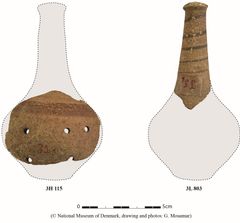
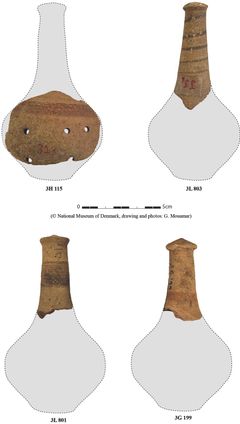
The mixture of clay from which the rattles are made is of the exact same composition as the professionally made pottery from the ancient city of Hama where they were found, showing that the rattles were part of the potters’ professional range alongside other ceramic wares.
The rattles were likely sold at the market.
“It shows us that parents in the past loved their children and invested in their wellbeing and their sensorimotor development, just as we do today. Perhaps parents also needed to distract their children now and then so that they could have a bit of peace and quiet to themselves. Today, we use screens, back then it was rattles,” says senior researcher at the National Museum of Denmark Mette Marie Hald, one of the co-authors of the study.
Rattles – and children – are overlooked in archaeology
Although the rattles contained little pieces of clay or small pebbles, which enabled the production of sound, the noise they make is so low that the scholars rule out the possibility that they might have been used as musical instruments.
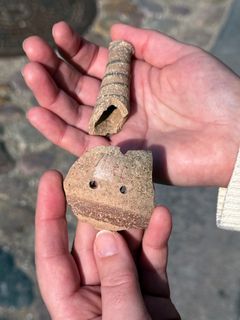
Moreover, the handles are very small and not suitable for adults, but they fit exactly into a small child’s hand.
“When you find items such as these, the tendency in archaeology has been to interpret them as musical instruments or even cultic objects when, really, they are something much more down-to-earth and relatable such as toys for children,” says Mette Marie Hald.
Tip of the iceberg
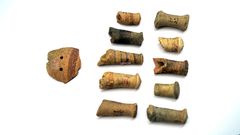
The team of researchers identified a total of 19 rattles from an Early Bronze Age residential quarter within the city of Hama. This is the largest collection of this type of rattles from the Near East.
However, Mette Marie Hald estimates that there must be many more rattles from archaeological sites stored in museum collections, but they are difficult to recognize as such from their fragments.
For this reason, the scholars have put together a manual to identify rattles, says Mette Marie Hald.
“I hope that this will provide us with a greater insight into the world of children in the past. From an economic point of view, it is fascinating that already 4500 years ago, there was an actual market for commercial toys. At the same time, it is touching to get a glimpse of a family’s everyday life – perhaps a parent stopped at a market stand on their way home and bought a rattle as a present for their child. This scenario is entirely recognisable to us today.”
The study was financed by Independent Research Fund Denmark.
Kontakter
Mette Marie HaldSenior Researcher, the National Museum of Denmark
Tlf:+45 41206175mette.marie.hald@natmus.dkJohn Fhær Engedal NissenKommunikationsmedarbejderNationalmuseet
Tlf:+45 41 20 68 49jni@natmus.dkBilleder


Nationalmuseet
Nationalmuseet er Danmarks kulturhistoriske hovedmuseum. Det ligger i Prinsens Palæ i København, hvor det har haft adresse siden 1849.
Nationalmuseet består foruden af besøgsstedet i København også af en forsknings-, samlings og bevaringsafdeling, der tager sig af konservering og bevaring af Danmarks kulturskatte samt forskning i både kulturhistoriske og naturvidenskabelige emner.
Der er 18 besøgssteder knyttet til Nationalmuseets organisation, som Rane Willerslev er direktør for.
Følg pressemeddelelser fra Nationalmuseet – Forskning og Kulturarv
Skriv dig op her, og modtag pressemeddelelser på e-mail. Indtast din e-mail, klik på abonner, og følg instruktionerne i den udsendte e-mail.
Flere pressemeddelelser fra Nationalmuseet – Forskning og Kulturarv
4.500 year old food remains reveal sophisticated cooking in Early Bronze Age Syria14.9.2026 10:09:10 CEST | Press release
New research shows a sophisticated kitchen in ancient Syria dating back 4,500 years, featuring the use of two different types of cooking pots and a range of ingredients—such as goat, grain, and gazelle—as well as resin used as a spice.
4.500 år gamle madrester afslører avanceret madlavning i bronzealderens Syrien14.9.2026 08:24:09 CEST | Pressemeddelelse
Ny forskning viser et avanceret køkken i oldtidens Syrien for 4.500 år siden med brug af to forskellige grydetyper og en række ingredienser som ged, frugt, gazelle - og harpiks som krydderi.
Affald, brand og klimakrise: Stort bogværk om byggeloven viser, hvordan samfundets udfordringer har formet arkitekturen28.8.2026 09:00:25 CEST | Pressemeddelelse
Byggeloven har ændret sig mange gange gennem historien for at imødekomme de aktuelle samfundsproblemer. Nu samler et stort bogværk hele byggelovens historie: Fra affaldsproblemer i middelalderen til brandsikring i 1700-tallet og til nyere tiders fokus på energiforbrug i bygninger og byer.
Dansk skibsvrag med voldsom og tragisk historie undersøges nu nærmere11.5.2026 07:09:13 CEST | Pressemeddelelse
Forskere fra Nationalmuseet påbegynder i dag nye undersøgelser af 1600-talsvraget af det danske skib ”Havmanden” – et skib, der oplevede det voldsomste mytteri i dansk søfartshistorie. Målet er blandt andet at finde flere detaljer om menneskene ombord, som oplevede skibets tragiske skæbne.
To arkæologer hædres for dedikeret undervisning8.5.2026 16:24:27 CEST | Pressemeddelelse
Den største pris inden for arkæologi i Danmark uddelt af Erik Westerby Fondet går i år til lektor Henriette Lyngstrøm og lektor emeritus Per Ole Rindel. De får hver et hæderslegat for deres dedikerede og mangeårige indsats i undervisningen af de unge arkæologistuderende på Københavns Universitet.
I vores nyhedsrum kan du læse alle vores pressemeddelelser, tilgå materiale i form af billeder og dokumenter samt finde vores kontaktoplysninger.
Besøg vores nyhedsrum