Gastronomic artist is awarded the Sonning Prize 2025
27.1.2025 09:00:00 CET | Københavns Universitet | Pressemeddelelse
French Hervé This, who invented molecular gastronomy, has fundamentally changed European food culture and put gastro experiences at the top of many people's bucket lists. Now, he receives Denmark’s biggest cultural award at the University of Copenhagen.
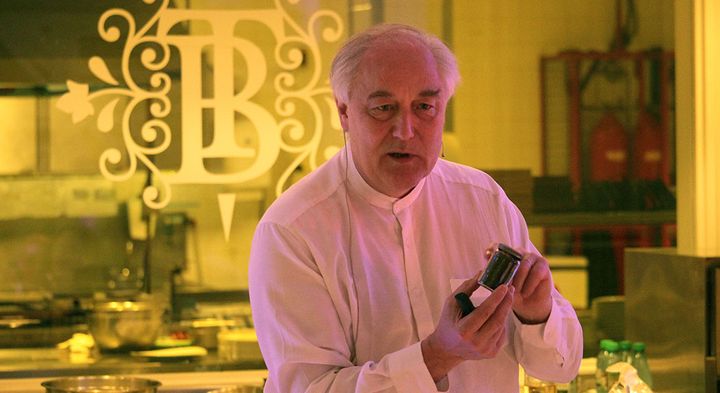
Science and culture come together when chemist Hervé This is awarded the Sonning Prize 2025 at a ceremony on 9 April 2025 at the University of Copenhagen. The award comes with DKK 1 million.
As the founder of molecular gastronomy, Hervé This has revolutionised European food culture, which also has put Denmark on the world map as a top destination for gastro-tourists.
In his 2002 international bestseller Molecular Gastronomy, Hervé This introduced the chemical and physical principles that can transform a classic meal into an extraordinary culinary experience. The principles are used by chefs across the world in their quest for recognition and Michelin stars. Noma, Alchemist and The Fat Duck are examples of European restaurants that unfold This’s scientific approach, attracting international tourists to their culinary strongholds on par with other cultural attractions.
The essence of molecular gastronomy is to change the shape, texture and flavour of raw ingredients during cooking and combine them to create new, unique tastes and sensory experiences that often challenge the traditional perception of food.
"Hervé This has been a pioneer in molecular gastronomy and given the world a scientific approach to cooking, raising the bar for precision and innovation in the culinary arts. Molecular gastronomy is an art that uses food to activate the senses and evoke emotions," say Professor Karl Anker Jørgensen, Aarhus University, Professor Marie-Louise B. Nosch, University of Copenhagen, Steffen Brandt, musician, Erik A. Frandsen, artist, and Birgitte Nauntofte, chair of the Aarhus University Board, who have nominated Hervé This for the Sonning Prize.
Molecular gastronomy is also for the general public
Molecular gastronomy sounds like something that is limited to the fine-dining segment. However, it is also used in education, healthcare and private homes – with sous-vide cookers being more or less mainstream.
In healthcare, molecular gastronomy is, for example, used to create better meals and sensory experiences for people with chewing and swallowing problems, which helps increase their quality of life. Students across educational levels are taught molecular gastronomy, which they can use in different areas of the food industry, such as food innovation, food production, catering, canteen services, etc. These aspects of what molecular gastronomy is and can be used for show that Hervé This has pushed the culinary and cultural boundaries of food culture.
“The University of Copenhagen is excited to present the Sonning Prize to Hervé This. Naturally, science is what’s dearest to us. With this award, we honour a science that has had a huge impact on European food culture and the development of food tourism as a phenomenon as well as on how the general public perceives food. Molecular gastronomy is a perfect example of how formulas and experiments have moved from the lab into the real world," says Henrik C. Wegener, Rector of the University of Copenhagen, chair of the Sonning Foundation and MSc in food science.
Hervé This is a chemist. As early as 1988, he and the late professor from the University of Oxford, Nicholas Kurti, presented their scientific discipline Molecular and Physical Gastronomy. In addition to his principal work, Molecular Gastronomy, Hervé This has published another international bestseller Note-by-Note Cuisine (2014) and other gastronomic handbooks. He has received numerous awards and international recognition.
Sonning Prize 2025
Hervé This will be awarded the Sonning Prize on 9 April 2025 at a ceremony in the Ceremonial Hall at the University of Copenhagen. After the ceremony, there will be a press conference where the attending media can put questions to Hervé This.
About the Sonning Prize
On the Sonning Prize website, you can read more about the award and see previous recipients.
Nøgleord
Kontakter
Nena ThomassenUCPH Communication, University of Copenhagen
Tlf:004593565390nst@adm.ku.dkBilleder
Følg pressemeddelelser fra Københavns Universitet
Skriv dig op her, og modtag pressemeddelelser på e-mail. Indtast din e-mail, klik på abonner, og følg instruktionerne i den udsendte e-mail.
Flere pressemeddelelser fra Københavns Universitet
Researchers create a Little Big Bang: Bowling-pin-shaped nuclei shed new light on the Universe’s first moments20.8.2026 09:07:36 CEST | Press release
Researchers from the University of Copenhagen have succeeded in recreating the primordial matter that filled the Universe shortly after the Big Bang – by smashing much smaller atomic nuclei together than previously thought possible. These microscopic Big Bangs could provide new insights into the Universe’s earliest moments while also helping researchers understand one of the fundamental questions in nuclear physics.
Forskere skaber et mini-Big Bang: Bowlingkegle-formede atomkerner giver nyt indblik i Universets første øjeblikke20.8.2026 07:22:00 CEST | Pressemeddelelse
Det er lykkedes forskere fra Københavns Universitet at genskabe det urstof, som Universet bestod af lige efter Big Bang – men ved at smadre langt lettere atomkerner mod hinanden end man hidtil har troet muligt. Disse mikroskopiske Big Bangs kan give os nye indsigter i Universets fødsel og samtidig hjælpe os til at forstå et af kernefysikkens grundmysterier.
Calcium supplements may slow bone loss in postmenopausal women18.8.2026 09:45:19 CEST | Pressemeddelelse
A new study from the University of Copenhagen shows that daily calcium supplementation in the years following menopause may help prevent loss of bone mass. Further it can help reduce the risk of osteoporosis. The researcher behind the study believes the results should have implications for future recommendations for women in this age group.
Calciumtilskud kan bremse knogletab hos kvinder efter overgangsalderen18.8.2026 09:41:50 CEST | Pressemeddelelse
Et nyt studie fra Københavns Universitet viser, at dagligt calciumtilskud i årene efter overgangsalderen kan være med til at forebygge tab af knoglemasse. Videre kan det bidrage til at mindske risikoen for knogleskørhed. Forsker bag mener, at resultaterne bør få betydning for fremtidige anbefalinger til kvinder i den aldersgruppe.
Constipation is common in astronauts – blood tests provide new answers17.8.2026 06:00:00 CEST | Pressemeddelelse
Many things are different in space – including how the intestines work. Constipation is a known side effect of space travel, but until now we have known little about why it happens. Now, researchers from the University of Copenhagen, in collaboration with NASA, have examined blood samples from astronauts and have suggestions as to why the intestines slow down in space. This may provide useful information both for astronauts and for patients on Earth.
I vores nyhedsrum kan du læse alle vores pressemeddelelser, tilgå materiale i form af billeder og dokumenter samt finde vores kontaktoplysninger.
Besøg vores nyhedsrum