Gastronomic artist is awarded the Sonning Prize 2025
27.1.2025 09:00:00 CET | Københavns Universitet | Pressemeddelelse
French Hervé This, who invented molecular gastronomy, has fundamentally changed European food culture and put gastro experiences at the top of many people's bucket lists. Now, he receives Denmark’s biggest cultural award at the University of Copenhagen.
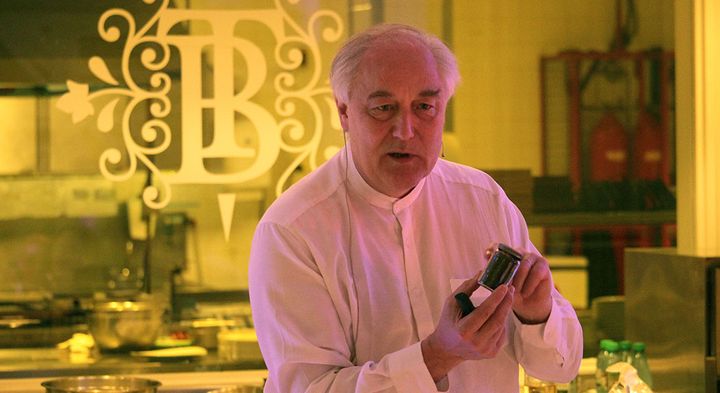
Science and culture come together when chemist Hervé This is awarded the Sonning Prize 2025 at a ceremony on 9 April 2025 at the University of Copenhagen. The award comes with DKK 1 million.
As the founder of molecular gastronomy, Hervé This has revolutionised European food culture, which also has put Denmark on the world map as a top destination for gastro-tourists.
In his 2002 international bestseller Molecular Gastronomy, Hervé This introduced the chemical and physical principles that can transform a classic meal into an extraordinary culinary experience. The principles are used by chefs across the world in their quest for recognition and Michelin stars. Noma, Alchemist and The Fat Duck are examples of European restaurants that unfold This’s scientific approach, attracting international tourists to their culinary strongholds on par with other cultural attractions.
The essence of molecular gastronomy is to change the shape, texture and flavour of raw ingredients during cooking and combine them to create new, unique tastes and sensory experiences that often challenge the traditional perception of food.
"Hervé This has been a pioneer in molecular gastronomy and given the world a scientific approach to cooking, raising the bar for precision and innovation in the culinary arts. Molecular gastronomy is an art that uses food to activate the senses and evoke emotions," say Professor Karl Anker Jørgensen, Aarhus University, Professor Marie-Louise B. Nosch, University of Copenhagen, Steffen Brandt, musician, Erik A. Frandsen, artist, and Birgitte Nauntofte, chair of the Aarhus University Board, who have nominated Hervé This for the Sonning Prize.
Molecular gastronomy is also for the general public
Molecular gastronomy sounds like something that is limited to the fine-dining segment. However, it is also used in education, healthcare and private homes – with sous-vide cookers being more or less mainstream.
In healthcare, molecular gastronomy is, for example, used to create better meals and sensory experiences for people with chewing and swallowing problems, which helps increase their quality of life. Students across educational levels are taught molecular gastronomy, which they can use in different areas of the food industry, such as food innovation, food production, catering, canteen services, etc. These aspects of what molecular gastronomy is and can be used for show that Hervé This has pushed the culinary and cultural boundaries of food culture.
“The University of Copenhagen is excited to present the Sonning Prize to Hervé This. Naturally, science is what’s dearest to us. With this award, we honour a science that has had a huge impact on European food culture and the development of food tourism as a phenomenon as well as on how the general public perceives food. Molecular gastronomy is a perfect example of how formulas and experiments have moved from the lab into the real world," says Henrik C. Wegener, Rector of the University of Copenhagen, chair of the Sonning Foundation and MSc in food science.
Hervé This is a chemist. As early as 1988, he and the late professor from the University of Oxford, Nicholas Kurti, presented their scientific discipline Molecular and Physical Gastronomy. In addition to his principal work, Molecular Gastronomy, Hervé This has published another international bestseller Note-by-Note Cuisine (2014) and other gastronomic handbooks. He has received numerous awards and international recognition.
Sonning Prize 2025
Hervé This will be awarded the Sonning Prize on 9 April 2025 at a ceremony in the Ceremonial Hall at the University of Copenhagen. After the ceremony, there will be a press conference where the attending media can put questions to Hervé This.
About the Sonning Prize
On the Sonning Prize website, you can read more about the award and see previous recipients.
Nøgleord
Kontakter
Nena ThomassenUCPH Communication, University of Copenhagen
Tlf:004593565390nst@adm.ku.dkBilleder
Følg pressemeddelelser fra Københavns Universitet
Skriv dig op her, og modtag pressemeddelelser på e-mail. Indtast din e-mail, klik på abonner, og følg instruktionerne i den udsendte e-mail.
Flere pressemeddelelser fra Københavns Universitet
Maskine i molekylestørrelse: Forskere har bygget verdens mindste turbine23.10.2026 11:57:52 CEST | Pressemeddelelse
Et internationalt forskerhold med centrale bidrag fra Københavns Universitet er lykkedes med at bygge et skrueformet molekyle, som drejer rundt, når man sætter strøm til det: en usynlig turbine i ekstrem miniature. Maskinen markerer et gennembrud inden for molekylære maskiner, og bedriften er netop udgivet i det prestigefyldte Nature.
Music can enhance the flavour of your food22.10.2026 08:10:00 CEST | Press release
Listening to music while you eat can shape the way your brain constructs flavour. A new study from the University of Copenhagen shows for the first time how sound and taste interact in the brain at a biological level.
Musik kan forstærke smagen af din mad22.10.2026 08:10:00 CEST | Pressemeddelelse
Hvis du hører musik, når du spiser, kan det være med til at forme den måde, hjernen konstruerer din smagsoplevelse på. Det viser et nyt studie fra Københavns Universitet, der for første gang giver et biologisk indblik i, hvordan lyd og smag smelter sammen i hjernen.
Danmark mangler loven, der kan få AI ud af den offentlige sektors digitale kirkegård21.10.2026 06:05:00 CEST | Pressemeddelelse
Uklare regler spænder ben for brugen af kunstig intelligens i det offentlige. To juraforskere foreslår nu en samlet AI-lov, der kan skabe klarhed og styrke både innovation og borgernes retssikkerhed.
Mobilfri undervisning løfter karaktererne, viser stort eksperiment20.10.2026 06:05:00 CEST | Pressemeddelelse
Studerende klarer sig bedre fagligt, når telefonen lægges væk i undervisningen. Effekten er størst blandt dem, der i forvejen har de laveste karakterer, viser et nyt internationalt studie fra bl.a. Københavns Universitet.
I vores nyhedsrum kan du læse alle vores pressemeddelelser, tilgå materiale i form af billeder og dokumenter samt finde vores kontaktoplysninger.
Besøg vores nyhedsrum