Danish innovation to convert nutrients and CO2 from shrimp and fish farming into seaweed
16.5.2023 08:48:46 CEST | Københavns Universitet | Press release
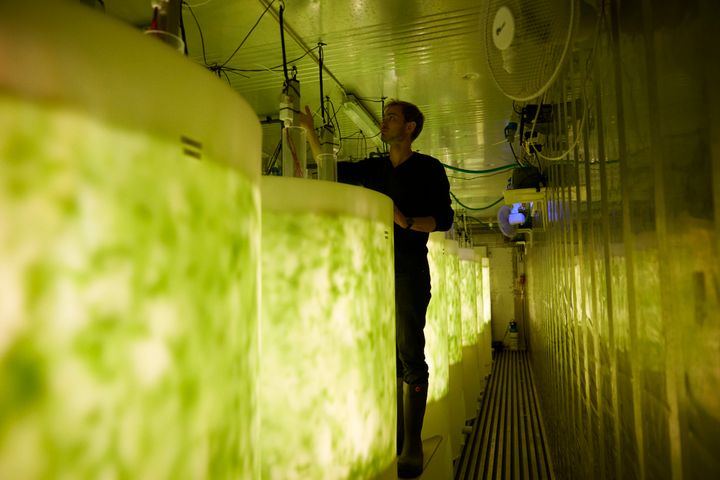
Together with Aarhus University and a range of companies, researchers from the University of Copenhagen will develop the sustainable co-production of fish, shrimp and seaweed.
Over the next four years, they will work to further develop a closed, sustainable cycle on land that utilizes residual nutrients and CO2 from shrimp and fish farming to grow high-value seaweed for the food and healthcare industries. The project is called SeaFree.
"The project aims to use seaweed production to absorb and convert emissions from land-based aquaculture into a high-value product. Among other things, the seaweed will be used for dietary supplements that can prevent diabetes and sustainable foodstuffs innovations. In addition to capturing emissions that would have otherwise been emitted into the atmosphere and aquatic environment, the seaweed produced is both healthy and rich in umami flavour," says Professor Marianne Thomsen from the Department of Food Science at the University of Copenhagen.
A single 40-foot container makes seaweed in a week
The project, funded by Innovation Fund Denmark with DKK 14.4 million (€1.9m), is being carried out in a collaboration among the companies Pure Algae, DryingMate, Food Diagnostics, Sigrid Therapeutics, XOventure GmbH/Rigi Care, KOST, SOF Odden Caviar and HanseGarnelen.
The project’s starting point is a 40ft container setup equipped with eight one-thousand-liter tanks. The container solution is a so-called Plug’n’Play technology with great export potential. By combining salt water, CO2 and nutrients with LED lights, the unit can produce a full batch of seaweed in just one week, resulting in an extremely short harvest period.
"SeaFree represents the latest in recycling technology for land-based shrimp and fish farming. Besides capturing emissions, the system also recirculates surplus heat from the plants to the Plug'n'Play technology. The project includes the development of a new technology that makes it possible to use surplus heat to dry the seaweed which is then sold to the healthcare industry. In this way, SeaFree contributes to a more sustainable and efficient production process," says Marianne Thomsen.
A potential export venture
The final product consists of climate-friendly fish, shrimp and sea lettuce – a healthy, fiber and protein-rich seaweed species. In addition to the production of various dietary supplements, sea lettuce is also used as an edible accompaniment when people buy seafood.
"Part of the project is also about developing recipes that increase awareness of seaweed as an ingredient for delicious home-cooked meals," says Professor Marianne Thomsen.
According to Thomsen, there is huge potential in farming fish and seaweed in the manner envisioned by SeaFree. If all of the world's land-based shrimp and fish farms implemented the method, it could significantly reduce the CO2 footprint of global food systems.
As such, the combination of aquaculture and seaweed cultivation in closed systems may well develop into a new Danish export market.
"On a global level, it will be possible to implement the technology, marketed as "SeaFree Synergy Solutions", anywhere in the world. As for the technology’s environmental benefits, they are unequivocal. "We are already in contact with South Korea, which is very interested in the technology and the project’s development," she concludes.
Contacts
Marianne Thomsen
Professor
Department of Food Science
University of Copenhagen
Mobile: + 45 22 29 26 27
mth@food.ku.dk
Michael Skov Jensen
Journalist and team coordinator
The Faculty of Science
University of Copenhagen
Mobile: +45 93 56 58 97
msj@science.ku.dk
Images
About Københavns Universitet
Københavns Universitet blev grundlagt i 1479 og har i dag cirka 37.000 studerende og 10.000 ansatte – heraf flere end 5.000 forskere – og en omsætning på 9,4 milliarder kroner. 10 nobelpriser er blevet tildelt forskere med tilknytning til universitetet.
Subscribe to releases from Københavns Universitet
Subscribe to all the latest releases from Københavns Universitet by registering your e-mail address below. You can unsubscribe at any time.
Latest releases from Københavns Universitet
Less food waste: Supermarkets can save money by giving surplus food away23.4.2026 10:03:13 CEST | Press release
When supermarkets choose the right strategy for surplus food, they can both reduce food waste and improve their bottom line. An analysis from the University of Copenhagen shows that it is often more profitable to donate surplus food than to throw it away. In many cases, doing so leads to a direct financial gain.
Historiske analyser kan hjælpe kommunerne i mål med den grønne omstilling21.4.2026 10:07:05 CEST | Pressemeddelelse
Gamle konflikter og dårlige erfaringer med tidligere naturprojekter gør det svært for kommunerne at gennemføre store klimatiltag som udtagning af lavbundsjorde, viser ny forskning fra Københavns Universitet. De historiske erfaringer bør bruges til at forbedre dialogen med borgerne, når der skal planlægges nye klimaindsatser, mener forskerne.
Mindre madspild: Butikkerne kan spare ved at give madvarer væk21.4.2026 07:16:00 CEST | Pressemeddelelse
Når supermarkeder vælger den rigtige strategi for overskudsmad, kan de både reducere madspild og forbedre bundlinjen. En analyse fra Københavns Universitet peger på, at det oftest er mere rentabelt at donere madvarer bort frem for at smide dem ud. I mange tilfælde er det direkte en økonomisk gevinst.
Stenalderfolk forsvandt: Nyt DNA-studie afslører dramatisk befolkningsskifte for 5.000 år siden20.4.2026 06:00:00 CEST | Pressemeddelelse
DNA fra flere tusinde år gamle skeletter i Frankrig afslører pest, høj dødelighed og nye sociale strukturer, og kaster lys over, hvordan Europas befolkning blev formet.
Forskere: Chatbots er partiske og bør ikke bruges til politisk rådgivning16.4.2026 14:59:57 CEST | Pressemeddelelse
Populære chatbots som ChatGPT og Gemini er ikke neutrale, og de favoriserer bestemte partier, når man spørger dem, hvem man skal stemme på. Det gør dem uegnede til rådgivning i forbindelse med et valg, mener forskere fra Københavns Universitet, som står bag en ny analyse af chatbots’ politiske bias.
In our pressroom you can read all our latest releases, find our press contacts, images, documents and other relevant information about us.
Visit our pressroom