
Danish quantum physicists make nanoscopic advance of colossal significance
26.1.2023 20:00:00 CET | Københavns Universitet | Press release
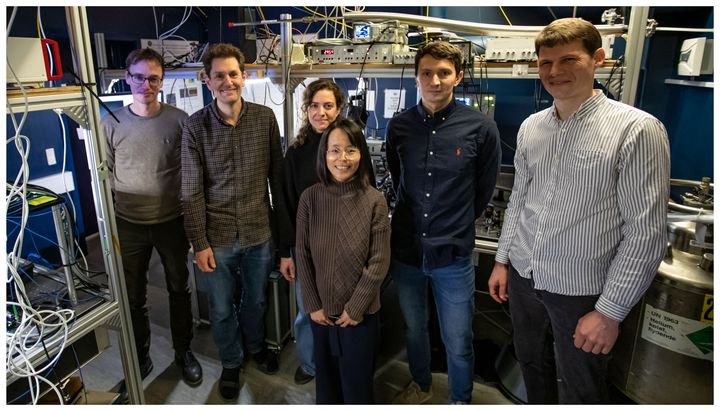
Going from one to two is a minor feat in most contexts. But in the world of quantum physics, doing so is crucial. For years, researchers around the world have strived to develop stable quantum light sources and achieve the phenomenon known as quantum mechanical entanglement – a phenomenon, with nearly sci-fi-like properties, where two light sources can affect each other instantly and potentially across large geographic distances. Entanglement is the very basis of quantum networks and central to the development of an efficient quantum computer.
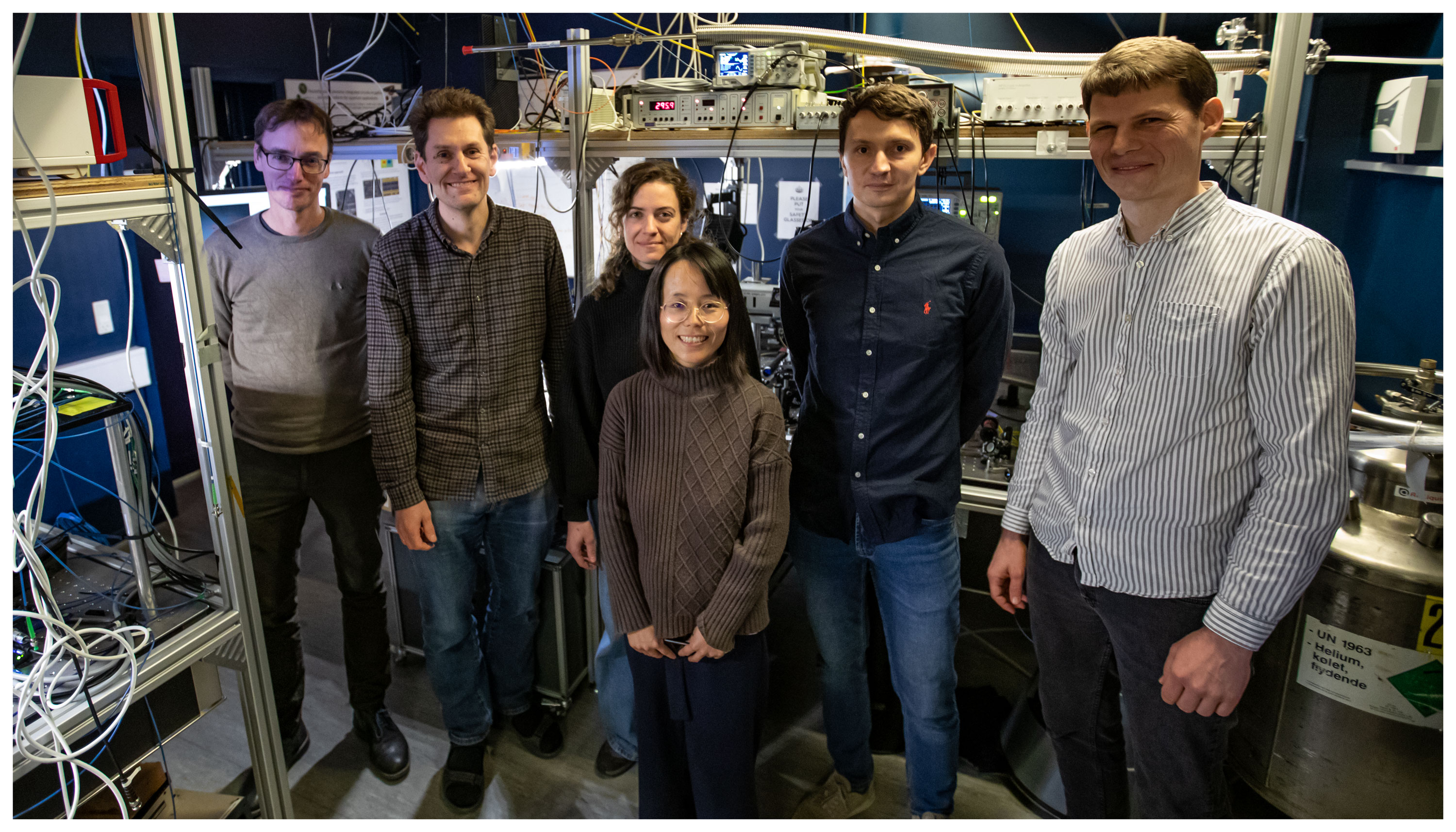
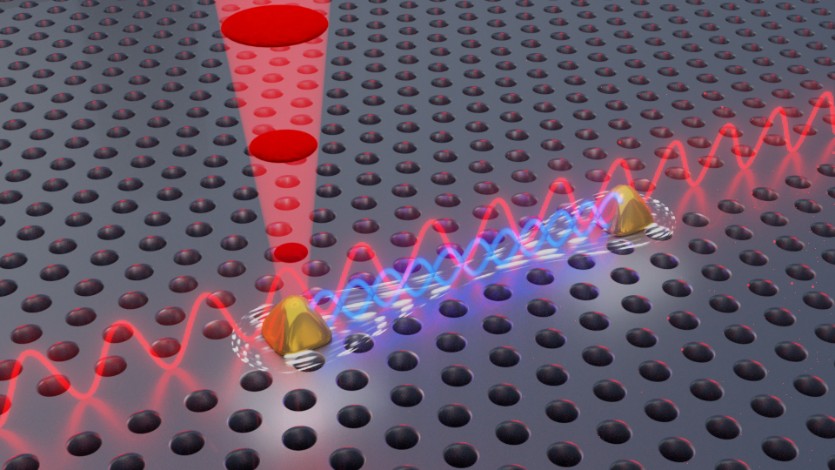
Today, researchers from the Niels Bohr Institute published a new result in the highly esteemed journal Science, in which they succeeded in doing just that. According to Professor Peter Lodahl, one of the researchers behind the result, it is a crucial step in the effort to take the development of quantum technology to the next level and to "quantize" society’s computers, encryption and the internet.
"We can now control two quantum light sources and connect them to each other. It might not sound like much, but it’s a major advancement and builds upon the past 20 years of work. By doing so, we’ve revealed the key to scaling up the technology, which is crucial for the most ground-breaking of quantum hardware applications," says Professor Peter Lodahl, who has conducted research the area since 2001.
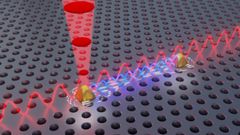
The magic all happens in a so-called nanochip – which is not much larger than the diameter of a human hair – that the researchers also developed in recent years.
Quantum sources overtake the world's most powerful computer
Peter Lodahl's group is working with a type of quantum technology that uses light particles, called photons, as micro transporters to move quantum information about.
While Lodahl's group is a leader in this discipline of quantum physics, they have only been able to control one light source at a time until now. This is because light sources are extraordinarily sensitive to outside "noise", making them very difficult to copy. In their new result, the research group succeeded in creating two identical quantum light sources rather than just one.
"Entanglement means that by controlling one light source, you immediately affect the other. This makes it possible to create a whole network of entangled quantum light sources, all of which interact with one another, and which you can get to perform quantum bit operations in the same way as bits in a regular computer, only much more powerfully," explains postdoc Alexey Tiranov, the article’s lead author.
This is because a quantum bit can be both a 1 and 0 at the same time, which results in processing power that is unattainable using today's computer technology. According to Professor Lodahl, just 100 photons emitted from a single quantum light source will contain more information than the world's largest supercomputer can process.
By using 20-30 entangled quantum light sources, there is the potential to build a universal error-corrected quantum computer – the ultimate "holy grail" for quantum technology, that large IT companies are now pumping many billions into.
Other actors will build upon the research
According to Lodahl, the biggest challenge has been to go from controlling one to two quantum light sources. Among other things, this has made it necessary for researchers to develop extremely quiet nanochips and have precise control over each light source.
With the new research breakthrough, the fundamental quantum physics research is now in place. Now it is time for other actors to take the researchers' work and use it in their quests to deploy quantum physics in a range of technologies including computers, the internet and encryption.
"It is too expensive for a university to build a setup where we control 15-20 quantum light sources. So, now that we have contributed to understanding the fundamental quantum physics and taken the first step along the way, scaling up further is very much a technological task," says Professor Lodahl.
The research was conducted at the Danish National Research Foundation's "Center of Excellence for Hybrid Quantum Networks (Hy-Q)" and is a collaboration between Ruhr University Bochum in Germany and the the University of Copenhagen’s Niels Bohr Institute.
Contacts
Peter Lodahl
Professor
Niels Bohr Institute
University of Copenhagen
Mobile: + 45 20 56 53 03
Email: lodahl@nbi.ku.dk
Alexey Tiranov
Postdoc
Niels Bohr Institute
University of Copenhagen
Phone: + 45 35 33 51 39
Email: alexey.tiranov@nbi.ku.dk
Michael Skov Jensen
Journalist and team coordinator
The Faculty of Science
University of Copenhagen
Mobile: + 45 93 56 58 97
msj@science.ku.dk
Images
About Københavns Universitet

Københavns Universitet blev grundlagt i 1479 og har i dag cirka 37.000 studerende og 10.000 ansatte – heraf flere end 5.000 forskere – og en omsætning på 9,4 milliarder kroner. 10 nobelpriser er blevet tildelt forskere med tilknytning til universitetet.
Subscribe to releases from Københavns Universitet
Subscribe to all the latest releases from Københavns Universitet by registering your e-mail address below. You can unsubscribe at any time.
Latest releases from Københavns Universitet
Dog training choices reflect owners’ ethical views on animals5.5.2026 06:00:00 CEST | Pressemeddelelse
A new study from the University of Copenhagen explores how dog owners’ ethical views on animals are reflected in the training methods they use. The findings may give dog owners new insight into why they choose certain training approaches over others.
Straf eller godbid afslører hundeejeres etiske syn på dyr5.5.2026 06:00:00 CEST | Pressemeddelelse
Et nyt studie fra Københavns Universitet har undersøgt, hvordan hundeejeres etiske syn på dyr hænger sammen med, hvilke træningsmetoder de bruger. Det kan være en øjenåbner for hundeejere, der vil forstå, hvorfor de vælger netop de træningsmetoder, de gør.
Mødre uden særlig fedtsyre i blodet får oftere børn med astma1.5.2026 06:05:00 CEST | Pressemeddelelse
Et lille molekyle i gravide kvinders blod kobles sammen med børns risiko for at udvikle småbørnsastma og luftvejsinfektioner, viser nyt studie.
Første psykiatriske indlæggelse bliver for de fleste starten på et langvarigt sygdomsforløb30.4.2026 10:39:41 CEST | Pressemeddelelse
Ved at følge en gruppe unge med psykiske problemer gennem 20 år har forskere fra Københavns Universitet fundet, at hele 95 procent igen kommer i kontakt med hospitalspsykiatrien. Samtidig har patienterne en tydelig social slagside, og det peger på, at første indlæggelse er et kritisk vindue for at sætte ind med massiv støtte.
Less food waste: Supermarkets can save money by giving surplus food away23.4.2026 10:03:13 CEST | Press release
When supermarkets choose the right strategy for surplus food, they can both reduce food waste and improve their bottom line. An analysis from the University of Copenhagen shows that it is often more profitable to donate surplus food than to throw it away. In many cases, doing so leads to a direct financial gain.
In our pressroom you can read all our latest releases, find our press contacts, images, documents and other relevant information about us.
Visit our pressroom