
AI can predict a patient's risk of death simply by looking at a photograph
27.11.2026 06:00:00 CET | Københavns Universitet | Press release
Researchers from the University of Copenhagen have developed an AI model that can identify the risk of early death more accurately than the methods currently used in emergency departments. It also identifies seriously ill patients who might otherwise be overlooked, but the researchers emphasise that the AI model should be seen as a supplement to a medical assessment.
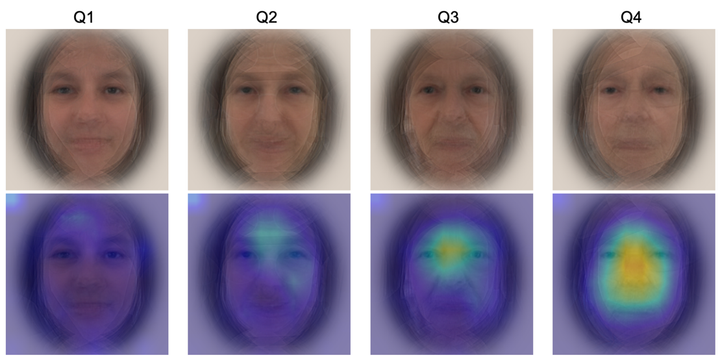
A single photograph of a patient's face can contain surprisingly accurate information about their health. In fact, it may reveal enough to predict their risk of death and when they are likely to die.
That’s the conclusion of a new study in which researchers from the University of Copenhagen developed an AI model capable of estimating a patient's likelihood of death based on a photograph taken at hospital admission. The model was trained on nearly 28,000 photographs of patients from the emergency department at Herlev Hospital and performed better than the existing methods healthcare professionals use in emergency departments to assess how critically ill patients are.
"We know that experienced doctors can often tell at a glance whether a patient is seriously ill. This is sometimes referred to as a clinical gestalt. What is interesting is that we can now use an AI model to quantify many of the same signals with a high degree of precision," says Morten Scheibye-Knudsen, Associate Professor at the Department of Cellular and Molecular Medicine at the University of Copenhagen and senior author of the study.
Better than existing methods
In busy emergency departments, healthcare professionals sometimes take photographs of patients to prevent mistaken identities and improve patient safety. These photographs were used to train the AI model. Researchers then asked the model to assess each patient's risk of dying within one day, one week and one month, and compared the predictions with data on when the patients actually died. The model proved to be remarkably accurate.
It was also more accurate than the methods currently used by doctors and nurses in emergency departments. These assessments are based on factors such as respiratory rate, heart rate, oxygen saturation, blood pressure and level of consciousness, which are combined into a score from 1 to 7 known as the Early Warning Score (EWS).
"Our AI model was 34 per cent better at predicting the risk of early death than the EWS," says Morten Scheibye-Knudsen.
Identifies patients who would otherwise be overlooked
The study also showed that the AI model could identify a previously overlooked group of patients at significantly increased risk of death. Among patients whom healthcare professionals had classified as low risk, the model identified a subgroup with a more than thirteen-fold increased risk of dying.
"The model appears able to identify patients that current systems fail to detect. This could prompt healthcare professionals to monitor a patient more closely or carry out further examinations," says Indra Heckenbach, former postdoctoral researcher at the University of Copenhagen and lead author of the study. He helped develop the AI model and has since founded a company in the United States that develops clinical AI models for assessing health risks.
Captures many small signals
But what exactly is the AI detecting in our faces that may reveal disease? The findings suggest that the model primarily focuses on central facial features around the eyes, nose and mouth, while also assessing skin tone and complexion.
The AI model was particularly effective at identifying conditions such as heart disease, COPD, diabetes and chronic kidney disease, as well as more general indicators of frailty and disease burden.
"The model is probably capturing a combination of many small signals. Individually, these may be difficult to detect, but together they reveal important information about a patient's health," says Indra Heckenbach.
Significant implications for ageing research
The findings may also have important implications for research into ageing. One of the major challenges in the field is identifying biomarkers, that is, biological indicators that not only reflect how old we are but also how well our bodies are functioning and how great our risk is of developing disease and dying.
"When we study ageing, we are actually less interested in how many years a person has lived and more interested in how well their body is functioning. The fact that we can detect signals from a single facial photograph that are associated with ageing, a wide range of age-related diseases and mortality is therefore particularly exciting. In the long term, this could provide an entirely new tool for studying how we age," says Morten Scheibye-Knudsen.
A low-cost and accessible tool for the future
The researchers emphasise that the technology is not yet ready for use in healthcare settings. More studies are needed to confirm the findings in clinical practice and to better understand which physiological characteristics the model is assessing.
In principle, the technology could be deployed on a standard smartphone. In the longer term, the researchers see potential applications in emergency departments, telemedicine and out-of-hours medical services to help assess which patients are in the greatest need of urgent care. They stress, however, that the model would always serve as a supplement to the clinical judgement of doctors and nurses.
"A photograph can be taken in a matter of seconds, so this could become an additional tool for identifying patients who need closer follow-up or monitoring," says Morten Scheibye-Knudsen.
-----
About the study
- The AI model was trained on 27,660 photographs from the emergency department at Herlev Hospital
- The photographs were taken to prevent patient mix-ups or in situations where patients were unable to confirm their identity themselves, or where many patients had similar clinical pathways
- The model was validated using a dataset of celebrities from Wikipedia, where researchers knew both when the photograph was taken and when the person died. The model was also able to predict mortality in this dataset
- Patients were followed through Danish national health registries
- A total of 14,127 patients died during the follow-up period
- Compared with the Early Warning Score (EWS), the AI model improved the classification of patients at risk of early death by 34 per cent
- The study was published in Nature Communications
Contacts
Associate Professor Morten Scheibye-Knudsen
Department of Cellular and Molecular Medicine
E-mail: mscheibye@sund.ku.dk
Mobile: +45 42 50 70 60
Communications Consultant Sole Bugge Møller
UCPH Press Office
E-mail: sole@adm.ku.dk
Mobile: +45 93 51 84 42
About the University of Copenhagen
The University of Copenhagen was founded in 1479 and today has 37,000 students and 10,000 employees – of whom more than 5,000 are researchers – and revenues of DKK 11.3 billion.
10 Nobel Prizes have been awarded to researchers at the University.
Subscribe to releases from Københavns Universitet
Subscribe to all the latest releases from Københavns Universitet by registering your e-mail address below. You can unsubscribe at any time.
Latest releases from Københavns Universitet
AI kan forudsige patienters risiko for at dø blot ved at kigge på et billede27.11.2026 06:00:00 CET | Pressemeddelelse
Forskere fra Københavns Universitet har skabt en AI-model, der kan identificere risiko for tidlig død bedre end de metoder akutmodtagelserne bruger i dag. Den finder også alvorligt syge patienter, der ellers overses, men forskerne understreger at AI-modellen skal ses som et supplement til en lægefaglig vurdering.
Ny database vil skabe åbenhed om kunstig intelligens i det offentlige26.11.2026 09:30:00 CET | Pressemeddelelse
Ny kortlægning af 533 AI-projekter viser markante huller i gennemsigtigheden. For de fleste projekter er leverandøren ukendt, og hvor infrastrukturen kan identificeres, dominerer amerikanske teknologivirksomheder.
Fermented milk may have played an important role in Neolithic farmers’ rituals26.11.2026 07:31:00 CET | Press release
A new study suggests that 5,000-year-old pottery vessels from Denmark most likely contained fermented dairy products. The vessels were discovered in passage tombs, where Neolithic farmers buried their dead and performed rituals, indicating that fermented milk may have served as grave goods or used in funerary offerings.
Syrnet mælk kan have spillet vigtig rolle i stenalderbønders religiøse ritualer26.11.2026 07:28:44 CET | Pressemeddelelse
I et nyt studie viser arkæologer, at 5.000 år gamle lerkar fra Vestsjælland sandsynligvis har indeholdt syrnede mælkeprodukter, der minder om nutidens tykmælk, kefir eller skyr. Karrene er fundet i jættestuer, hvor stenalderbønderne begravede deres døde, og det tyder på, at syrnet mælk blev brugt som gravgaver eller i begravelsesritualer.
AI-billede eller ægte foto? De fleste kan ikke se forskel længere26.11.2026 06:05:00 CET | Pressemeddelelse
Vi mennesker har overraskende svært ved at afgøre, om et billede er skabt af kunstig intelligens eller er et ægte fotografi. Selv personer med stærke analytiske evner klarer sig ikke væsentligt bedre end tilfældighederne, viser nyt internationalt forskningsprojekt.
In our pressroom you can read all our latest releases, find our press contacts, images, documents and other relevant information about us.
Visit our pressroom