
Recipe for one of the world’s most important cancer drugs uncovered: Tobacco plants could produce the medicine
24.11.2026 08:10:00 CET | Københavns Universitet | Press release
As more people are diagnosed with cancer, researchers have spent years trying to understand the biological process behind the widely used cancer drug taxol. Now, researchers from the University of Copenhagen have identified the crucial blueprint for this process, a discovery that could play an important role in enabling cheaper, large-scale production of the drug.

More people around the world will receive a cancer diagnosis at some point in their lives. As this trend is expected to continue, researchers have been working to crack the code of how the widely used cancer drug taxol (paclitaxel) is naturally produced, with the aim of making its production cheaper and more efficient in the future.
Today, taxol, which is used to treat breast cancer, ovarian cancer and lung cancer, is produced through a long process that extracts related plant compounds from plants and converts them to the drug through a series of complex chemical reactions. This makes taxol one of the most expensive medicines available.
"That is why it has been essential to understand how taxol can be produced biosynthetically, so that treatment can become more accessible to patients around the world," says Professor Sotirios Kampranis from the Department of Plant and Environmental Sciences, who is also the senior author of the study published in Nature Chemical Biology.
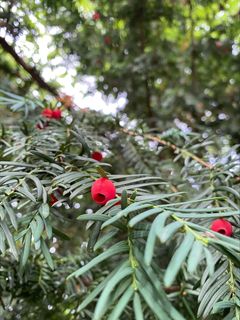
Taxol originally comes from the yew tree, where the active compound is produced in the bark. Although taxol has long been produced for cancer treatment, there has never been a complete manual describing the process that the plants use to make it. Now, researchers have assembled that missing guide.
"We have tested numerous hypotheses to uncover the complete biological pathway for producing taxol from start to finish. We now have a blueprint, essentially a recipe, that can be used to produce taxol in plants, yeast or other systems. This could pave the way for new methods of producing taxol that make manufacturing easier and the final product more affordable," says Sotirios Kampranis.
Tobacco plant can produce cancer drug
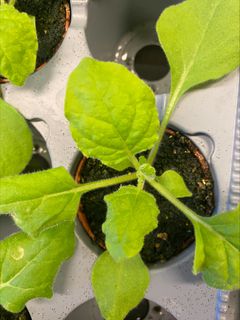
In the study, the researchers took candidate genes responsible for taxol production from the yew tree and introduced them into another plant, the tobacco species Nicotiana benthamiana. This plant grows quickly and is widely used in research.
"We introduced more than 20 of the yew tree genes into tobacco plants to demonstrate the entire biological process of taxol production step by step," says Zhen Fan, postdoctoral researcher at the Department of Plant and Environmental Sciences and co-first author of the study.
The researchers succeeded in getting the tobacco plants to produce taxol at levels comparable to those found naturally in yew tree bark.
"The tobacco plant is an effective platform for growing taxol because it provides the same cellular environment as the yew tree but is a lot faster to grow and easier to engineer" says Sotirios Kampranis.
For tobacco plants to be used in large-scale production in the future, the yew tree genes will need to become a stable part of the plant’s own genetic makeup.
"That is the next major challenge. Large-scale production, for example in greenhouses, requires stable plants that permanently contain the yew genes, so that we do not have to introduce them every time," says Sotirios Kampranis.
The key to cheaper treatment may lie in the new blueprint
In addition to using tobacco plants to produce the cancer drug, the researchers point to other possible production methods.
"Now that we have the crucial blueprint for biosynthetic taxol production, there is potential to produce it in many different ways. We also see fermented yeast cells as a promising solution," says Sotirios Kampranis.
Regardless of the method used, other researchers can now build on this blueprint to produce taxol, opening up new possibilities.
"In Denmark, hospitals and patients are not as dependent on low-cost taxol. But in many other parts of the world, affordable taxol treatment is crucial. Our discovery could ultimately contribute to cheaper taxol, making treatment more accessible in low-income countries," concludes Sotirios Kampranis.
Keywords
Contacts
Sotirios KampranisProfessor, Department of Plant and Environmental Sciences
Tel:+45 35 33 29 89soka@plen.ku.dkZhen FanPostdoctoral Researcher, Department of Plant and Environmental Sciences
Tel:+45 35 33 22 67zf@plen.ku.dkAmalie Viktoria GammelgaardKU Kommunikation, Presse
Tel:93 51 60 67amalie@adm.ku.dkImages
About the University of Copenhagen
The University of Copenhagen was founded in 1479 and today has 37,000 students and 10,000 employees – of whom more than 5,000 are researchers – and revenues of DKK 11.3 billion.
10 Nobel Prizes have been awarded to researchers at the University.
Subscribe to releases from Københavns Universitet
Subscribe to all the latest releases from Københavns Universitet by registering your e-mail address below. You can unsubscribe at any time.
Latest releases from Københavns Universitet
Opskriften på et af verdens vigtigste kræftlægemidler er fundet: Tobaksplanter kan producere midlet24.11.2026 08:10:00 CET | Pressemeddelelse
Samtidigt med at flere og flere får kræft, har forskere i årevis forsøgt at forstå den biologiske proces bag det udbredte kræftlægemidlet taxol. Nu har forskere fra Københavns Universitet fundet den afgørende skabelon på den proces, som kan spille en vigtig rolle for, at lægemidlet kan produceres billigere og i stor skala.
Hver tredje hjertestopoverlever husker noget fra tiden uden puls23.11.2026 15:22:23 CET | Pressemeddelelse
Det første danske studie af nærdødsoplevelser viser, at mange overlevere efter hjertestop har klare erindringer fra perioden, hvor de fremstod bevidstløse. Oplevelserne ligner dem, som er beskrevet i udlandet, men i Danmark ser de ud til at efterlade mennesker med flere eksistentielle spørgsmål end svar.
The ocean exchanges far more different gases with the atmosphere than we thought23.11.2026 11:00:00 CET | Press release
Far more different gases are exchanged between the ocean and the atmosphere than previously known. Extensive measurements by researchers from the University of Copenhagen document this. The new results point to a blind spot in climate models.
Havet udveksler mange flere forskellige gasser med atmosfæren, end vi troede23.11.2026 11:00:00 CET | Pressemeddelelse
For første gang har forskere fra Københavns Universitet gennem omfattende målinger vist, at der udveksles 48 kendte gasser mellem havet og atmosfæren. Målingerne fortæller os noget helt nyt om, hvad der foregår kemisk mellem vand og luft. De nye resultater peger på en blind vinkel i klimamodeller.
Discovery of curse ritual in rubbish dump surprises Egyptologist: “It must have been widespread in ancient Egypt”23.11.2026 08:54:39 CET | Press release
Forty papyrus fragments found in a rubbish deposit more than 3,000 years old turned out to be the burnt remains of a curse ritual. According to Egyptologist Fredrik Hagen, signs of mass production suggest the ritual was widespread and commonly practised in ancient Egypt.
In our pressroom you can read all our latest releases, find our press contacts, images, documents and other relevant information about us.
Visit our pressroom