
Quaise Energy Signs 50 MW Geothermal Power Purchase Agreement with Google
17.11.2026 12:50:00 CET | Business Wire | Press release
Agreement advances development of commercial-scale superhot geothermal, will supply carbon-free energy to Oregon communities as early as 2030
Quaise Energy, a leading developer of utility-scale superhot geothermal energy, today announced that Google has signed a power purchase agreement (PPA) for 50 megawatts (MW) of superhot geothermal power from Project Obsidian, Quaise’s flagship project in Central Oregon. Once online, this always-on, carbon-free energy is slated to support Google’s existing data center operations in The Dalles, Ore. and the region’s communities. The agreement will help catalyze the commercial development of superhot geothermal energy, providing benefits for ratepayers and helping protect the environment.
This press release features multimedia. View the full release here: https://www.businesswire.com/news/home/20261117923219/en/
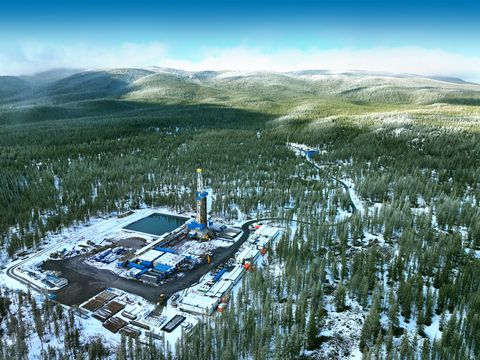
Beginning as early as 2030, Google will purchase 50 MW of power from Project Obsidian. The initial phase of development will use conventional drilling technology to access superhot geothermal conditions at commercial scale. Superhot geothermal is a virtually limitless energy source that uses the Earth’s natural heat to generate up to 10x more clean power per well than traditional geothermal systems. The second phase of development at Project Obsidian is expected to be the first in the world to use millimeter wave drilling, a technology designed to uniquely access superhot geothermal conditions worldwide.
“We started Quaise to make the Earth’s most abundant energy source universally accessible — and this agreement marks a critical next step, not just for Quaise but for the entire clean energy sector,” said Carlos Araque, CEO and President of Quaise Energy. “Together with Google, we are building the commercial foundation for superhot geothermal and cementing the United States as the global leader in geothermal power.”
Unlike traditional geothermal energy, which is limited to regions with naturally occurring hot water reservoirs rarely exceeding 400°F, Quaise develops Enhanced Geothermal Systems (EGS) at superhot conditions, which are expected to enable utility-scale projects to compete with today’s most efficient power plants. Quaise is simultaneously advancing the development of millimeter wave drilling, a technology that can plug into existing drilling rigs to economically reach superhot geothermal conditions.
The agreement builds on Google’s clean energy portfolio and pioneering support of geothermal energy. From 2010 to 2025, Google signed more than 240 agreements to purchase nearly 35 GW of new clean energy, including more than 29 GW in North America across 148 projects. As demand for electricity continues to grow across the country, Google remains committed to ensuring that energy is affordable, reliable, and accessible for families and businesses.
Google pays for 100% of the power its data centers use, and as the company builds data centers, Google covers the infrastructure needs directly driven by its growth. In Oregon, the company’s three data center campuses have already achieved 83% carbon-free energy, with residents of Northern Wasco County People’s Utility District’s service territory having the third-lowest energy rates in the state. Today’s partnership further extends Google’s clean energy and geothermal leadership, while accelerating the development of superhot geothermal as a cost-effective, clean energy resource for Oregon residents and businesses.
“Google data centers are long-term investments in the communities we call home,” said Lucia Tian, Head of Advanced Energy Technologies at Google. “This collaboration with Quaise on superhot geothermal will help fuel local economic growth while helping to build a more robust and affordable energy future for Oregon.”
This new investment extends Google’s track record as a leader powering economic growth in Oregon. Google has proudly called Oregon home since 2006, when it built its first owned-and-operated data center in The Dalles. In the last 20 years, Google has invested more than $7 billion in the state, ranks as the largest taxpayer in Wasco County in recent years, and in 2025, the company helped provide $9.3 billion of economic activity for tens of thousands of Oregon businesses, nonprofits, publishers, creators, and developers.
Quaise’s agreement with Google is the latest milestone in a period of significant momentum for the company. In August 2026, it closed a $180 million Series B financing round, including a $35 million investment from Nabors Industries.
Project Obsidian represents a significant economic opportunity for Central Oregon. The project is expected to support 200 to 400 jobs during construction, more than 50 permanent high-skilled jobs in engineering and operations, and establish the region as a hub for superhot geothermal development. Grid upgrades associated with the project will strengthen reliability for local consumers, and royalties from electricity sales will provide lasting economic benefits to the region.
Technology proven at Obsidian is expected to reduce development costs for future superhot geothermal projects across the United States, where abundant subsurface heat remains inaccessible with conventional methods.
About Quaise Energy
Quaise Energy is making the Earth’s deep heat universally accessible to deliver clean, reliable, baseload power at scale. As both a technology innovator and project developer, Quaise builds and operates solutions that harness superhot geothermal energy far below the surface, enabling power generation that can rival the output of today’s most efficient fossil fuel and nuclear plants. With its millimeter wave drilling technology, developed after more than a decade of research at the Massachusetts Institute of Technology (MIT), Quaise’s mission is to make superhot geothermal the backbone of the modern energy system, offering affordable, zero-carbon power and true energy independence for communities and nations everywhere.
About Google in Oregon
Google has called Oregon home since 2006, when it opened its first U.S. data center in The Dalles. Today, Google operates three data center campuses in The Dalles, a Google Cloud region in Oregon and an office in downtown Portland. Google continues to invest in infrastructure, local organizations and workforce development opportunities that support Oregon’s economy and communities.
Forward Looking Statements
This press release contains forward-looking statements, including statements regarding Quaise’s and Google’s future performance, plans, and expectations. These forward-looking statements are based on assumptions deemed reasonable by Quaise and Google at the time they were made. There is no assurance that such statements will prove accurate, and actual results may differ materially from those expressed or implied herein due to various risks, uncertainties, and other factors. Readers are cautioned not to place undue reliance on these forward-looking statements, which speak only as of the date of this press release and are based on the aforementioned assumptions. Quaise and Google each assume no obligation to update or revise any forward-looking statements, whether as a result of new information, future events, or otherwise, except as may be required by applicable law.
View source version on businesswire.com: https://www.businesswire.com/news/home/20261117923219/en/
Subscribe to releases from Business Wire
Subscribe to all the latest releases from Business Wire by registering your e-mail address below. You can unsubscribe at any time.
Latest releases from Business Wire
Would You Let AI Manage Your Next Trip?17.11.2026 13:06:00 CET | Press release
New research suggests AI agents could change how travelers choose airlines and hotels by 2032The Intelligent Journey 2032 explores four directions travel could take by early in the next decade, and how technology, particularly AI, will connect travelers with airlines, airports, hotels and other travel companies.The study suggests the future will be defined by travelers deciding what they are willing to delegate, with clear consent, spending limits, and the ability to retain control as key considerations.It also identifies travel orchestration as the strategic prize for the industry, as AI could reshape travel commerce, and shift value toward those able to coordinate the entire journey across suppliers, payments, identity, disruption and service. AI is already transforming the traveler journey, helping people discover, plan and navigate their trips. The question is how far travelers will let AI make decisions for them in the future: booking, paying, changing plans and recovering from di
Iconic Raises $10M to Build Software That Understands the World’s Biggest Projects17.11.2026 13:01:00 CET | Press release
Iconic has raised $10 million in seed funding led by Peak Capital, with participation from Bridford Group, Common Magic, Graduate Ventures, NP-Hard, and Tiny VC. Since its founding in mid-2025, Iconic has signed five clients in energy, infrastructure, and AI infrastructure: a global energy major, a leading European utility, a major European airport, a European rail infrastructure owner, and a global contractor building semiconductor fabs and data centers. Each spends over $1 billion annually on capital projects. An estimated $15 trillion is invested in capital projects annually, yet fewer than 3% are delivered on time, on budget, and to plan. Capital projects rarely fail because of engineering complexity, but because decisions are made without a complete understanding of the project. Information is fragmented across documents and systems shared by owners, contractors, and engineering firms. Decisions are hard to reverse, with consequences lasting years through delays, claims, and cost
Nowhere to Sit, Nothing to Do: Europe’s Biggest Airports Fall Short for Passengers17.11.2026 12:24:00 CET | Press release
AirHelp data shows that nearly half of Europe’s biggest airports score below the global average for both seating and entertainment. One in four of Europe’s 50 biggest airports scores below the global average on all four parts of the experience passengers rated, according to AirHelp data covering 279 airports worldwide. Passengers rated each airport on wait times, restaurants, seating and entertainment. Twelve airports, including Dublin, Manchester, Lisbon, London Luton and Milan Bergamo, came in below the global average on all four. Only four beat all four averages: Zurich, Warsaw, Naples and Ankara. Entertainment is the weak spot almost everywhere Entertainment was the lowest-rated part of the experience at 45 of the 50 airports, averaging 6.5 out of 10, with more than half of the airports falling below the global average of 6.7. Seven airports scored less than 6, including Manchester, Stansted, Dublin and Oslo. The data also suggests that passengers who can’t find a seat usually have
Infobip Expands Relationship With Anthropic With Verified Claude Connector for Global Messaging17.11.2026 10:00:00 CET | Press release
New integration enables Claude users to send and track messages across SMS, RCS, MMS and Viber through Infobip. Global AI-first cloud communications platform Infobip has expanded its collaboration with Anthropic with the launch of the Infobip Message connector in the Claude Marketplace. The Anthropic-verified connector enables developers, enterprises and builders using Claude to add global messaging capabilities to AI agents without building separate integrations for individual communication channels. The integration connects Claude with Infobip’s global communications infrastructure, enabling AI agents to send messages across SMS, RCS, MMS and Viber through a single connector. Using Infobip’s send and check status tools, agents can trigger outbound messages and track their delivery status, allowing them to incorporate real-world communication into automated workflows. For businesses building agentic AI applications, the connector can support use cases such as order confirmations, deli
Luminor Partners With Plumery to Accelerate Delivery of Digital Banking Solutions17.11.2026 09:55:00 CET | Press release
Luminor has partnered with financial technology company Plumery, using its headless digital platform to accelerate the delivery of selected digital banking solutions across Estonia, Latvia and Lithuania. Plumery was selected because its technology and approach align well with Luminor’s strategy. The cooperation forms part of Luminor’s broader work to modernise its technology, simplify its products and strengthen its digital channels. Under the partnership, Luminor uses Plumery’s headless, API-first architecture to design and deliver digital banking experiences in combination with the bank’s own applications, customer journeys and integrations. This allows Luminor to develop and introduce new functionality more efficiently, while retaining control over how its digital services are designed and integrated. Luminor Bloom, hosted on Luminor’s new cloud-based banking platform, is the first solution delivered through the partnership. Plumery provides the digital banking interface used for Lu
In our pressroom you can read all our latest releases, find our press contacts, images, documents and other relevant information about us.
Visit our pressroom