
EU pesticide risk assessors question whether growing complexity leads to better environmental protection
28.10.2026 12:40:27 CET | Aarhus Universitet Technical Sciences | Press release
A new European study involving 114 regulatory professionals from 25 countries highlights concerns about the growing complexity of EU pesticide risk assessments and their ability to reflect real-world environmental conditions. The authors call for stronger collaboration and more targeted approaches to improve both environmental protection and regulatory efficiency.
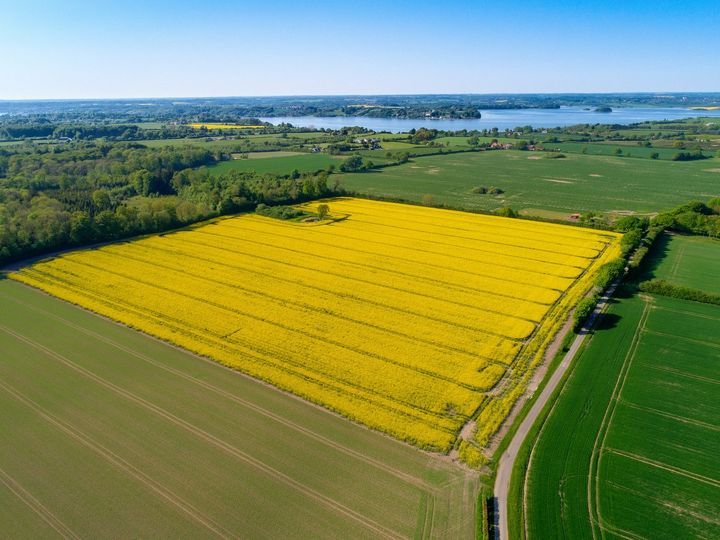
The European Union has developed an extensive regulatory system to assess the environmental risks of pesticides before they can be authorized for use. But does making these assessments increasingly detailed and complex necessarily lead to better environmental protection?
A new study involving researchers from Aarhus University and several European regulatory institutions, published in Environmental Sciences Europe, suggests that the answer may not be straightforward.
Researchers surveyed 114 regulatory practitioners from 31 organizations across 25 European countries, followed by a series of workshops. Their responses reveal a well-established regulatory system that is increasingly challenged by procedural complexity, growing workloads and difficulties reflecting real-world environmental conditions.
Scientific quality does not always translate into confidence in outcomes
One of the study's central findings is a distinction between practitioners' commitment to scientific quality and their confidence in the overall outcomes of the regulatory system.
While practitioners surveyed placed very high importance on scientific quality, their confidence that current assessments adequately predict environmental impacts was more moderate, averaging 3.1 out of 5 among those surveyed.
Practitioners pointed to limitations in assessing the combined effects of pesticides, long-term environmental impacts and wider landscape conditions.
"Regulatory risk assessors are rarely heard in the public debate, even though they are the people working with these assessments every day. What stands out is their strong commitment to scientific quality, ...combined with a recognition that current assessment approaches have limitations in how well they reflect real-world environmental conditions," says James H. Williams, Researcher at the Department of Agroecology, Aarhus University, and co-lead author of the study.
The findings reflect practitioners' experiences and concerns, rather than a direct evaluation of whether existing assessments adequately protect the environment.
More complexity is not necessarily the answer
The study also identifies growing operational challenges. Increasingly extensive guidance and data requirements have strengthened regulatory procedures, but they have also made assessments more resource intensive.
Practitioners report fragmented information systems, repeated assessments of existing evidence and complex methods that do not always change regulatory conclusions.
The researchers therefore recommend clearer environmental protection objectives, better sharing and reuse of data, and stronger collaboration between regulatory organizations and EU Member States.
"The solution is not simply to make assessments less detailed. It is about directing scientific effort towards the questions that are decisive for environmental protection. Better collaboration and more systematic use of existing knowledge could improve both the quality and efficiency of assessments," says Johan Axelman, Special Consultant at the Department of Agroecology.
Relevant to ongoing EU policy discussions
The findings come amid ongoing EU negotiations on changes to pesticide regulation, including the European Commission's Food and Feed Safety Simplification Omnibus proposal. By drawing directly on the experiences of regulatory practitioners, the study identifies opportunities to improve regulatory efficiency while maintaining scientific rigour and strengthening environmental protection.
The research was conducted under the European Partnership for the Assessment of Risks from Chemicals (PARC), in collaboration with the Horizon Europe projects PollinERA and SYBERAC.
About the study
Publication: Practitioners’ perspectives on EU environmental risk assessment for plant protection products
Journal: Environmental Sciences Europe
Published: 13 October 2026
Authors: James Henty Williams, Yann Devos, Annette Aldrich, Kristina Christensen, Sabine Duquesne, Vanessa Mazerolles, Natasha Mølgaard and Johan Axelman.
Read the study: https://doi.org/10.1186/s12302-026-01538-x
Press contact:
Jonathan Torp Henschel
Communications Advisor, Aarhus University
jth@agro.au.dk | +45 41 89 32 41
Research contact:
James Henty Williams
Department of Agroecology, Aarhus University
jhw@agro.au.dk
Keywords
Contacts
Jonathan Torp HenschelKommunikationsrådgiver
Kommunikationsrådgiver på Institut for Agroøkologi
Department of Agroecology
The Department of Agroecology carry out basic, strategic and applied research in issues regarding the interaction between climate, soil, plants, animals and people in agro-ecosystems with a focus on promoting health, sustainability and environmentally friendly production of food, feed, energy and bio-based products. We contribute to sustainable production and growth through research, consulting and teaching.
Subscribe to releases from Aarhus Universitet Technical Sciences
Subscribe to all the latest releases from Aarhus Universitet Technical Sciences by registering your e-mail address below. You can unsubscribe at any time.
Latest releases from Aarhus Universitet Technical Sciences
Derfor er danske universiteter attraktive mål for hackere26.10.2026 18:23:19 CET | Pressemeddelelse
På få uger har cyberangreb ramt DTU, Københavns Universitet og Aarhus Universitet. Universiteterne ligger inde med værdifulde data, har mange forskellige it-systemer og bygger på en tradition for åbenhed. Det gør dem interessante for alt fra cyberkriminelle til fremmede stater, forklarer professor i cybersikkerhed.
30 års forskning i lattergas har lagt fundamentet for de næste skridt26.10.2026 11:29:35 CET | Pressemeddelelse
På 30 år er forskerne blevet langt bedre til at måle udledningen af lattergas, forstå de mikrobielle processer bag og modellere, hvordan kvælstof bevæger sig gennem landbrugssystemet. I en ny artikel i Global Change Biology gør en international forskergruppe status over udviklingen – og ser på, hvordan den viden kan danne grundlag for de næste skridt i kvælstofforskningen.
AU forskere: Manglende kapacitet og uklare rammer kan spænde ben for den grønne trepart26.10.2026 11:27:00 CET | Pressemeddelelse
Den grønne trepart skal forandre det danske landskab i stor skala. Men uden flere hænder, klarere styring og bedre lokale processer risikerer ambitionerne at gå i stå, lyder det i nye anbefalinger, som AU-forskerne Martin Hvarregaard Thorsøe og Niels Halberg har bidraget til.
Nyt værktøj afslører naturens skjulte potentiale26.10.2026 09:29:35 CET | Pressemeddelelse
Forskere fra Aarhus Universitet har udviklet en ny måde at tænke biodiversitet på. I stedet for kun at måle de arter, vi kan observere i dag, forsøger deres nye koncept at beregne, hvor meget biodiversitet et landskab faktisk har potentiale til at understøtte. Tilgangen kan være med til at forklare, hvorfor nogle natur- og biodiversitetstiltag bliver en succes, mens andre giver skuffende resultater.
Masser af temperaturdata – men hvad fortæller de egentligt om grises velfærd under transport?22.10.2026 13:30:00 CEST | Pressemeddelelse
En ny undersøgelse fra Aarhus Universitet viser, at de temperaturdata, der ifølge EU-reglerne skal registreres under lange grisetransporter, er vanskelige at sammenligne og kun i begrænset omfang kan bruges til at vurdere grisenes velfærd. Der skal ske betydelige forbedringer, før data kan indgå i et fælles europæisk system til overvågning af dyrevelfærd.
In our pressroom you can read all our latest releases, find our press contacts, images, documents and other relevant information about us.
Visit our pressroom