Elections will determine whether Israel remains the Middle East’s only democracy, new report says
16.10.2026 12:07:16 CEST | Democracy News Alliance | Press release
Los Angeles/DNA - For the first time since the Hamas attacks of three years ago, Israel is set to go to the polls on October 27 to elect the members of the 26th Knesset.
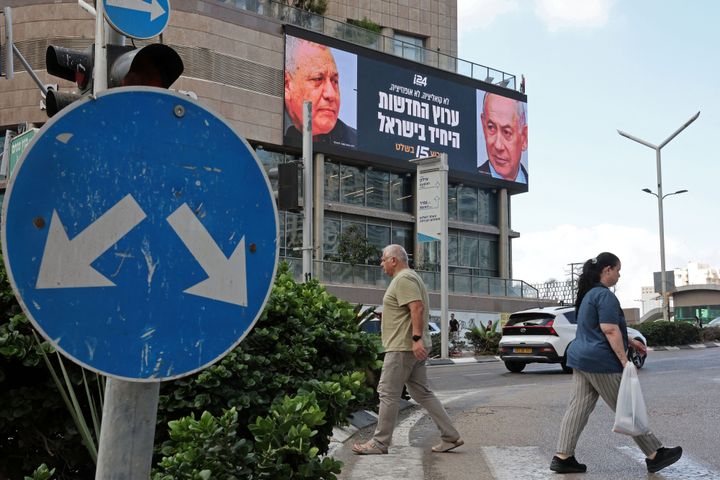
In 2023 the country was in the top group of ‘consolidated democratic states’, according to the 2026 Berggruen Governance Index (BGI), just as it had been in 2000. However, according to a new report from governance experts, the wars unleashed on multiple fronts in rapid succession following the Hamas attacks launched from Gaza have changed Israel politically, economically, and socially.
The report ‘Israeli Governance Performance: The 2026 Elections, Democracy and Future Scenarios’ was produced by researchers at the University of California, Los Angeles (UCLA), the Los Angeles-based Berggruen Institute, and Berlin’s Hertie School.
The ongoing election campaign, which never stopped despite the longest war in Israel’s history, is about to conclude with voting at the ballot box, in what the entire population is experiencing as an existential moment.
The issues raised by the parties and candidates are all domestic: primarily the establishment of a commission to investigate responsibility for the events of October 7, 2023, the conclusion of the political career of Prime Minister Benjamin Netanyahu, who is still on trial for corruption and fraud in a case that has been ongoing for ten years, and the conscription of ultra-Orthodox students.
Political debate is characterized by extreme polarization
The election narrative has been no-holds-barred, with significant involvement of the Israeli media, which has not stopped providing almost daily analysis of Prime Minister Netanyahu’s responsibility for failing to prevent the attacks of three years ago and of the information he is alleged to have received prior to ‘Black Saturday’. The political debate in the age of social media has been characterized by extreme polarization, with vitriolic attacks by candidates on each other.
This election is completely different from previous ones. “The main competing factions sit largely on the center-right and right, with left-leaning and secular Labor Zionism—the dominant ideology for Israel’s first several decades—all but eradicated as a political force,” as the new report highlights. Consequently, “the outcome will largely determine which type of right-wing ideology prevails, rather than offering a choice between conservatism and leftism or liberalism.”
Old players have entered the fray, such as former generals and former prime ministers, yet the political landscape remains centered on one figure, the country’s longest-serving premier, Benjamin Netanyahu. On one side are the steadfast ‘Bibists’, on the other is the ‘Anyone but Bibi’ camp. The divide is between those willing to serve in a government with the current Prime Minister and those for whom his name is a red line.
No clear favorite in opinion polls
Opinion polls suggest a political stalemate, with neither side securing the minimum 61 seats in the Knesset needed to form a government. Netanyahu’s main rival, Gadi Eisenkot, is set to secure 23 seats with his party, while Netanyahu’s Likud is set to take 21, according to the latest surveys. Among the voters are 2.3 million Arabs holding Israeli citizenship, representing 21 percent of the population.
As the UCLA report notes, "the stakes are very high". The elections are widely considered decisive in determining whether Israel will continue to be "the only democracy in the Middle East" or slide further towards being an "illiberal democracy".
“The question of Israel’s democratic trajectory, however, now sits inside a wider governance crisis”, the report reads. Studies have identified signs of deterioration in recent years. “Israel is increasingly isolated. This includes the ongoing case brought by South Africa at the International Court of Justice, International Criminal Court arrest warrants against Netanyahu and former Defense Minister Yoav Gallant, and expanding European sanctions on West Bank settlement goods,” the researchers write.
The report argues that the shift to the right could undermine democratic accountability, and a state of permanent military mobilization could impair the capability of the State. Diplomatic isolation and a brain drain may reduce the ability to provide public goods and services. Indeed, calling up reservists removes productive labor from the civilian economy, shrinking the tax base and limiting potential participation in innovative sectors.
Brain drain as a problem for the country
A significant related risk is precisely that of the brain drain. One of Israel’s key economic advantages is the availability of a highly skilled workforce. The high-tech sector generates approximately 17% of GDP and nearly 60% of exports. "Evidence points to a sharp increase in the emigration of skilled workers since the 2023 judicial-overhaul crisis and the war", the report says.
According to the 2026 Berggruen Governance Index, the provision of public goods and services is the area in which Israel performs best. The authors of the report note that the isolation following Israel’s military response to the October 7 attacks (ranging from the Turkish trade embargo and the halt of the process of normalization with Saudi Arabia to a decline in European and American public support) entails increasingly high economic costs.
“In the medium run, Israel cannot remain militarily dominant, diplomatically isolated, and prosperous simultaneously”, the report concludes. Despite initiatives like the Abraham Accords, military superiority has not secured Israel’s acceptance within the region. Elections will not resolve these issues. The vote is likely to affect only some of these challenges, while political deadlock may well be the most probable outcome.
The full report, ‘Israeli Governance Performance: The 2026 Elections, Democracy and Future Scenarios for Palestine’ can be downloaded here: https://ucla.box.com/shared/static/46lqkqifrmb95k4f7xuk22rhq6d1qnbx.pdf
-------------------------
This text and the accompanying material (photos and graphics) are an offer from the Democracy News Alliance, a close co-operation between Agence France-Presse (AFP, France), Agenzia Nazionale Stampa Associata (ANSA, Italy), The Canadian Press (CP, Canada), Deutsche Presse-Agentur (dpa, Germany) and Press Association (PA, United Kingdom). All recipients can use this material without the need for a separate subscription agreement with one or more of the participating agencies. This includes the recipient's right to publish the material in own products.
The DNA content is an independent journalistic service that operates separately from the other services of the participating agencies. It is produced by editorial units that are not involved in the production of the agencies' main news services. Nevertheless, the editorial standards of the agencies and their assurance of completely independent, impartial and unbiased reporting also apply here.
Contact:
Democracy News Alliance
Christian Röwekamp
roewekamp.christian@dpa.com
Keywords
Images
Subscribe to releases from Democracy News Alliance
Subscribe to all the latest releases from Democracy News Alliance by registering your e-mail address below. You can unsubscribe at any time.