
Wandercraft
4.9.2026 15:00:00 CEST | Globenewswire | Press release
Wandercraft Secures 12 Calvin-40 Customers as It Accelerates Commercial Dominance in Industrial Humanoids
Wandercraft Secures 12 Calvin-40 Customers as It Accelerates Commercial Dominance in Industrial Humanoids
Expanding use cases and growing commercial interest position Wandercraft as a category leader in the future of industrial robotics
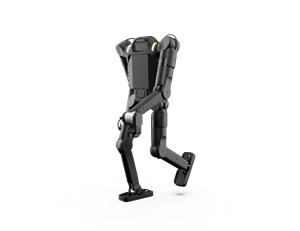
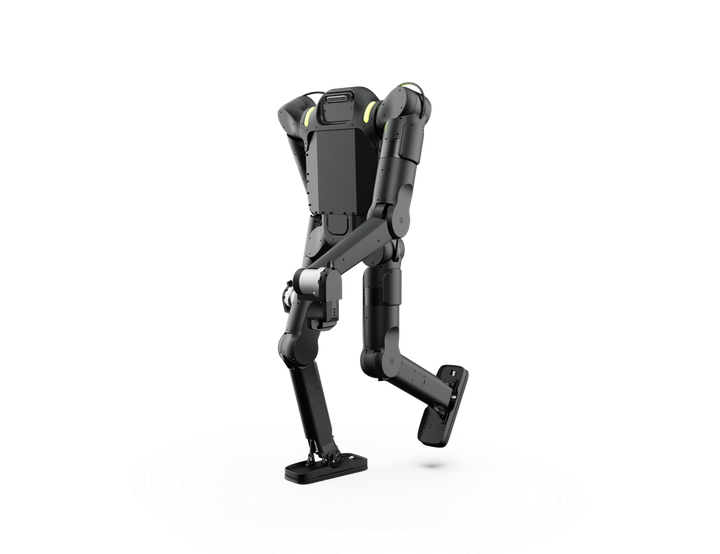
NEW YORK and PARIS, Sept. 04, 2026 (GLOBE NEWSWIRE) -- Wandercraft, a global robotics company with a physical AI platform spanning medical and industrial applications, has secured 12 blue-chip customers for Calvin-40, its industrial humanoid robot, including some of the world’s largest automotive, logistics, retail, healthcare, and defense organizations. As Wandercraft expands Calvin-40’s capabilities and prepares to ramp up production to meet growing demand, the company is positioning the robot for commercial dominance in the industrial humanoid robotics market.
Designed for physically demanding and difficult-to-staff work, Calvin-40 is being developed to handle boxes, parcels, tires, panels, carts, and other materials across automotive, retail, healthcare facilities, and defense logistics, and soon, construction and agriculture. Picking and sorting are among the next capabilities Wandercraft is adding as Calvin-40 progresses from handling larger objects to tasks requiring increasingly dexterous manipulation.
“Humanoid robotics is at a critical inflection point,” said Matthieu Masselin, co-founder and CEO of Wandercraft. “The question is no longer whether a humanoid robot can perform impressive tasks, but whether it can deliver useful work safely, reliably, and repeatedly at a commercially viable scale. We spent more than a decade building robots people trust to support their bodies and help them walk. With Calvin-40, we are bringing that same discipline to industry, expanding its capabilities, winning customers, and building toward significant scale.”
A Different Path to Generalization
As competition intensifies to develop increasingly general-purpose humanoid robots, Wandercraft is pursuing a deliberate, focused approach to physical AI.
Wandercraft’s development model for Calvin-40 is to establish reliability across defined, commercially valuable task clusters, then use data from real-world deployments to progressively expand its capabilities. This creates a proprietary data flywheel controlled by Wandercraft and independent of any single technology supplier.
Strategic control remains in-house: Wandercraft owns the operational data, use-case expertise, and the development path from reliable task-specific performance to broader generalization. That combination gives Calvin-40 a highly differentiated foundation for technological independence, continuous improvement, and long-term competitive advantage. The company began with material-handling applications involving objects such as tires, boxes, and parcels, where there is significant demand for automation and where capabilities such as mobility, balance, load handling, perception, and manipulation can serve as building blocks for adjacent applications.
From there, Calvin-40 has expanded into other forms of material handling, including panels and carts. Finer manipulation, such as picking and sorting, is already being developed and tested, extending the robot’s physical AI into increasingly complex industrial tasks.
“Humanoid robots will not scale because they are general. They will become general as they scale,” Masselin said. “Our approach is to solve important industrial problems first, deploy Calvin-40 in real-world environments, and then expand outward from capabilities that have already proven themselves. Each new deployment generates experience and data that can help make Calvin-40 more capable and successful while preserving the reliability industrial customers require.”
Built on a Medical Robotics Foundation
Wandercraft spent more than a decade developing self-balancing robotic systems for people with severe mobility impairments. Its Atalante X rehabilitation exoskeleton and Eve personal exoskeleton require the balance, control, safety, and reliability essential when a person depends on a robot for physical support. That experience now informs Calvin-40, which industrial customers similarly demand for high uptime, consistent performance, and safe operation around people.
“Medical robotics taught us to engineer for environments where failure has real consequences,” Masselin said. “Reliability, balance, safety, and uptime cannot be added as afterthoughts. They must be part of the architecture from the start.”
Moving From Capability to Industrial Scale
Wandercraft is also building the industrial infrastructure needed to manufacture robots at a much larger scale.
Its strategic partnership with Renault Group combines Wandercraft’s robotics expertise with Renault Group’s manufacturing, engineering, procurement, and design-to-cost experience. Renault Group has announced it plans to deploy 350 humanoid robots in the next 18 months, providing an important example of the potential for Calvin-40 deployment at an industrial scale.
“It will drive productivity through the acceleration of production time and cost reduction. In the end, it makes a lot of sense to combine Wandercraft's unique expertise and technology in exoskeletons and robots with Renault Group's strong industrial capacity and design-to-cost know-how to bring the production of robots at scale,” said Thierry Charvet, Chief Industry and Quality Officer of Renault Group.
The Renault relationship is part of a broader strategy to accelerate Calvin-40 scale-up and reduce costs across industries where employers face physically demanding work, labor constraints, safety concerns, or pressure to increase productivity.
Wandercraft sees substantial opportunities in environments where physical tasks still depend heavily on people, including factories and distribution centers, retail operations, healthcare facilities, and defense logistics.
From Specialized Tasks to Broad Industrial Utility
The company ultimately sees Calvin-40 operating across environments where safety, heavy payloads, reliability, success rate, and uptime are essential, adding capabilities over time while maintaining a common robotic platform.
That approach stands apart from the race to immediately replicate the full range of human abilities in a single machine. Wandercraft believes industrial generalization will instead emerge incrementally as robots master commercially useful tasks, operate reliably in real-world settings, and develop increasingly sophisticated physical intelligence.
“The opportunity is much larger than a single robot performing a single task,” Masselin said. “We are building a platform that can learn to do more and more useful work while meeting the standards businesses expect of industrial equipment. Our experience in medical robotics has given us a foundation. Calvin-40 allows us to bring that expertise to industry at scale.”
About Wandercraft
Wandercraft is a global company dedicated to developing and deploying reliable, high-performance robotic platforms across medical and industrial applications. Renowned for its Personal Exoskeleton, Eve™, Wandercraft is creating next-generation upright mobility solutions to restore walking ability both indoors and throughout rehabilitation. Atalante X™ is a self-balancing exoskeleton deployed in more than 150 inpatient and outpatient rehabilitation centers worldwide. This expertise in building robotics for demanding medical settings has established a foundation of safety, reliability, and real-world performance that now extends to industrial applications.
In 2025, Wandercraft expanded into industrial robotics with the launch of Calvin-40, a powerful, autonomous humanoid robot, announced alongside a strategic partnership with Renault Group. Built on the same proven self-balancing robotics foundation as Wandercraft’s medical exoskeletons, Calvin-40 is engineered to perform physically demanding or hazardous tasks with the reliability, success rate, and uptime required in industrial environments, starting with manufacturing. Wandercraft holds more than 30 patents and builds robotics with a deeply human purpose: helping people do what they otherwise couldn’t, whether by restoring mobility or taking on demanding work. Learn more at wandercraft.eu.
Contact
Elodie Andriot
Global Head of Growth
elodie.andriot@wandercraft.health
A photo accompanying this announcement is available at https://www.globenewswire.com/NewsRoom/AttachmentNg/c0e926f6-49c7-41bd-91c7-1fd835048878
Subscribe to releases from Globenewswire
Subscribe to all the latest releases from Globenewswire by registering your e-mail address below. You can unsubscribe at any time.
Latest releases from Globenewswire
Møns Bank A/S4.9.2026 15:29:13 CEST | Pressemeddelelse
Storaktionærmeddelelse
Tallink Grupp4.9.2026 15:00:00 CEST | Press release
AS Tallink Grupp Managers’ Transactions - Harri Hanschmidt
Tallink Grupp4.9.2026 15:00:00 CEST | Press release
AS Tallink Grupp Managers’ Transactions - Kalev Järvelill
NANO-X IMAGING LTD4.9.2026 14:45:58 CEST | Press release
Nanox Signs Distribution Agreement with Associated X-Ray Imaging to Expand Nanox.ARC Adoption Across New England
Danske Bank A/S4.9.2026 14:37:30 CEST | Pressemeddelelse
RETTELSE - Danske Bank A/S, ledende medarbejderes transaktioner
In our pressroom you can read all our latest releases, find our press contacts, images, documents and other relevant information about us.
Visit our pressroom