
Scientists have designed a clay that can prevent fruits and vegetables from rotting too quickly
22.6.2026 10:38:59 CEST | Københavns Universitet | Press release
The gas ethylene causes fruit and vegetables to ripen faster and is responsible for millions of tons of food being lost annually during transport and storage. Now researchers from the University of Copenhagen, among others, have succeeded in getting clay to collect the gas and hope that the material can help reduce food waste in the long term.
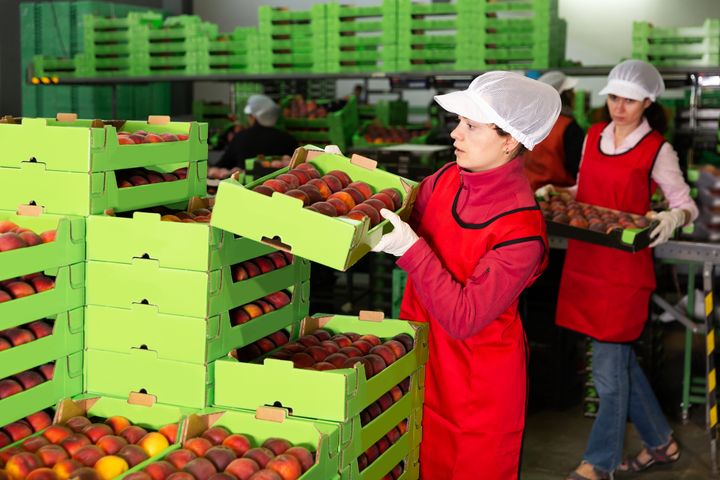
Avocados from Chile, bananas from Costa Rica, tomatoes from southern Spain, mangoes from Brazil. A large part of the fruits and vegetables we eat have travelled across the globe before they reach store shelves here at home. But many millions of tons are lost every year before they reach that far.
One of the main reasons is ethylene – a natural gas that many fruits and vegetables produce and that controls their ripening. When fruits and vegetables are confined in closed packaging or containers during transport and storage, the concentration of ethylene in the air increases, accelerating the ripening process. As a result, a large part of the cargo ends up rotting before it reaches its final destination.
Clay may be the solution
Now, new research led by the University of Copenhagen shows that ordinary clay could probably be part of the solution.
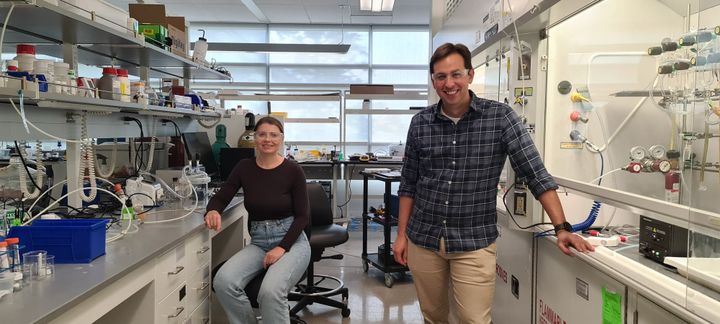
"Clay is an interesting material because it is natural, cheap, non-toxic and found everywhere - and we can absorb it safely into the body. Our thought was: Can we use chemistry and physics to modify clay so that it captures the gas and thus slows down the ripening process? We have succeeded in doing so," says Associate Professor Heloisa Bordallo from the Niels Bohr Institute, who led the new study .
First, the researchers tried to capture the gas with the clay in its natural form. Here, a small amount was captured. By increasing the voids in the clay's structure with a mild chemical treatment, the researchers made room for the clay to capture more gas – but without the gas escaping again – while keeping the material nontoxic.
Researchers have never succeeded in getting clay to absorb such large amounts of ethylene, which is why they believe the concept has potential for use in food packaging.
"Now we know the fundamental physics and chemistry of the process that affects the clay's ability to absorb and retain ethylene. We didn't do that before. So now we can control and optimize the process, which is necessary for it to be used in industry," says Karina Kovalchuk, a a member of Bordallo’s group at Lawrence Berkeley National Laboratory and first author of the study.
Degasser in food packaging
According to the researchers, the research results provide a kind of design manual for how to develop sustainable materials for food packaging that tackle the problem of ethylene.
“We imagine small bags or pads of powdered clay that can be placed with fruit and vegetables during transport and absorb ethylene – in the same way as the moisture-absorbing silica bags that often come in the packaging when you buy, for example, shoes and electronics,” says Karina Kovalchuk.
The research group is currently working on optimizing the chemical process to strike the right balance between effectiveness and environmental friendliness. They are also investigating whether they can make the clay capture even more ethylene and retain it for even longer. Next, the clay material will be tested in food packaging, and hopefully then the concept can be brought to market.
Two good purposes
The new material not only has the potential to reduce food waste. Another consequence of the ethylene problem and the long transport is that fruits often do not develop their full flavour. Much fruit is harvested early precisely to avoid them rotting along the way. But many processes in the fruit are thus not fully developed and cannot be 'caught up' fully later, even if the fruit ripens with ethylene during transport. And this affects the taste and aroma.
"If we manage to solve the problem with ethylene, it serves two good purposes. First, we can reduce the global problem of food waste. At the same time, it can make it possible to harvest fruit later in the ripening process, so that consumers get fruit that tastes as it should," concludes Heloisa Bordallo.
Although the study focuses on ethylene and food, the researchers point out that the research results may also have implications for other technologies where materials need to collect certain gases.
THE STUDY SHOWS
- Ethylene is a natural plant gas that many fruits and vegetables secrete and which controls their ripening.
- When ethylene gas accumulates during transport and storage, it can significantly shorten the shelf life of fruits and vegetables.
- In the study, the researchers used the clay mineral Montmorillonite, which is widespread, nontoxic and naturally occurring.
- To investigate how the gas moves in the clay material, the researchers used advanced measurement methods with neutrons and X-rays as well as thermal analyses, where the material is heated and its reaction is measured.
- The study shows that chemically modified clay can both increase the uptake and retention of ethylene.
ABOUT THE STUDY
- The scientific article about the study has been published in the journal Applied Surface Science Advances.
- The following researchers have contributed: Karina Kovalchuk and Leander Michels from Lawrence Berkeley National Laboratory, USA; Will Gates from Deakin University, Australia; Murillo Martins from Oak Ridge National Laboratory, USA, GW Greene from La Trobe University, Australia and Heloisa N. Bordallo from the University of Copenhagen.
- The research is supported by the Laboratory Directed Research and Development (LDRD) Program of Lawrence Berkeley National Laboratory and the Carlsberg Foundation.
Keywords
Images
Links
Subscribe to releases from Københavns Universitet
Subscribe to all the latest releases from Københavns Universitet by registering your e-mail address below. You can unsubscribe at any time.
Latest releases from Københavns Universitet
Københavns Universitet og Healthcare Denmark indgår strategisk partnerskab22.6.2026 09:56:57 CEST | Pressemeddelelse
Formålet med partnerskabet er at fremme internationalt samarbejde og synliggøre de unikke danske styrker indenfor sundheds- og life science-økosystemet, innovation og forskning.
Forskere har designet ler, der kan forhindre frugt og grønt i at rådne for hurtigt22.6.2026 07:10:51 CEST | Pressemeddelelse
Gassen ethylen får frugt og grønt til at modne hurtigere og er medskyldig i, at millioner af ton årligt går tabt under transport og opbevaring. Nu er forskere fra bl.a. Københavns Universitet lykkedes med at få ler til opsamle gassen og håber at materialet på længere sigt kan afhjælpe madspild.
Miljøforskere bag KU-spinout: Vores drikkevand indeholder hundredvis af kemikalier – i dag tester vi kun for en brøkdel18.6.2026 07:11:00 CEST | Pressemeddelelse
Meget af vores drikkevand indeholder hundredvis af kemikalier, men i dag tester vi kun for en brøkdel. Forskere fra Københavns Universitet har nu startet en virksomhed, der tilbyder en særlig bred screening af drikkevand, der kan afsløre alle de ’skjulte’ kemikalier. De første forsyningsselskaber har bestilt analyser.
Kinesisk importkonkurrence får CO₂-udledningerne til at stige globalt18.6.2026 05:00:00 CEST | Pressemeddelelse
Danske virksomheder udleder mindre CO₂, når de flytter visse arbejdsopgaver til udlandet. Samtidig stiger udledningen tilsvarende i udlandet. Til gengæld stiger udledningen globalt, når virksomheder presses af billig import fra Kina. Det viser ny forskning fra Københavns Universitet.
Pest dræbte allerede mennesker for 5.500 år siden17.6.2026 17:01:00 CEST | Pressemeddelelse
Et nyt studie i Nature viser, at tidlige former for pest forårsagede dødelige udbrud – længe før den sorte død dræbte op mod halvdelen af Europas befolkning.
In our pressroom you can read all our latest releases, find our press contacts, images, documents and other relevant information about us.
Visit our pressroom