
Industrial waste used to develop non-toxic wood protection
7.5.2026 09:41:48 CEST | Københavns Universitet | Press release
Researchers at the University of Copenhagen have developed a new, non-toxic method for protecting wood that could eventually replace conventional pressure-treated timber. The method is based on lignin – a natural substance found in wood – and is designed to avoid the environmentally harmful chemicals that are currently used to extend the lifespan of wood products. The researchers aim to have the technology ready for market use before 2030.
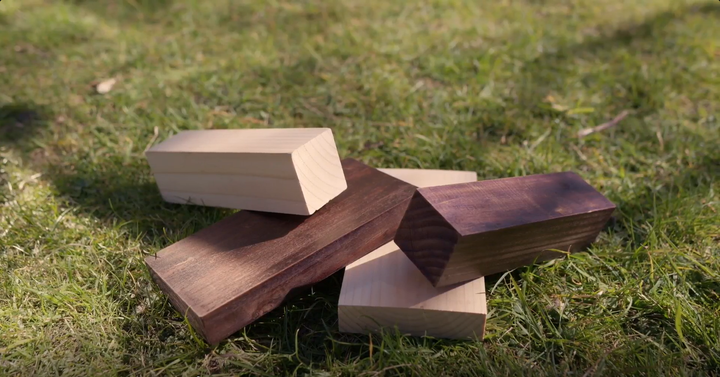
The research originated in a project aimed at developing biofuels for ships but has since evolved into an environmentally friendly method for wood preservation. The path to new inventions is rarely straight or predictable, and this has certainly been the case for University of Copenhagen researchers Emil Thybring and Sune Tjalfe Thomsen. For several years, they have been working on a new, sustainable way to impregnate wood without harming the environment.
Today, the wood industry treats timber with heavy metals such as copper to extend its lifespan when used as a construction material. In the pressure treatment process, water with dissolved preservation chemicals is forced into the wood. The problem is that a large proportion of these substances is later leached out when the wood is exposed to rain, ultimately ending up in soil, marine environments and drinking water.
“The toxic substances we introduce into the wood using water to make it last longer also leave the wood with water and end up in nature. It is a serious problem, and one we aim to solve with our technology,” says Emil Thybring, associate professor at the Department of Geosciences and Natural Resource Management.
The wood’s own ‘glue’ – in hyperconcentrated form
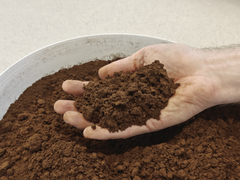
The researchers’ method is based on lignin, a natural binding agent in wood that stiffens the material and holds its cells together. Lignin is available in vast quantities as a residual product from the paper industry, where it is separated out and typically burned because it gives paper a brownish colour rather than the desired white. According to the researchers, just 15 percent of the EU’s lignin production could replace the environmentally harmful substances used across the entire EU production of pressure-treated timber.
“It makes perfect sense to take a global industrial by-product and use it as an environmentally friendly alternative to the most widely used – and environmentally damaging – wood protection methods we rely on today,” says Sune Tjalfe Thomsen, associate professor at the Department of Geosciences and Natural Resource Management.
By dissolving lignin in alcohol, the researchers have succeeded in creating an extremely concentrated solution with such a high lignin content that it can impregnate wood very efficiently – a process they have dubbed “hyperlignification”.
“Others have previously considered using lignin as a wood preservative and experimented with relatively dilute solutions. We work with much higher concentrations, which truly saturate the wood and protect it against fungal decay and rot,” says Emil Thybring.
Blocking fungi and moisture
The method works by dissolving lignin – a natural binding agent in wood – in an alcohol-based liquid, allowing it to penetrate the wood’s microscopic structure. The researchers use a process similar to conventional pressure impregnation, in which the liquid is forced into the wood under pressure. The key difference is the much higher lignin concentration, making it possible to fully ‘saturate’ the wood with the natural material.
Once inside the wood, the lignin alters the material’s internal composition, making it far less attractive to wood-degrading fungi. At the same time, the wood’s ability to absorb moisture is reduced, which is one of the primary drivers of biological degradation. The result is a wood material that is far more resistant to the mechanisms that normally lead to rot and decay.
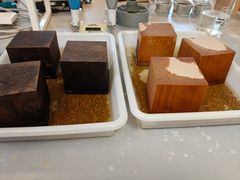
“In laboratory trials, where we expose the wood to some of the most aggressive wood-degrading fungi under optimal growth conditions, we see a striking difference between untreated and hyperlignified wood. For example, tests on pine and beech show that when fungi have decomposed around 50 percent of untreated wood, they have only broken down about 1 percent of the hyperlignified wood,” says Sune Tjalfe Thomsen.
These results indicate that the treatment has the potential to significantly reduce the rate of degradation. The findings were obtained under controlled laboratory conditions. An important next step is therefore to assess the effect at larger scales and under realistic outdoor conditions.
From backyard experiments to full-scale research
Ensuring that wood withstands outdoor exposure is not a new interest for Emil Thybring and Sune Tjalfe Thomsen, who could best be described as researchers with a long-standing interest in wood durability. For years, Emil Thybring conducted his own experiments in his backyard, testing various natural wood protection methods and monitoring them over time.
Today, that interest has evolved into a full-scale research project, which has recently received more than DKK 15 million in funding from Innovation Fund Denmark’s Grand Solutions programme. Last year, the researchers also won a major European innovation competition, the “Evergreen Prize for Innovation”, receiving EUR 300,000 to further develop their non-toxic wood protection technology.
The Grand Solutions project has been named “HYPERLIGNO” and was officially launched on 1 April. In collaboration with Frøslev – Denmark’s largest timber supplier to the construction industry – as well as architects and other partners, the project aims to bring the research from the laboratory into production, transforming new knowledge into new wood products.
“We need to dive deep into the lignin molecules because we can see that certain types of lignin penetrate deeper into the wood and provide better protection. This allows us to identify the optimal lignin source from the paper industry,” explains Sune Tjalfe Thomsen.
The Hyperligno team aims to develop a product that could replace today’s toxic wood impregnation methods in Denmark and across Europe. At the same time, the EU is moving towards stricter regulation of biocides in wood, with a phase-out expected by 2030.
“Our goal is to develop a wood protection that, under optimal conditions, can last for 100 years – and we are pushing to bring it to market at scale before 2030,” concludes Emil Thybring.
Keywords
Contacts
Emil ThybringLektor, Institut for Geovidenskab og Naturforvaltning
Tel:+45 61 31 97 76eet@ign.ku.dkSune Tjalfe ThomsenLektor, Institut for Geovidenskab og Naturforvaltning
Tel:+45 50 59 40 49stt@ign.ku.dkAmalie Viktoria GammelgaardKU Kommunikation, Presse
Tel:+45 93 51 60 67amalie@adm.ku.dkImages
Links
About the University of Copenhagen
The University of Copenhagen was founded in 1479 and today has 37,000 students and 10,000 employees – of whom more than 5,000 are researchers – and revenues of DKK 11.3 billion.
10 Nobel Prizes have been awarded to researchers at the University.
Subscribe to releases from Københavns Universitet
Subscribe to all the latest releases from Københavns Universitet by registering your e-mail address below. You can unsubscribe at any time.
Latest releases from Københavns Universitet
Scientists stunned: Volcano cleans up after itself by removing methane from the air7.5.2026 11:01:00 CEST | Press release
A violent volcanic eruption in the South Pacific has revealed a surprising natural mechanism that could potentially help slow global warming. The finding provides entirely new insights into atmospheric chemistry and may inspire new methods to remove methane emissions from the air.
Forbløffede forskere: Vulkan rydder op efter sig selv og fjerner metan fra luften7.5.2026 11:00:00 CEST | Pressemeddelelse
Et voldsomt vulkanudbrud i Stillehavet har afsløret en overraskende naturlig mekanisme, som muligvis kan hjælpe med at bremse den globale opvarmning. Opdagelsen giver helt ny viden om atmosfærisk kemi, der kan inspirere udviklingen af nye metoder til at fjerne metan fra atmosfæren
Trænørders opfindelse kan gøre trykimprægneret træ overflødigt7.5.2026 09:40:25 CEST | Pressemeddelelse
En ny giftfri træbeskyttelse har set dagens lys på Københavns Universitet. Opfindelsen skal erstatte de miljøfarlige stoffer i trykimprægneret træ og bygger på restproduktet lignin – et naturligt bindemiddel i træer. Forskernes mål er at få produktet på markedet inden 2030.
Dog training choices reflect owners’ ethical views on animals5.5.2026 06:00:00 CEST | Pressemeddelelse
A new study from the University of Copenhagen explores how dog owners’ ethical views on animals are reflected in the training methods they use. The findings may give dog owners new insight into why they choose certain training approaches over others.
Straf eller godbid afslører hundeejeres etiske syn på dyr5.5.2026 06:00:00 CEST | Pressemeddelelse
Et nyt studie fra Københavns Universitet har undersøgt, hvordan hundeejeres etiske syn på dyr hænger sammen med, hvilke træningsmetoder de bruger. Det kan være en øjenåbner for hundeejere, der vil forstå, hvorfor de vælger netop de træningsmetoder, de gør.
In our pressroom you can read all our latest releases, find our press contacts, images, documents and other relevant information about us.
Visit our pressroom