Danish CMO Koda sues AI music company Suno for stealing members’ repertoire - calls for global standards of consent, transparency and remuneration
4.11.2025 07:01:00 CET | Koda | Pressemeddelelse
Landmark lawsuit filed on behalf of all Koda members; evidence indicates Suno trained on copyrighted works - including music by popular artists Aqua, MØ and Christopher - without permission, transparency or payment. Koda welcomes AI when developed responsibly and urges the industry to rally behind a new standard

The Danish rights organization Koda has filed a lawsuit against U.S.-based AI music service Suno. Koda claims that the genAI tech company has trained their AI model on Koda’s repertoire while concealing the scope and sources of the training data - failing to disclose what works were used and how.
No licensing pathway was offered, no remuneration paid, and Suno’s outputs can mimic protected music, putting them in direct competition with the very works exploited. Evidence includes famous Danish repertoire from Aqua, MØ and Christopher. In all cases, Koda has concrete evidence that the copyright of each work has been infringed. The case is brought on behalf of all Koda members to protect creators, culture, and ensure a sustainable music economy. This marks the first time a Danish rights organization has filed a lawsuit against an AI service.
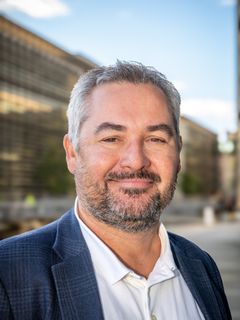
“We are excited about what responsible AI can do for music,” said Gorm Arildsen, CEO of Koda. “But innovation can’t be built on stolen goods. Suno has taken our members’ creative work and fed it into their machines without consent, transparency or remuneration. That is theft - and it threatens the future of music.”
Koda calls for a clear, industry-wide standard demanding consent, transparency and remuneration from tech companies using human created protected music for training or generating music - and urges the entire sector to rally behind it. Recent licensing progress between industry actors, prove that lawful agreements are in fact possible. Koda’s lawsuit against Suno asks the court - and the industry - to choose a future where AI grows the pie without hollowing out the roots.,
“We find it unacceptable that it requires legal action to make Suno and similar AI services pay for the music they use to build a service which they profit from. If the industry wants to foster the future of truly talented artists creating new music, we must protect them. These are the actors most vulnerable to being trampled by big tech. We at Koda refuse to let algorithms shape our cultural history.” says Gorm Arildsen.
In a new report published by Koda together with IFPI Denmark, it is estimated that AI-generated music like that produced by Suno will, within a few years, consume large parts of the economy that makes it possible to create new Danish music. If the current development in AI continues, Danish music faces a historic revenue loss of 28 percent by 2030.
Last year, Suno was valued at $500 million - over DKK 3 billion. Suno is currently raising additional investments and is projected to reach a valuation of $2 billion - nearly DKK 13 billion.
Koda urges policymakers, platforms, publishers, labels, CMOs and AI developers to align on practical frameworks so AI can thrive with creators - not at their expense.
To see specifics about the case, examples, Q&A, etc., please visit: LINK
Kontakter
Sira BerryInternational Communications Consultant
Tlf:+4526968464svb@koda.dkBilleder
Links
Om Koda
About Koda
Koda is a Danish non-profit collective rights management organisation representing 52,000 composers, songwriters, and music publishers. Committed to securing fair remuneration for its members whenever their music is used, Koda also works actively to promote a music industry that is socially, environmentally, and economically sustainable.
Følg pressemeddelelser fra Koda
Skriv dig op her, og modtag pressemeddelelser på e-mail. Indtast din e-mail, klik på abonner, og følg instruktionerne i den udsendte e-mail.
Flere pressemeddelelser fra Koda
Tunge erhvervsorganisationer går med i barselsalliance: Understreger behov for politisk handling16.9.2026 07:00:00 CEST | Pressemeddelelse
Dansk Erhverv, SMVdanmark og HK Privat tilslutter sig Barselsalliancen, der arbejder for bedre barselsvilkår for kombinatører. Dermed får alliancen opbakning fra nogle af de store aktører på det danske arbejdsmarked. Ifølge alliancen understreger det, at de nuværende barselsregler ikke kun er en udfordring for kulturbranchen, men også for iværksætteri og et arbejdsmarked, hvor flere arbejder på nye måder.
Nordic Digital Music Survey 2026: Consumers demand control over AI-generated music as free listening remains widespread10.9.2026 08:00:00 CEST | Pressemeddelelse
Nordic consumers want AI-generated music to be clearly labelled and are calling for stronger protection for music creators whose works are used to train AI services. Paid music streaming also continues to grow across the region, although free listening remains widespread. These are among the findings of the latest Nordic Digital Music Survey, commissioned by the collective management organisations Koda in Denmark, TONO in Norway and Teosto in Finland.
Ny stor undersøgelse: Gratis lytning fylder massivt i danskernes musikstreaming10.9.2026 08:00:00 CEST | Pressemeddelelse
En ny undersøgelse af danskernes digitale musikforbrug viser, at 94 procent fortsat streamer musik, men at alt for få betaler for det. Kun 67 procent betaler for at streame musik, mens hele 59 procent af den daglige tid danskerne bruger på musikstreaming foregår på gratistjenester. Undersøgelsen viser samtidig stor opbakning til musikskaberne, når det gælder AI. 75 procent af danskerne mener, at sangskrivere og komponister skal betales, når deres musik bruges af AI-tjenester, mens 66 procent mener, at politikerne bør sikre, at AI-tjenester ikke undergraver musikskabernes økonomi.
Kulturbranchen går sammen om konkrete anbefalinger til bedre barselsvilkår20.8.2026 07:00:00 CEST | Pressemeddelelse
En bred kreds af organisationer fra kulturlivet og de kreative erhverv præsenterer nu en række konkrete anbefalinger til, hvad kulturbranchen selv kan gøre for at styrke vilkårene før, under og efter barsel. Ambitionen er at sætte gang i en fælles og forpligtende samtale om, hvordan det kan blive lettere at kombinere familieliv med en karriere i kulturlivet.
Skelsættende AI-dom: Suno dømt for ulovlig brug af ophavsretligt beskyttet musik31.7.2026 16:45:10 CEST | Pressemeddelelse
Den regionale domstol i München har i dag givet den tyske rettighedsorganisation GEMA medhold i sagen mod AI-musiktjenesten Suno. Dommen er den første materielle afgørelse om AI-musiktjenesters brug af ophavsretligt beskyttet musik og markerer et vigtigt skridt mod klare og mere retfærdige spilleregler for AI og ophavsret.
I vores nyhedsrum kan du læse alle vores pressemeddelelser, tilgå materiale i form af billeder og dokumenter samt finde vores kontaktoplysninger.
Besøg vores nyhedsrum