
The myth of junkfood-eating gamers is actually about social hunger – and gender
18.11.2024 12:45:04 CET | Københavns Universitet | Press release
Gamers are often associated with unhealthy diets, messy living spaces and at times asocial lifestyles. While the gamer stereotypes first mentioned have some basis in reality, this is not necessarily for the reasons we thought. This, according to new research from the University of Copenhagen that examines the daily lives of gamers.
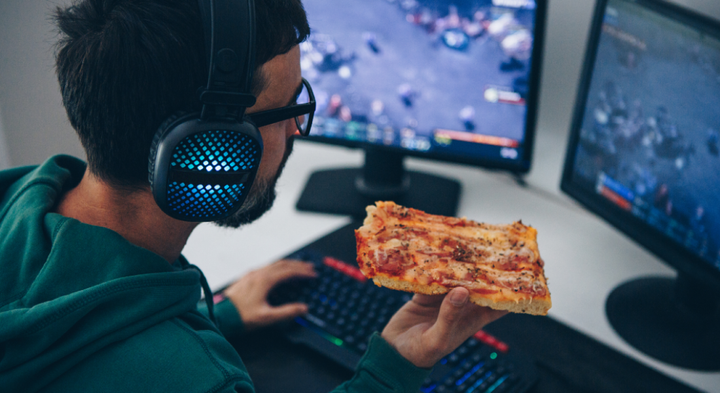
It’s a familiar caricature: poorly nourished, pimpled, greasy pizza fingers tapping furiously on a keyboard, eyes glued to a screen, surrounded by a sea of trash and soda bottles. The stereotypical "gaming nerd" is both unhealthy and challenged when it comes to tidiness and hygiene. While stereotypes about gamers hold true to some extent, they might not be for the reasons we once supposed. That’s what new research on the daily lives of gamers reveals.
“The eating habits of gamers are actually attributable to them being social creatures. If they live with others, they prioritize the social aspect of meals and often make an effort to prepare food. If not, and they live alone – as an increasing number of Danes do – it’s often about quickly finishing a meal to get back to socializing with friends online,” explains Thomas Skelly from the Department of Food and Resource Economics.
Together with research colleague Kristian Haulund Jensen from the Department of Psychology at Aarhus University, Skelly examined existing research on the topic and then combined it with his own data from fourteen young gamers using diary entries, qualitative interviews and focus groups.
The new study concludes that the main factor influencing whether young gamers opt for a frozen supermarket pizza or homemade stew is whether the most attractive social activity is centered around cooking and dining or online in the game waiting for them.
Moreover, a significant gender difference emerged, which we'll return to later.
Previous research missed the everyday aspect
According to the researchers, previous studies on this topic have been lackluster because they overemphasized LAN-parties, where gamers gather to play in groups big and small.
“The eating habits of most people vary between everyday life and for special occasions and it’s no different in gamer culture. In everyday life, gamers, like other young people, are somewhat driven by the need for a quick bite. But when they gather at major events, there’s an inherent culture of unhealthy eating often being washed down with energy drinks and soda. In large part, this is where the stereotypes originate,” explains Kristian Haulund Jensen.
Therefore, the researchers want to differentiate between two types of food in understanding gamer food culture – "gamer food" and "gaming food."
The first type is closely associated with social gamer events, such as LAN parties. Here, according to the researchers, the intake of junk food is a symbolic act.
“This excess of pizza, chips, cola, etc., is heavily symbolic in a kind of celebratory ritual of gaming culture. But this ritualistic junk-food-eating is strongly associated with the stereotype of the unhealthy gamer, even though it’s not an everyday phenomenon, as shown in our review of earlier studies,” says Thomas Skelly.
As such, the researchers propose a different term: “gaming food,” which refers to the daily eating habits of gamers. This might involve "fast food" because speed can be crucial.
“If the priority is to get back to socializing with friends in an online game, it needs to be quick. But it doesn’t necessarily have to be junk food – a sandwich on dark Danish rye bread is equally fast,” explains Thomas Skelly.
Fastfood rye bread and clean homes for women gamers
Nevertheless, the researchers did find a pattern regarding whether the chosen quick “gaming food” is healthy or unhealthy, which has more to do with gender than gamer culture.
There is a significant difference in the norms male and female gamers have regarding the food they consume. According to the researchers, this somewhat aligns with gender-based eating habits in other contexts. The same applies to household priorities, like cleaning.
“Women participants showed much more awareness of health and household ideals than the men. These considerations are essential in managing everyday life, where they often play no significant role for male gamers,” says Kristian Haulund Jensen.
He believes that the difference is partly due to society placing higher demands on women’s bodies, appearance, and homes – which are expected to be presentable. This creates a different form of shame among women about being perceived as unhealthy or unclean.
“So, whereas men are more inclined to satisfy a craving with junk food from a convenience store and leave the trash behind, women might instead make a rye bread sandwich in the kitchen and tidy up afterward,” says Kristian Haulund Jensen.
According to the researchers, the reputation of gamer culture is more a result of gaming historically being dominated by men (especially in earlier years) rather than being inherent to the culture – at least when looking at everyday life.
“At major events like LAN parties, other mechanisms come into play. Here, the significant majority of men among gamers has created some traditions that apply to the environment as a whole, including its food culture. But if you imagine a large LAN event with only women gamers, it’s easy to imagine that things would look healthier between the rows of computers,” says Thomas Skelly.
*
More info: Youth culture plays a role too
Youth itself is another factor that can influence the unhealthy eating habits among gamers. Most gamers are young, and young people’s attitudes toward food are typically marked by a rebelliousness against parental expectations for healthy eating.
Furthermore, the researchers point out that young people typically don’t have much money for food, which can impact the quality of what they eat as well.
Both of these factors, combined with the need to eat quickly so as to not miss out on socializing with friends online, intersect with gender norms. Gaming is dominated by young men, and a masculine trait regarding food, according to the researchers, is less concern for health than women have.
Facts: LAN Parties
Previous research on gamer food culture has focused on so-called "LAN parties." This is a form of social gathering, where gamers pack in like sardines among rows of computers and play side by side, for entire nights and even days on end.
This event format peaked in the 90s and 2000s before rapid internet made online gaming possible. But these gatherings continue as a cultural highlight for many gamers: LANparty.dk.
A LAN party can involve as few as two people playing together on a local computer network, but they’re often much larger, with several hundred or even thousands of participants. The official record was set in Sweden in 2013, where 22,810 gamers attended the DreamHack event.
Keywords
Contacts
Thomas A. M. SkellyPh.D. FellowDepartment of Food and Resource Economics, University of Copenhagen
Tel:+45 35 32 75 44Tel:+45 42 95 96 98thomas.skelly@ifro.ku.dkKristian Bjørn-HansenJournalist and Press ContactFaculty of Science, Copenhagen University
Tel:+45 93516002kbh@science.ku.dkKristian H. JensenPh.D. StudentDepartment of Psychology and Behavioral Sciences, Aarhus University
Tel:+45 87 15 00 86khj.crf@psy.au.dkLinks
ABOUT THE FACULTY OF SCIENCE
The Faculty of Science at the University of Copenhagen – or SCIENCE – is Denmark's largest science research and education institution.
The Faculty's most important task is to contribute to solving the major challenges facing the rapidly changing world with increased pressure on, among other things, natural resources and significant climate change, both nationally and globally.
Subscribe to releases from Københavns Universitet
Subscribe to all the latest releases from Københavns Universitet by registering your e-mail address below. You can unsubscribe at any time.
Latest releases from Københavns Universitet
Søvnforskere slår alarm: Stigende nattemperaturer truer søvnen for milliarder af mennesker9.4.2026 05:41:34 CEST | Pressemeddelelse
Varmere nætter forstyrrer vores søvn i alarmerende grad, og problemet ser ud til at tage til i styrke. En international gruppe af forskere foreslår en global arbejdsgruppe, der kan overvåge og beskytte menneskehedens søvn i en ophedet verden.
Fisk på antidepressiver: Forskere udvikler nyt våben mod giftige stoffer i spildevandet8.4.2026 06:00:00 CEST | Pressemeddelelse
Giftige kemikalier fra lægemidler som antidepressiv medicin slipper hver dag igennem spildevandet og ud i vandmiljøet. Et nyt forskningsprojekt fra Københavns Universitet skal nu for første gang give overblik over miljøfremmede stoffer i spildevandet, og hvordan man mest effektivt fjerner hver enkelt af dem.
Ekstremismens to ansigter: Derfor støtter nogle mennesker vold mellem grupper31.3.2026 05:00:00 CEST | Pressemeddelelse
Menneskers tilbøjelighed til at støtte vold mod andre grupper skyldes ikke en enkelt tankegang: To grundlæggende motivationer og forskellige personlighedstræk er afgørende for volden. Det afslører en ny videnskabelig undersøgelse, der omfatter 58 lande.
4.000 år gamle lertavler gemte på magiske besværgelser… og ølregninger30.3.2026 08:28:11 CEST | Pressemeddelelse
På Nationalmuseet har der i over 100 år ligget en stor samling skrifttavler fra de tidligste civilisationer i Mellemøsten – mange over 4.000 år gamle og skrevet på nu uddøde sprog. Tavlerne har levet et stille liv, men nu har forskere tydet dem og fundet fascinerende tekster om magi, konger og godt gammeldags bureaukrati.
Drenge dropper bøgerne, når skolen holder lukket – piger bliver ved med at læse27.3.2026 08:56:13 CET | Pressemeddelelse
Når en ferie eller en pandemi lukker skolen, forstærker det kønsforskellene i børns læsning: Drengene falder fra, mens pigerne fortsætter med at læse, viser et nyt studie fra Københavns Universitet. Det peger på, at drenge er mere afhængige af skolens faste rutiner og forventninger, mener forskerne.
In our pressroom you can read all our latest releases, find our press contacts, images, documents and other relevant information about us.
Visit our pressroom