
Children's gut bacteria may hold the key to diarrhea treatment
13.11.2024 08:27:28 CET | Københavns Universitet | Pressemeddelelse
Diarrhea claims the lives of 500,000 children each year in low- and middle-income countries. Now, Danish and Ethiopian researchers have linked chronic diarrhea to a specific pattern of gut bacteria, a discovery that could pave the way for new treatments capable of saving lives.
Our intestines are home to a microbiotic universe in which bacteria train our immune systems to be resilient, produce vitamins and transform the foods that we consume into beneficial compounds. Imbalances in this gut microbiome can be linked to various illnesses, including obesity, diabetes and diarrhea.
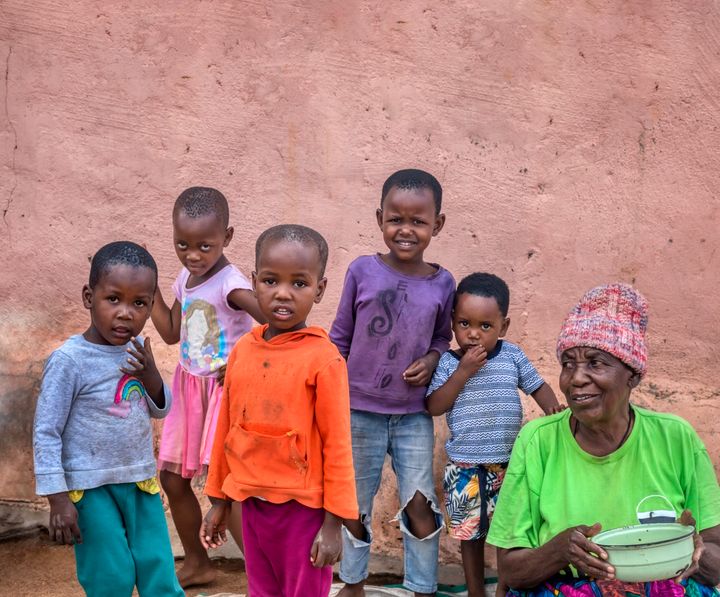
In developing countries, acute and chronic diarrhea is a widespread problem among children and leads to the deaths of half a million children under the age of five every year. Acute diarrhea often resolves on its own and can typically be treated with antibiotics. But once it progresses to a chronic form, it can leave children severely ill and underdeveloped, making treatment much harder. Until now, the cause of chronic diarrhea has remained unclear.
"Persistent diarrhea in adults can be extremely unpleasant but is rarely life-threatening. However, for a child, it can have lifelong consequences. While acute diarrhea has become much more treatable over the past fifty years, little progress has been made in treating the chronic type, which is what sparked our interest," explains Dennis Sandris Nielsen, a professor at the University of Copenhagen’s Department of Food Science.
In a new study published in Nature Communications, Nielsen and his Ethiopian colleague Getnet Tesfaw mapped the gut microbiome of over 1,300 children under five years of age in Ethiopia. The study’s main conclusion is clear: children with chronic or persistent diarrhea have significantly lower and different bacterial diversity compared to healthy children.
"Our results show a clear link between gut bacteria composition and the duration of diarrhea. Children with chronic diarrhea not only have more harmful bacteria, but notably fewer beneficial ones," explains Tesfaw, who will defend his PhD thesis on the topic later in November.
A vicious cycle of diarrhea
Researchers used DNA sequencing to identify various beneficial and harmful bacteria in stool samples. Results indicate that children with chronic diarrhea have an overrepresentation of harmful bacteria, such as Escherichia and Campylobacter, while the presence of beneficial bacteria, such as Faecalibacterium, is significantly reduced.
The study also revealed that children with chronic diarrhea lack bacteria that produce short-chain fatty acids, which are typically produced by beneficial bacteria and play an essential role in gut health.
Acute diarrhea is defined as lasting from one to six days, while chronic diarrhea persists for a week or more. According to Nielsen, the results indicate that chronic diarrhea develops if beneficial, short-chain fatty acids producing microbes are lost to an extent that the children's gut microbiomes for unkonwon reasons fail to recover from after for instance antibiotic treatment for acute cases.
"The progression into persistent diarrhea seems to be driven by a loss of beneficial bacteria. We do not yet know the exact cause, but we speculate that while antibiotics may be necessary to treat acute diarrhea, they also kill off good gut bacteria. As a result, children may enter a vicious cycle where chronic diarrhea takes over because they don’t consume the right foods to restore these beneficial bacteria," the researcher explains.
Local "superfood" to the rescue
The new mapping of gut bacteria in children with chronic diarrhea offers a deeper understanding of the problem's causes and makes it easier to develop new, targeted treatments that could restore a healthy gut microbiome.
According to Tesfaw, the primary focus of treatment should be on designing an optimal diet to help restore the microbiome in affected children. Ideally, this diet would be familiar to the local population, accessible and sustainable. The researchers already have a potential main ingredient in mind.
"In Ethiopia, they have a superfood grain called teff, which is rich in nutrients and fiber. It clearly has the potential to serve as a dietary supplement that could help stop chronic diarrhea," says Nielsen.
However, further studies are needed, and the researchers hope to secure funding for a new research project in the near future.
Contact:
Dennis Sandis Nielsen
Professor Department of Food Science
University of Copenhagen
dn@food.ku.dk
Tel: +4535333287
Mob: +4551330362
Michael Skov Jensen
Journalist and Team Coordinator
Faculty of Science
msj@science.ku.dk
+45 93 56 58 97
Følg pressemeddelelser fra Københavns Universitet
Skriv dig op her, og modtag pressemeddelelser på e-mail. Indtast din e-mail, klik på abonner, og følg instruktionerne i den udsendte e-mail.
Flere pressemeddelelser fra Københavns Universitet
Nyt fund omskriver historien om en af menneskets vigtigste forfædre19.11.2026 07:00:00 CET | Pressemeddelelse
Fossile tænder fra to huler i Kina viser, at menneskets forfader, Homo erectus, levede på det asiatiske fastland langt senere end hidtil troet. Forskerne fandt desuden en tand fra en anden menneskeart, der levede side om side med Homo erectus og det udfordrer vores forståelse af menneskets evolution.
Hvor mange job vil AI koste? Forskere advarer mod forhastede konklusioner18.11.2026 06:05:00 CET | Pressemeddelelse
Nyt CAISA-brief advarer mod at forveksle ’AI-eksponering’ med ’jobtab’ eller ’sparede årsværk’. Ifølge forskerne bag briefet er vi i den offentlige debat tilbøjelige til at overse de komplekse mekanismer, der afgør, hvordan kunstig intelligens faktisk påvirker beskæftigelsen.
Breakthrough: Danish researchers find efficient solution to famous 174-year-old mathematical headache17.11.2026 11:50:37 CET | Press release
Can any map be coloured using just four colours? That is the question behind one of the most famous problems of mathematics, dating back to 1852. Since 1976, we have known that the answer is ‘yes’ – but how do you actually find the coloring? Now, two professors from the University of Copenhagen and DTU, together with international colleagues, have found the optimal algorithm after a decade-long ‘obsession’. The answer provides new fundamental mathematical insights.
Gennembrud: Danske forskere har fundet en effektiv løsning på 174 år gammel matematisk hovedpine17.11.2026 10:58:34 CET | Pressemeddelelse
Kan ethvert landkort farvelægges med blot fire farver? Det handler et af matematikkens mest berømte problemer om, som stammer fra 1852. Vi har siden 1976 vidst at svaret er 'ja', men hvordan gør man det? Nu har to professorer fra Københavns Universitet og DTU sammen med udenlandske kolleger fundet en optimal algoritme, og det efter 10 års ’besættelse’. Svaret giver nye grundlæggende matematiske indsigter.
High water, high rents: Poorest residents pay the most for climate adaptation12.11.2026 07:17:00 CET | Press release
As cities worldwide adapt to extreme weather, climate adaptation must prevent people from wading through flooded streets in the future. But the costs are not equally shared. A study from the University of Copenhagen shows that climate adaptation policies may even make social inequality worse. In Copenhagen, stormwater costs fall disproportionately on not-for-profit housing residents, as these neighborhoods are often located near climate adaptation projects.
I vores nyhedsrum kan du læse alle vores pressemeddelelser, tilgå materiale i form af billeder og dokumenter samt finde vores kontaktoplysninger.
Besøg vores nyhedsrum