
Widespread practice among athletes harms both performance and health
15.7.2024 10:27:00 CEST | Københavns Universitet | Press release
Drastically cutting back on caloric intake to lose weight ahead of competition is commonplace among athletes. However, this type of 'dieting' doesn’t just diminish performances, it can also compromise their immune systems. These are the findings of a new study from the University of Copenhagen.
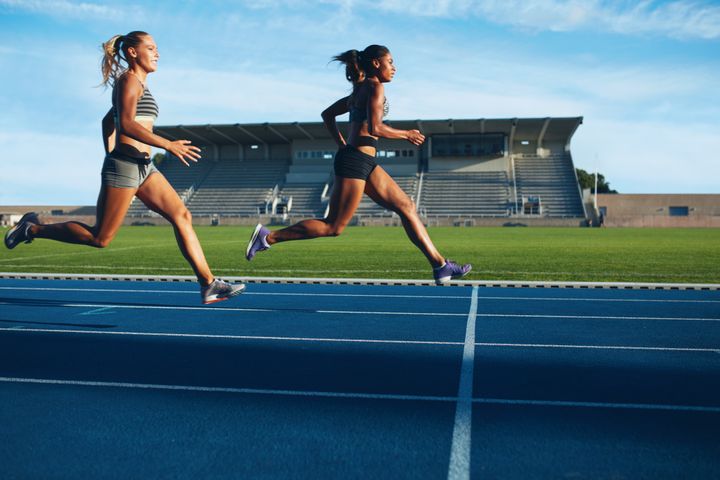
Whether selected to swim, row or run in the Olympics, or gearing up to ride in the Tour de France, achieving the 'right' weight has been a focal point of many elite athletes for decades. It could be to look lean and mean in a swimsuit or jersey, or to qualify for a certain weight category. But there is also a belief that losing weight enhances performance.
As such, it is a widespread phenomenon among athletes – especially in endurance sports like running, swimming, cycling and rowing – to reduce their dietary intake in the run-up to competition.
"It is particularly problematic among female endurance athletes. Many athletes focus heavily on weight in their respective sports. Consequently, they tend to go into short-term, but intense periods of weight loss with the expectation of performing better," says Professor Ylva Hellsten of the University of Copenhagen’s Department of Nutrition, Exercise and Sports.
She and PhD student Jan Sommer Jeppesen are two of the researchers behind a new study on the effects of low energy availability among female athletes.
"We know that the phenomenon of not eating enough is associated with many things that are harmful to health – including missed periods, compromised bone health and changes in metabolism. But there is still plenty that we don't know. As such, we investigated some of the possible consequences more closely," says Jeppesen, who is the study’s lead author.
Reduced cycling performance
For the study, the researchers recruited twelve female triathletes, all of who had a normal energy intake. During one part of the trial, the athletes were given enough calories for 14 days, after which their performance was tested. The same athletes also went through a 14-day period during which they consumed only about 50% of their energy needs while sticking to their normal intensive training schedule.
During the period with insufficient calories, athletes lost an average of roughly 4% of their body weight, about half of which was muscle mass. And they experienced a lossin performance:
"The fourteen days of insufficient food intake reduced their performance by 7.7% in a 20-minute time trial on a bike, which is quite significant. And during a more intense short-term test, their performance slid by as much as 18%. So there is no doubt that this practice greatly impairs one's performance as an athlete, even over shorter periods of time," says Jan Sommer Jeppesen.
Weaker immune system
In addition to sports performance, the researchers examined the effects on athletes' immune function:
"Among other things, we saw that insufficient energy intake was associated with increased systemic stress. The athletes had a large increase in cortisol, a stress hormone, and a dramatically increased stress level in immune cells. This suggests that there is a quite severe impact on several aspects of the immune system if one doesn't eat enough. This may potentially contribute to athletes being more exposed to illness," says Jeppesen.
The researchers hope that the results of the study will help create more awareness of the phenomenon:
"Many coaches continue to pressure athletes to lose weight. For many years, it has been a part of the culture in the sports world – and remains so. We need to shed light on the phenomenon and ask critically: What are we actually doing to our athletes both physically and psychologically?" says Ylva Hellsten.
Team Denmark to use the results
Team Denmark, the Danish elite sport organisation, welcomes the new research results with open arms.
"It focuses on a really important topic and challenges the attitude that lighter is always better. The theory and culture remains prevalent in many sports. I experience many athletes who trim their weight in the weeks leading up to a competition, but without understanding the consequences of doing so," says Majke Jørgensen, a sports nutritionist and manager at Team Denmark.
She sees the results as useful knowledge that can support a message that Team Denmark has been trying to promote:
"My experience is that elite athletes and coaches are curious, but need research that backs up any critiques of the phenomenon. Here, the fact that the test subjects are actual athletes is a major strength, so that the results can be transferred to the athletes and coaches that Team Denmark supports. We will use these results to support what we are already trying to communicate, both when we sit down with athletes one-on-one, as well as during workshops and presentations in these types of contexts," says Jørgensen.
[BOX] THREE DAYS OF REFEEDING DOES NOT HELP
After fourteen days of low energy availability (LEA), the athletes underwent a three-day "refeeding" period as part of the trial, during which they were provided plenty to eat.
"We had expected that the three days of enough food would restore their performance – and maybe even improve it – but there was absolutely no effect. Their performance was just as degraded as prior to the three days. This tells us that the negative effects cannot be reversed by quickly replenishing energy stores, which is a strategy used by many athletes," says Jeppesen.
[BOX] WOMEN MORE VULNERABLE THAN MEN
According to the research literature, men tend to be more resilient when it comes to insufficient energy intake.
"Based upon the little bit of research in this area, it seems that men are able to tolerate reduced energy intake before it affects us negatively. This indicates that women in particular are a vulnerable population in this respect," says Jan Sommer Jeppesen.
The gender difference is partly due to the fact that low energy availability can cause a woman's estrogen levels to drop drastically. Since estrogen protects the circulatory system, muscles and bones, etc., estrogen loss has extensive effects on a woman's physiology. Ylva Hellsten points out that the harmful effects of not eating enough for long periods of time, especially in women, can therefore also be lifelong.
[BOX] ABOUT THE STUDY
- The research paper about the study has been published in the journal Redox Biology.
- The researchers behind the study are: Jan Sommer Jeppesen, Ylva Hellsten, Hannah G. Caldwell, Lasse Gliemann op Jens Bangsbo and from the Department of Nutrition, Exercise and Sports at the University of Copenhagen and Lone O. Lossius and Anna K. Melin from Linnaeus University in Sweden.
- The study is supported by the Ministry of Culture, the Frimodt-Heinike Foundation, the Novo Nordisk Foundation and Team Denmark.
Keywords
Contacts
Jan Sommer Jeppesen
PhD Student
Department of Nutrition, Exercise and Sports
University of Copenhagen
sommer@nexs.ku.dk
+45 28 94 74 08
Ylva Hellsten
Professor, Head of Section
Department of Nutrition, Exercise and Sports
University of Copenhagen
yhellsten@nexs.ku.dk
+45 35 32 16 16
Maria Hornbek
Journalist
Faculty of Science
University of Copenhagen
maho@science.ku.dk
+45 22 95 42 83
Images

Links
ABOUT THE FACULTY OF SCIENCE
The Faculty of Science at the University of Copenhagen – or SCIENCE – is Denmark's largest science research and education institution.
The Faculty's most important task is to contribute to solving the major challenges facing the rapidly changing world with increased pressure on, among other things, natural resources and significant climate change, both nationally and globally.
Subscribe to releases from Københavns Universitet
Subscribe to all the latest releases from Københavns Universitet by registering your e-mail address below. You can unsubscribe at any time.
Latest releases from Københavns Universitet
Søvnforskere slår alarm: Stigende nattemperaturer truer søvnen for milliarder af mennesker9.4.2026 05:41:34 CEST | Pressemeddelelse
Varmere nætter forstyrrer vores søvn i alarmerende grad, og problemet ser ud til at tage til i styrke. En international gruppe af forskere foreslår en global arbejdsgruppe, der kan overvåge og beskytte menneskehedens søvn i en ophedet verden.
Fisk på antidepressiver: Forskere udvikler nyt våben mod giftige stoffer i spildevandet8.4.2026 06:00:00 CEST | Pressemeddelelse
Giftige kemikalier fra lægemidler som antidepressiv medicin slipper hver dag igennem spildevandet og ud i vandmiljøet. Et nyt forskningsprojekt fra Københavns Universitet skal nu for første gang give overblik over miljøfremmede stoffer i spildevandet, og hvordan man mest effektivt fjerner hver enkelt af dem.
Ekstremismens to ansigter: Derfor støtter nogle mennesker vold mellem grupper31.3.2026 05:00:00 CEST | Pressemeddelelse
Menneskers tilbøjelighed til at støtte vold mod andre grupper skyldes ikke en enkelt tankegang: To grundlæggende motivationer og forskellige personlighedstræk er afgørende for volden. Det afslører en ny videnskabelig undersøgelse, der omfatter 58 lande.
4.000 år gamle lertavler gemte på magiske besværgelser… og ølregninger30.3.2026 08:28:11 CEST | Pressemeddelelse
På Nationalmuseet har der i over 100 år ligget en stor samling skrifttavler fra de tidligste civilisationer i Mellemøsten – mange over 4.000 år gamle og skrevet på nu uddøde sprog. Tavlerne har levet et stille liv, men nu har forskere tydet dem og fundet fascinerende tekster om magi, konger og godt gammeldags bureaukrati.
Drenge dropper bøgerne, når skolen holder lukket – piger bliver ved med at læse27.3.2026 08:56:13 CET | Pressemeddelelse
Når en ferie eller en pandemi lukker skolen, forstærker det kønsforskellene i børns læsning: Drengene falder fra, mens pigerne fortsætter med at læse, viser et nyt studie fra Københavns Universitet. Det peger på, at drenge er mere afhængige af skolens faste rutiner og forventninger, mener forskerne.
In our pressroom you can read all our latest releases, find our press contacts, images, documents and other relevant information about us.
Visit our pressroom