
Now we know, what gets roots to grow: Can help in future droughts
15.5.2024 07:30:00 CEST | Københavns Universitet | Pressemeddelelse
A biological mechanism familiar to people who fast helps plant roots grow strong. The discovery by University of Copenhagen scientists provides an answer to a long-unanswered question and a deeper understanding of the "mouths" of plants that can help to develop climate-resilient crops.
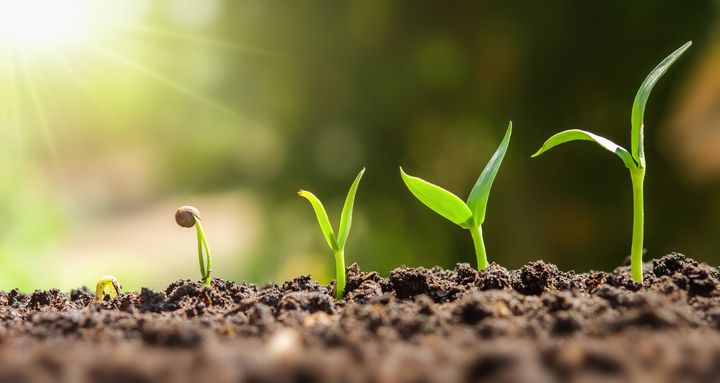
Imagine eating with your feet and having half your body underground. Such is the life of most plants, with roots as the mouths through which they eat and drink. Roots also serve to anchor plants and keep them safe in wind and rain. Indeed, roots are critical for a plant's life.
But many things remain unknown about the life of plants. How they grow their roots big and strong has long been a question and there are key pieces missing to the puzzle.
In a new study published recently, researchers from the University of Copenhagen’s Department of Biology share their discovery of how plants control root growth.
It turns out that a beneficial clean-up mechanism in plant cells called autophagy plays a key role. The same mechanism exists in humans and is part of a popular health trend.
"Fasting has become popular as it seems to have a range of health-promoting effects in humans, as periods without food cause the body to activate a clean-up processes to dispose of various waste products in cells. In our study, we have proven that the same mechanism, which also exists in the plant kingdom, plays a vital role in the ability of plant roots to grow and absorb water and nutrients for the rest of the plant," explains Assistant Professor Eleazar Rodriguez from the Department of Biology, who led the study.
Roots have a heartbeat
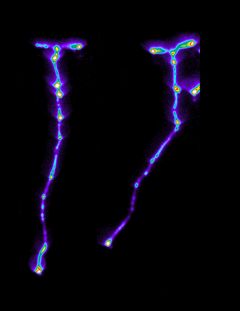
It has long been known that auxin, a plant hormone, controls plant growth, root growth included. Auxin is a fuel for a kind of heartbeat that beats in each and every root tip of a plant. Roughly every four to six hours, auxin levels and the heartbeat in a plant’s roots reach a maximum that causes new roots to grow.
"The movement of a root is almost like watching a snake slithering forward in search of water and nourishment in the soil. And we can see that the heartbeat is strongest every time the root meanders forth," says Eleazar Rodriguez.
But how plants control its heartbeat so as to optimize root growth, has remained an unanswered question. This is where the plant's internal clean-up mechanism comes into the picture.
"In our experiments, we disabled the clean-up mechanism to understand its significance. Imagine if every garbage collector in Copenhagen went on strike – it wouldn’t be long before trash filled the streets. The same thing happened in the plant cells, as the heartbeats that drive root growth became much weaker and went out of sync," explains Eleazar Rodriguez.
Doing this allowed the researchers to conclude that the clean-up mechanism helps keep levels of different biochemical components in perfect balance to provide the most efficient root growth.
Can help germinate new climate-resilient crops
According to the researchers, the new knowledge about plant roots may prove important in the fight against climate change. Extended periods of drought and floods are a new normal that place greater demands on food security. As such, the roots of the crops, which must be able to grow even in these harsh conditions.
“Numerous methods to change the genetic characteristics of plants are available today. These can be used to get plants to develop longer roots, faster, and in doing so, become more resistant to droughts or floods. One of the methods enlists the help of bacteria that live in symbiosis with the plant and can cause the plant to change its growth pattern. Several companies in Denmark are working on this right now," explains Ph.D. student Jeppe Ansbøl who co-authored the study..
The new knowledge applies to all flowering plants and perhaps more, according to the researcher. In principle, crops like tomatoes, potatoes, rice, wheat and corn could be altered to grow more and denser roots, because we now know how plants get their roots to grow.
"The more roots the plants have the more water and nutrients they can take, so the plants grow better faster. We’re heavily dependent on plants because they feed us, extract CO2 from the atmosphere and produce the oxygen we breathe. As such, it is extremely important to understand them fully, to which end we have just taken a big step forward," concludes Eleazar Rodriguez.
More about the result: Causing the garbage collectors in cells to go on strike
Autophagy means 'self-eating' and is a key mechanism when plants develop roots. To investigate the significance of autophagy, the researchers developed a mutant Arabidopsis (thale cress) plant in which its autophagy was disabled.
At the same time, they made the ARF7 protein luminescent, which is the protein that controls the auxin responses and which the plant cell's garbage collectors clean up to provide optimal root growth. The plant's garbage collectors collect waste from cells and transport it to a kind of recycling station in the plant called a vacuole.
"When we disrupted the plant's autophagy, there was waste everywhere, and we were able to detect the ARF7 protein among the waste," says Eleazar Rodriguez.
About the study
- The study has just been published in the scientific journal EMBO Reports [https://www.embopress.org/doi/full/10.1038/s44319-024-00142-5]
- The study was conducted in collaboration with Spanish researchers. The research team consists of: Elise Ebstrup, Jeppe Ansbøl, Ana Paez-Garcia, Henry Culp, Jonathan Chevalier, Pauline Clemmens, Núria Sánchez Coll, Miguel Anguel Moreno-Risueno and Eleazar Rodriguez.
- Institutions that contributed to the research are: Department of Biology, University of Copenhagen, Centro de Biotecnología y Genómica de Plantas (CBGP), Universidad Politécnica de Madrid, Instituto Nacional de Investigación y Tecnología Agraria y Alimentaria, Centre for Research in Agricultural Genomics, Consejo Superior de Investigaciones Científicas.
- The study is funded by the Independent Research Fund Denmark.
Kontakter
Eleazar Rodriguez
Assistant Professor
Department of Biology
University of Copenhagen
eleazar.rodriguez@bio.ku.dk
Jeppe Ansbøl
Ph.D. fellow
Department of Biology
University of Copenhagen
jeppe.ansboel@bio.ku.dk
Michael Skov Jensen
Journalist and team coordinator
The Faculty of Science
+ 45 93 56 58 97
msj@science.ku.dk
Billeder
Følg pressemeddelelser fra Københavns Universitet
Skriv dig op her, og modtag pressemeddelelser på e-mail. Indtast din e-mail, klik på abonner, og følg instruktionerne i den udsendte e-mail.
Flere pressemeddelelser fra Københavns Universitet
Støtte fra A.P. Møller Fonden sætter gang i nyt formidlingsprojekt om Søren Kierkegaard17.9.2026 08:00:00 CEST | Pressemeddelelse
Københavns Universitet har modtaget en bevilling på 6,1 millioner kroner fra A.P. Møller og Hustru Chastine Mc-Kinney Møllers Fond til almene Formaal til at udvikle en ny formidlingsindsats om Søren Kierkegaard. Indsatsen skabes i et partnerskab mellem Københavns Universitet, Det Kgl. Bibliotek og Københavns Museum og skal gøre Kierkegaards liv, tanker og forfatterskab tilgængeligt for et bredt publikum.
Forskere finder genetiske spor, der kan afsløre aggressiv prostatakræft10.9.2026 07:00:00 CEST | Pressemeddelelse
Et internationalt forskerhold har kortlagt de biologiske mekanismer bag prostatakræft og identificeret otte forskellige genetiske ’fingeraftryk’, som kan forklare, hvorfor nogle mænd bliver alvorligt syge, mens andre ikke gør. Resultaterne kan på sigt gøre behandling af prostatakræft langt mere præcis.
Nyt studie: Psykiatere er kun enige om diagnosen i 55 procent af tilfældene9.9.2026 09:35:26 CEST | Pressemeddelelse
Når psykiatere skal vurdere den samme patient, er de kun enige om diagnosen i cirka halvdelen af tilfældene, viser nyt studie fra Københavns Universitet. Det kan føre til forkert behandling af patienter og fejl i forskningen i psykiske lidelser, påpeger forskerne bag studiet.
Grøn trepart: Disse ting står øverst på danskernes ønskeliste31.8.2026 13:00:00 CEST | Pressemeddelelse
Mere plads til vild natur, sundere indre farvande, bedre dyrevelfærd og klimagevinster er de goder, danskerne i særlig grad forbinder med den grønne trepart. Det viser en ny befolkningsundersøgelse fra Green Mandate. Samtidig peger undersøgelsen på et betydeligt potentiale for øget borgerinddragelse i implementeringen af aftalen.
Uskyldige bilejere straffes for vanvidskørsel – problematisk, siger jura-forskere31.8.2026 10:33:57 CEST | Pressemeddelelse
Når politiet beslaglægger vanvidsbilisters køretøjer, kan det være en krænkelse af den private ejendomsret. I nogle sager tilhører bilen nemlig ikke lovovertræderen, men en uskyldig tredjepart.
I vores nyhedsrum kan du læse alle vores pressemeddelelser, tilgå materiale i form af billeder og dokumenter samt finde vores kontaktoplysninger.
Besøg vores nyhedsrum